Life
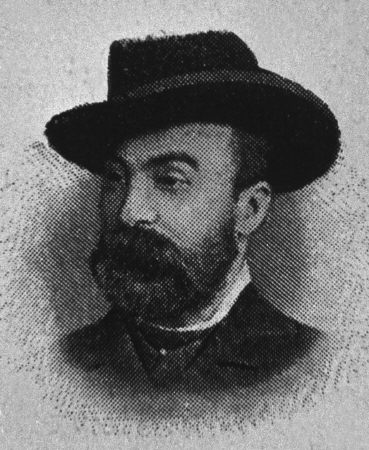
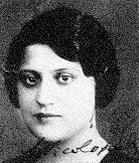
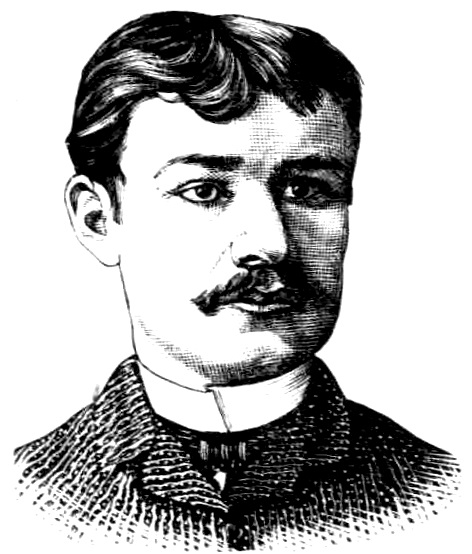
Karkavitsas was born on 12 March 1865 in Lechaina, a market town in the plain of Elis near the west coast of the Peloponnese, into a merchant family. He studied medicine in Athens from 1883 to 1888, and while still a student began to publish stories and to collect the folk songs and customs of his home region. In 1890 he served as a junior army doctor in Mesolongi and Larisa, where he got to know the villages of newly annexed Thessaly, and from October 1891 he spent about four years as ship's doctor on the steamer Αθηνά, sailing around the Aegean and listening to the sailors whose stories became Λόγια της πλώρης.
In 1896 he joined the army medical corps permanently and remained an officer for twenty years, serving in the campaign of 1897, in the Balkan Wars of 1912–13 and in garrisons around the country. He was a committed demoticist, writing for the journal Νουμάς and declaring that the purist katharevousa was a language to which «you throw gold and it gives you back coal». In 1916 he sided against Venizelos's revolutionary government in Thessaloniki, was imprisoned for some months and then placed on the retired list.
Tuberculosis of the larynx took his voice in his last years, so that the man who had written the most talkative prose in Greek could only communicate on paper. He died in Marousi, outside Athens, on 24 October 1922, at 57, in the weeks after the Asia Minor catastrophe, and was buried there.
Works

Η Λυγερή (The Slender Maid, 1890, book 1896) is his first long story: Anthi, a girl of Lechaina, loves one man but is married off to a prosperous middle-aged grocer, and the book watches, without romance, how she settles into comfort. Ο Ζητιάνος (The Beggar, serialised in 1896) is the masterpiece. Tziritokostas, a professional beggar trained in the villages of Kravara, whose whole economy was begging, arrives with his boy Moutzouris at Nychteremi, a village of Karagounides serfs on a Thessalian estate near the Vale of Tempe. He sells the women charms and potions, plays on their fear and greed, and when a man dies and the authorities arrive it is the villagers who are punished while the beggar walks away richer. It is the harshest picture of rural Greece in the language.
Λόγια της πλώρης (Words of the Prow, 1899) collects twenty sea tales told by sailors on the deck of a caique: Η θάλασσα (The Sea), in which a sailor's son is warned all his life against the «faithless» sea that has taken the family's men, and which ends «Με κράζει η θάλασσα» (The sea is calling me); Το γιούσουρι (The Black Coral), Οι σφουγγαράδες (The Sponge Divers), Η Γοργόνα, where the mermaid asks whether King Alexander still lives. Ο Αρχαιολόγος (The Archaeologist, 1904) is an allegory: two brothers, Aristodimos, who lives only for the ruins and papers of the ancestral house, and Dimitrakis, who wants to farm the land, stand for a Greece torn between its ancient past and its present.
Legacy in Greece today
Greek pupils meet Karkavitsas in the gymnasium anthologies through Η θάλασσα, Η Γοργόνα or an extract from Ο Ζητιάνος, and the beggar Tziritokostas is as familiar a villain as any in Greek literature; «Κραβαρίτης», a man from Kravara, still means a professional beggar, largely because of his novel. His complete works, in the public domain since 1993, are free on el.wikisource and in cheap editions. Lechaina honours him with a bust and a street, and streets named Καρκαβίτσα exist in several Greek towns. For a learner the sea tales are the best door: they are short, spoken by sailors in the first person, and full of the vocabulary of wind, boat and shore that you hear on any Greek island today.
Did you know?
- He was a serving army doctor for most of his writing life and gathered the material for Ο Ζητιάνος while posted in Thessaly in 1890.
- Λόγια της πλώρης grew out of four years as ship's doctor on the steamer Αθηνά, listening to sailors' stories on deck.
- In 1892 he dismissed katharevousa with the phrase «της ρίχνεις χρυσάφι και σου βγάζει κάρβουνο» (you throw it gold and it gives you back coal).
- Laryngeal tuberculosis left him unable to speak in his last years; he died in October 1922, days after the Asia Minor catastrophe.
Key works
| Greek title | Title | Year |
|---|---|---|
| Η Λυγερή | The Slender Maid | 1890 |
| Διηγήματα | Short Stories | 1892 |
| Ο Ζητιάνος | The Beggar | 1896 |
| Λόγια της πλώρης | Words of the Prow (sea tales) | 1899 |
| Ο Αρχαιολόγος | The Archaeologist | 1904 |
From the works


Public-domain pictures from Wikimedia Commons.
A line to remember
— Μακριά, έλεγε, μακριά, παιδί μου, απ' τ' άτιμο στοιχειό! Δεν έχει πίστη, δεν έχει έλεος. […] Με κράζει η θάλασσα.
— Makria, elege, makria, paidi mou, ap' t' atimo stoicheio! Den echei pisti, den echei eleos. […] Me krazei i thalassa.
«Keep away, he would say, keep away, my child, from the wicked monster! It has no faith, it has no mercy.» […] The sea is calling me.
From the original
The text as Andreas Karkavitsas wrote it, out of copyright, with our own translation beside it.
«Ἡ θάλασσα»The Sea
The opening of the tale that gives the collection its voice: an old sailor remembers his father's warning against the sea, echoed by the island's elders, before telling how it pulled him in anyway. The story's last words are «Με κράζει η θάλασσα», the sea is calling me.
«Ἡ θάλασσα», from Λόγια τῆς πλώρης (1899), opening paragraphs · Public-domain text, source: el.wikisource.org