Life
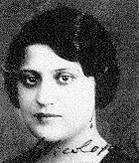
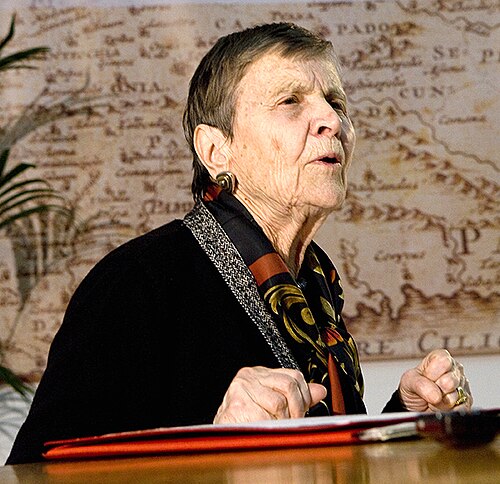
Eleni Glykatzi-Arveler was born in Athens in 1926. She studied history and archaeology in Greece, then moved to Paris in 1953 with a French scholarship. Her scholarly name in French publications is Hélène Ahrweiler. Working between Greek sources and a French academic environment, she developed a career in Byzantine history at the CNRS and the Sorbonne. She became a professor at the Sorbonne in 1967. Her research on maritime history formed the substantial book Byzance et la mer, published in 1966.
She also helped shape the institutions in which research was taught. A cofounder of Paris 1 Panthéon-Sorbonne, she served as its president from 1976 to 1981. She later became rector of the Paris educational academy and chancellor of the Paris universities, from 1982 to 1989. These were different offices, rather than a single unchanged post called “rector of the Sorbonne.” Cultural responsibilities included the Centre Pompidou. She continued to speak to Greek and French audiences about history and education. She died on 16 February 2026, a fact confirmed by institutional tributes from Paris 1 and the French Committee of Byzantine Studies. Her public career connects archival research, teaching, university leadership and the explanation of history beyond the seminar room.
Works

Arveler's research approached Byzantium as a society with institutions, resources and ways of describing its power. Byzance et la mer (Byzantium and the Sea,1966) studies naval forces, maritime policy and institutions from the seventh to the fifteenth centuries. This is a reminder that an empire was connected by ports and sea routes as well as by armies and palaces. Études sur les structures administratives et sociales de Byzance (Studies on Byzantine Administrative and Social Structures,1971) gathers earlier articles, rather than presenting a newly discovered medieval text.
L’Idéologie politique de l’empire byzantin (The Political Ideology of the Byzantine Empire,1975) turns toward the ideas used to understand and justify imperial power. In Γιατί το Βυζάντιο (Why Byzantium,2009), she addresses a wider audience and asks readers to reconsider the place of Byzantium in Greek and European history. Its Greek title begins with a useful question word, γιατί. The books have different audiences and scales: detailed maritime research, collected studies, political interpretation and a public synthesis. A learner need not begin with a large French monograph. Comparing their titles and reading a short Greek introduction already teaches how historical questions are framed, while reminding us that an interpretation is an argument to examine, not an event to memorize.
Legacy in Greece today
Arveler's work makes Greek useful for asking historical questions. Start with the title Γιατί το Βυζάντιο and write your own question beginning Γιατί. Read a short authorized preview or library description, underline three words about history or institutions, and restate one claim in simpler Greek. Then add “the historian argues that…” rather than presenting an interpretation as an uncontested fact. Her recorded Greek interviews also allow listening for how a speaker explains an abstract idea with everyday words. Compare the four-word quotation here with your own example of responsibility in study. This connects Byzantine history to active reading, reporting verbs and a small piece of personal Greek writing.
Did you know?
- Her French scholarly name was Hélène Ahrweiler.
- She presided over Paris 1 Panthéon-Sorbonne from 1976 to 1981.
- The 1971 book collects articles published earlier.
- Institutional tributes confirm her death on 16 February 2026.
Key works
| Greek title | Title | Year |
|---|---|---|
| Byzance et la mer | Byzantium and the Sea | 1966 |
| Études sur les structures administratives et sociales de Byzance | Studies on Byzantine Administrative and Social Structures | 1971 |
| L’Idéologie politique de l’empire byzantin | The Political Ideology of the Byzantine Empire | 1975 |
| Γιατί το Βυζάντιο | Why Byzantium | 2009 |
A line to remember
Η ανθρωπιά είναι ευθύνη.
I anthropia einai efthyni.
Humanity is responsibility.