Life
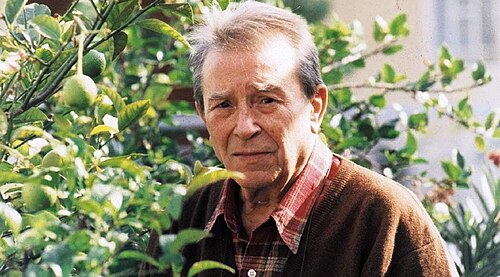
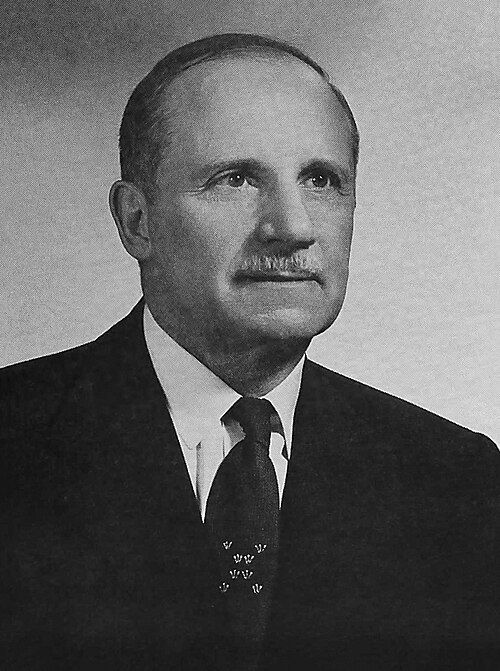
Prevelakis was born in Rethymno on 3 March 1909 (18 February by the old calendar then used in Crete), when Crete was still an autonomous state under the Sultan's nominal rule, and he grew up in a town where Greek Christians and Cretan Muslims lived side by side, until the exchange of populations of 1923 sent the Muslims to Turkey. He studied in Athens and in Paris, and in 1926, still a young man, he met Nikos Kazantzakis, twenty-six years older. The meeting turned into a friendship that lasted until Kazantzakis's death in 1957: they travelled together, and Kazantzakis wrote to him hundreds of letters about his work, his doubts and his battles with critics and the Church.
Prevelakis became an art historian; his doctoral thesis, on El Greco in Crete and Italy, was accepted by the University of Thessaloniki in 1935. From 1939 he taught art history at the Athens School of Fine Arts. Alongside teaching he published novels, plays, poems and essays from the 1930s to the 1970s. In 1977 he was elected a full member of the Academy of Athens. After Kazantzakis's death he became the guardian of his memory, publishing studies of his work and the great collection of his letters. He died at his home in Ekali, north of Athens, on 15 March 1986.
Works

Το χρονικό μιας πολιτείας (The Chronicle of a Town, 1938) is a short, lyrical book about Rethymno: its Venetian harbour and fortress, its Turkish quarters, its trades and characters, and the slow end of a mixed society that came with the departure of the Muslims. It is half memoir and half chronicle, written with affection and irony, and it remains his best-loved work.
His larger projects are two trilogies. Ο Κρητικός (The Cretan), made up of Το δέντρο (The Tree, 1948), Η πρώτη λευτεριά (The First Freedom, 1949) and Η πολιτεία (The Town, 1950), follows a Cretan family and their island through the revolts of the nineteenth century to union with Greece. Οι δρόμοι της δημιουργίας (The Paths of Creation) begins with Ο ήλιος του θανάτου (The Sun of Death, 1959), the story of an orphaned boy growing up with his aunt in a Cretan village during the wars of the 1910s, a book about grief, the land and the first stirrings of a writer; it continues with Η κεφαλή της Μέδουσας (The Head of Medusa, 1963) and Ο άρτος των αγγέλων (The Bread of Angels, 1966). His style is classical and controlled, his subject almost always Crete. Among his non-fiction, his books on Kazantzakis and the edition Τετρακόσια γράμματα του Καζαντζάκη στον Πρεβελάκη (Four Hundred Letters of Kazantzakis to Prevelakis, 1965) are essential reading for anyone who studies Kazantzakis.
Legacy in Greece today
In Rethymno Prevelakis is the town's writer. The Chronicle of a Town is read there almost as a guidebook to the old town, and visitors can walk from the Venetian harbour to the Fortezza and through the old quarters he describes. Few Greek towns have been described so lovingly by one of their own children. For readers of Kazantzakis he is indispensable: the letters he published are the best window into the older writer's life and work. A good thing to do: read the opening pages of Το χρονικό μιας πολιτείας in Greek, then walk the old town of Rethymno, or look at it on a map, and find the places he names.
Did you know?
- He met Kazantzakis in 1926, when he was seventeen, and remained his friend until Kazantzakis died in 1957.
- Kazantzakis wrote him hundreds of letters; Prevelakis published four hundred of them in 1965.
- Besides being a novelist he was an art historian who wrote on El Greco and taught at the Athens School of Fine Arts.
- He was elected to the Academy of Athens in 1977.
Key works
| Greek title | Title | Year |
|---|---|---|
| Το χρονικό μιας πολιτείας | The Chronicle of a Town | 1938 |
| Ο Κρητικός (Το δέντρο, Η πρώτη λευτεριά, Η πολιτεία) | The Cretan (trilogy) | 1948–1950 |
| Ο ήλιος του θανάτου | The Sun of Death | 1959 |
| Η κεφαλή της Μέδουσας | The Head of Medusa | 1963 |
| Τετρακόσια γράμματα του Καζαντζάκη στον Πρεβελάκη | Four Hundred Letters of Kazantzakis to Prevelakis (edition) | 1965 |
From the works


Public-domain pictures from Wikimedia Commons.
A line to remember
Το χρονικό μιας πολιτείας
To chroniko mias politeias
The chronicle of a town