Life
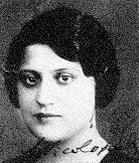
Dido Pappa, later Sotiriou by marriage, was born on 18 February 1909 in Aydın, the Greek Αϊδίνι, a prosperous town inland from Smyrna where her father had a factory. The family's world ended in 1922, when the Greek army's campaign in Asia Minor collapsed and more than a million Greeks of Anatolia fled or were expelled. The Pappas reached Athens ruined, and Dido grew up in the house of a wealthy aunt, who paid for her schooling and later for studies in French literature at the French Institute of Athens and in Paris.
From the 1930s she worked as a journalist, in women's magazines and the left-wing press. She joined the Communist Party, took part in the Resistance during the Occupation and remained on the Left all her life, later as a member of the EDA party and a writer for the newspaper Avgi. Her younger sister Elli Pappa was the companion of Nikos Beloyannis, the communist leader executed in 1952, and that story became her novel «Εντολή» (Command, 1976).
She began writing fiction only at fifty, with «Οι νεκροί περιμένουν» (The Dead Are Waiting, 1959), and «Ματωμένα χώματα» followed in 1962. In 1990 she received the Abdi İpekçi Prize for Greek–Turkish friendship. She died in Athens on 23 September 2004, aged ninety-five, a small, sharp woman who had become something like the grandmother of the refugee memory of Greece.
Works

«Οι νεκροί περιμένουν» (1959) is the autobiographical novel of a refugee family: the comfortable life in Aydın, the flight of 1922, the poverty of Athens and the political awakening of a girl who becomes a communist. It introduced the two subjects of all her work, Asia Minor and the Left, and it already has her voice, direct and unsentimental.
«Ματωμένα χώματα» (1962) is told in the first person by Manolis Axiotis, a farmer from Kırkıca (now Şirince), a Greek village in the hills above Ephesus. The first part is an idyll: harvests, feasts, figs and olives, Greeks and Turks living side by side with the small frictions of neighbours. Then the First World War sends the Greek men of the Ottoman Empire to the labour battalions (αμελέ ταμπουρού), where many die of hunger and cold; Manolis survives, deserts, hides. In 1919 the Greek army lands in Smyrna and he is conscripted, now as a soldier; the book follows the advance into Anatolia and the rout of August 1922 to the quays of burning Smyrna. Sotiriou built the novel on the notes of a real man, Manolis Axiotis, who had lived this life and gave her his manuscript. Her point of view is clear and was unusual in Greece at the time: the peasants on both sides are victims, and the guilt lies with the Great Powers and the politicians who sent them to kill each other. The farewell to Anatolia on the last page is addressed to a Turkish friend as much as to the lost land.
«Εντολή» (1976) reconstructs the last months of Nikos Beloyannis, from his trial to the firing squad; she also wrote essays on the Asia Minor question and its causes.
Legacy in Greece today
«Ματωμένα χώματα» has been reprinted continuously since 1962, is read in excerpts in Greek lyceum anthologies and is the book Greeks hand to foreigners who ask about Asia Minor. In Turkey it appeared in 1970 as «Benden Selam Söyle Anadolu'ya» (Give My Greetings to Anatolia) and has been read there ever since, which is why she is one of the few Greek writers with a Turkish readership. The village of Şirince, the Kırkıca of the novel, is now a tourist destination near Ephesus, and Greek visitors arrive with the book in their bags. A learner who has read the novel will understand why refugee neighbourhoods in Athens and Thessaloniki bear names like Nea Smyrni and Nea Ionia, and why the songs of Asia Minor still fill Greek tavernas. The site's pages on Venizelos and on Myrivilis, who fought in the same campaign, complete the picture.
Did you know?
- The narrator Manolis Axiotis was a real person: he gave Sotiriou the notebooks of his life, and she turned them into the novel.
- She published her first novel at fifty, after a career in journalism, and wrote her most famous book at fifty-three.
- The Turkish edition of 1970 made her a known name in Turkey, and in 1990 she received the Abdi İpekçi Prize, named after a murdered Turkish journalist, for her contribution to Greek–Turkish understanding.
- Her sister Elli Pappa was the companion of Nikos Beloyannis, «the man with the carnation», and Sotiriou's novel «Εντολή» tells his story from inside the family.
Key works
| Greek title | Title | Year |
|---|---|---|
| Οι νεκροί περιμένουν | The Dead Are Waiting (novel) | 1959 |
| Ηλέκτρα | Electra (novel) | 1961 |
| Ματωμένα χώματα | Bloodied Earth / Farewell Anatolia (novel) | 1962 |
| Εντολή | Command (novel on Beloyannis) | 1976 |
From the works


Public-domain pictures from Wikimedia Commons.
A line to remember
Ματωμένα χώματα
Matomena chomata
Bloodied earth