Life
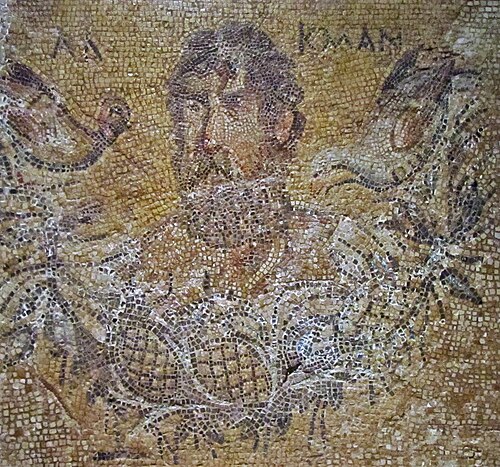
Very little is known for certain about Alcman’s life. Modern scholarship places his activity in Sparta in the second half of the seventh century BC, when the city was open to music, poetry and public festivals. The Byzantine lexicon known as the Suda, compiled many centuries later, calls him a Laconian from Messoa, a district of Sparta. It also reports that the grammarian Crates of Mallus made him a Lydian from Sardis, and that his parents were said to be slaves. The Suda dates his birth to the 27th Olympiad (672–669 BC), but modern editors treat this chronology as disputed.
The question of his origin was already debated in antiquity, and it remains open. What is clear is that his songs were written for Spartan audiences and festivals. He composed in the local Laconian form of Doric Greek, mixed with Aeolic forms and Homeric expressions, and he liked rare words, several of them of Lydian origin. Ancient scholars arranged his poems in six books of lyric songs. The spellings Alcman and Alkman both refer to the Greek Ἀλκμάν, and in Modern Greek he is called Αλκμάν or Αλκμάνας.
Works

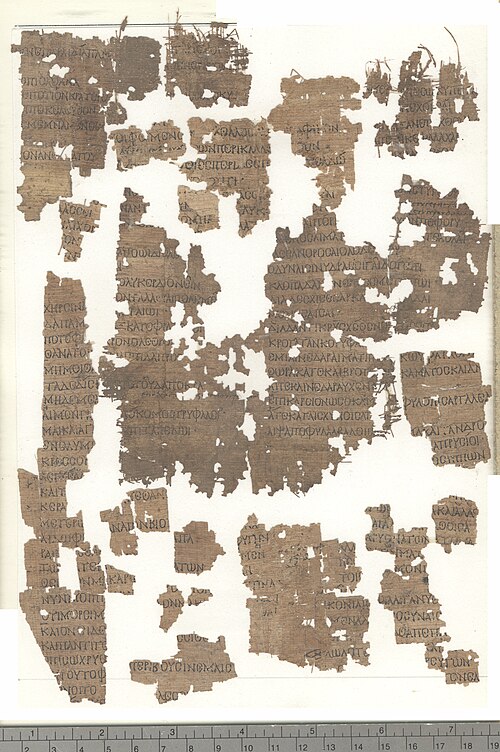
Alcman is best known for his παρθένεια (partheneia), songs sung and danced by choruses of girls, usually at public religious ceremonies. The longest surviving example, fragment 1 in Page’s edition, is often simply called the Partheneion. It was found on a papyrus at Saqqara in Egypt in 1855, during excavations by Auguste Mariette, and is now in the Louvre. The poem probably had about 140 lines in stanzas of fourteen lines; 101 survive, whole or damaged. The surviving opening tells the myth of the sons of Hippocoon, punished for their arrogance. The chorus then turns to the festival itself and praises its two leaders, Agido and Hagesichora, comparing them to prize-winning horses, gold and the sun. Which goddess was honoured and how the ritual worked remain uncertain.
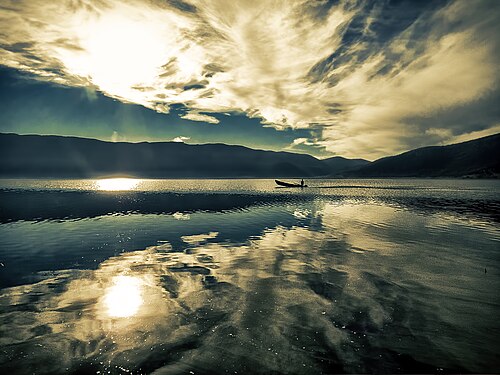
A second, more broken maiden-song, fragment 3, praises a girl named Astymeloisa, who moves through the crowd like a shooting star. Other short fragments survive because later writers quoted them. In fragment 26 the singer tells the girls that his limbs can no longer carry him and wishes he were a kerylos, a sea bird flying with the halcyons. In fragment 39 Alcman says he found his words and melody by listening to partridges. Fragment 89 describes the whole of nature asleep: peaks and ravines, creatures of the earth, bees, sea creatures and birds.
Legacy in Greece today
Alcman is read today in Greek anthologies of archaic lyric poetry. The Centre for Greek Language’s online anthology presents his fragments in the original with Modern Greek translations by scholars such as I. Th. Kakridis and I. N. Kazazis, so the same ancient lines can be compared in several renderings. Fragment 89 is a good place to start. The B2 level refers to this page’s adapted Modern Greek reading, not to independent reading of the Doric original. First list everything that is asleep in the fragment. Then write four sentences of your own about a quiet night, for example Τα βουνά κοιμούνται (The mountains are sleeping) and Ο δρόμος φωτίζεται από το φεγγάρι (The road is lit by the moon). Read them aloud slowly.
Did you know?
- The Louvre papyrus of the Partheneion measures about 22 by 27.5 cm and is not on public display.
- The Suda claims that Alcman was the first to compose songs in metres other than the epic hexameter.
- In one fragment Alcman says he found his melody by listening to partridges.
- Ancient sources disagree on whether he came from Sparta or from Sardis in Lydia.
Key works
| Greek title | Title | Year |
|---|---|---|
| Παρθένειο (απόσπ. 1 PMG) | Partheneion (Maiden-song) — fragment 1 PMG, Louvre papyrus | ? |
| Παρθένειο για την Αστυμέλοισα (απόσπ. 3 PMG) | Maiden-song for Astymeloisa — fragment 3 PMG | ? |
| Οι εποχές (απόσπ. 20 PMG) | The Seasons — fragment 20 PMG | ? |
| Ο κηρύλος (απόσπ. 26 PMG) | The Kerylos Bird — fragment 26 PMG | ? |
| Οι πέρδικες (απόσπ. 39 PMG) | The Partridges — fragment 39 PMG | ? |
| Εὕδουσι δ᾽ ὀρέων κορυφαί (απόσπ. 89 PMG) | Nature Asleep — fragment 89 PMG | ? |
A line to remember
εὕδουσι δ᾽ ὀρέων κορυφαί τε καὶ φάραγγες
In today's GreekΟι βουνοκορφές και τα φαράγγια κοιμούνται.
heúdousi d’ oréōn koryphaí te kaì pháranges
The mountain peaks and the ravines are asleep.