Life
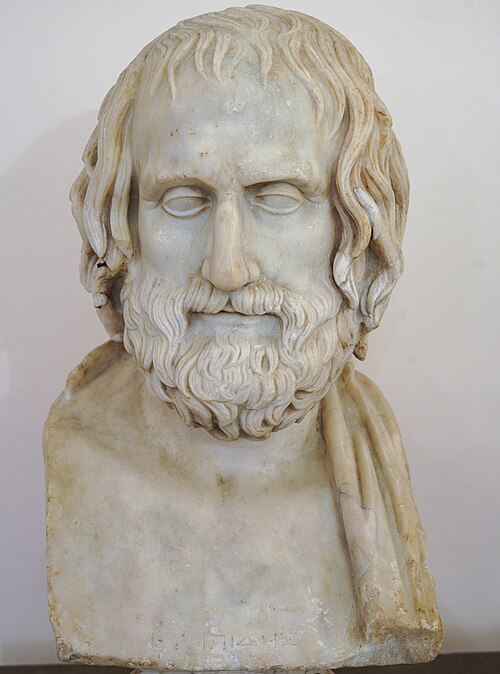
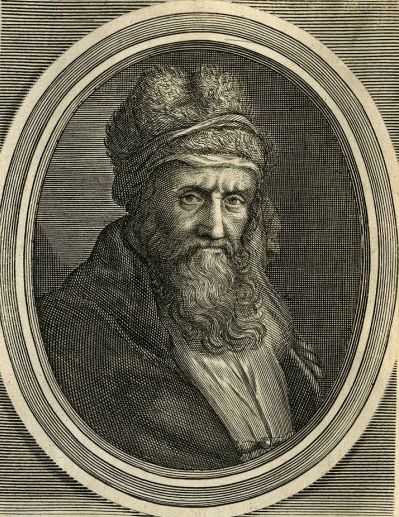
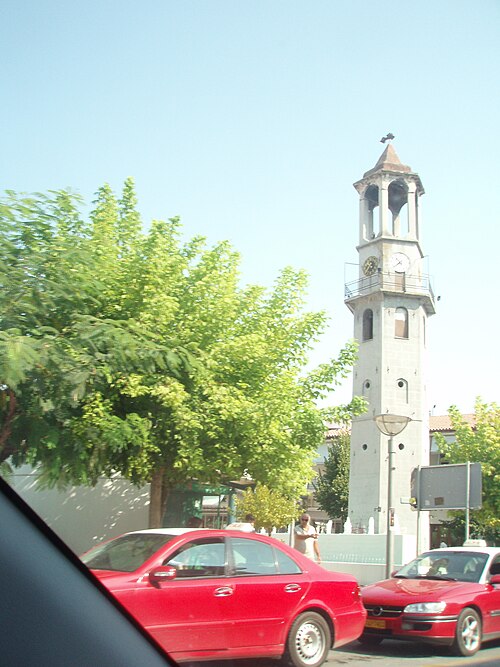
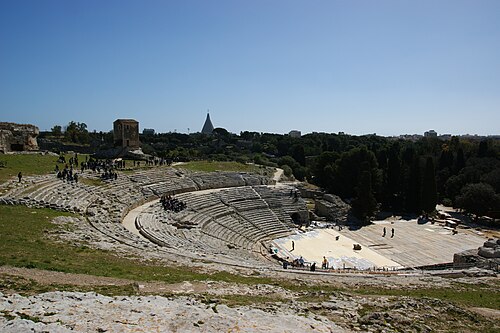
Almost everything known about Epicharmus comes from writers who lived long after him, and they do not agree. Diogenes Laertius calls him a man of Kos, the son of Helothales, and says that he was taken to Megara in Sicily as a three-month-old baby and later moved to Syracuse. The Byzantine lexicon known as the Suda instead calls him a Syracusan or a man from the Sicilian town of Krastos, and it lists other claims as well. The familiar name “Epicharmus of Kos” therefore reflects one tradition, not a settled fact. What is clear is that his career belonged to Syracuse, where he wrote in the local Doric Greek.
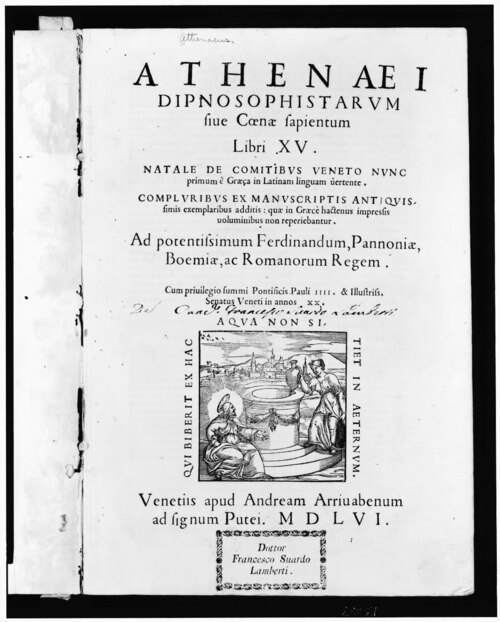
The Suda places his activity about six years before the Persian Wars, around 485 BC. Later accounts link him with the court of the Syracusan rulers, especially Hieron, who also welcomed Aeschylus. Ancient tradition made him a pupil of Pythagoras and an author of medical and philosophical maxims. Already in antiquity, however, Athenaeus noted that some poems circulating under his name had been written by others, and modern scholars treat many such sayings with caution. Diogenes reports that Epicharmus lived to ninety and that Syracuse honoured him with a statue whose epigram praised his wisdom.
Works

Epicharmus wrote many verse plays. The Suda gives fifty-two, or thirty-five according to another ancient count, and around forty titles are known today. The Centre for the Greek Language describes two broad groups. About half parodied myths of heroes such as Heracles and Odysseus. Others showed everyday life and comic types, such as the parasite who lives at another man’s table and the boorish countryman.
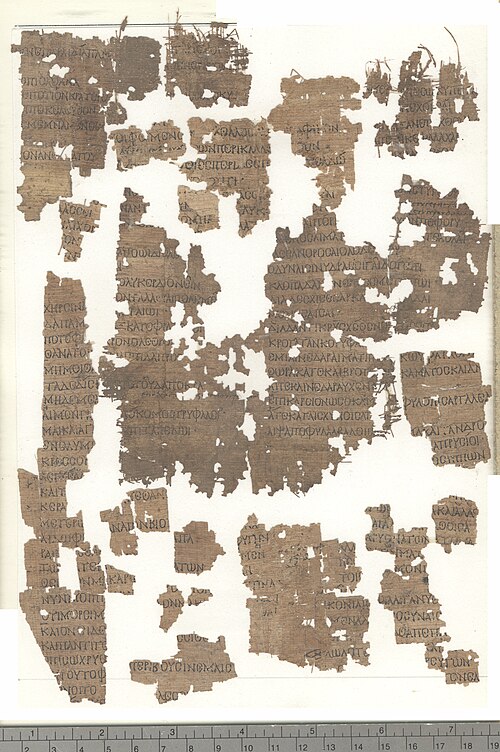
In Ἥβας γάμος (The Wedding of Hebe), quoted again and again by Athenaeus, a divine wedding feast becomes an occasion for long lists of fish and shellfish. Ὀδυσσεὺς αὐτόμολος (Odysseus the Deserter) placed a Homeric hero in a comic situation. Γᾶ καὶ Θάλασσα (Earth and Sea) staged a contest between two elements over which gives more good things. Λόγος καὶ Λογίνα (Logos and Logina) survives in even smaller pieces, and its plot is unclear.
In the Poetics, Aristotle wrote that the making of comic plots came originally from Sicily, naming Epicharmus and Phormis, and that Epicharmus lived much earlier than the Athenian comic poets Chionides and Magnes. His humour played with ideas and language. A famous “growing argument” asks whether a person who changes is still the same person, so that a debtor might claim he no longer owes yesterday’s debt. According to the Centre’s literary history, he avoided coarse jokes and attacks on named individuals.
Legacy in Greece today
Epicharmus is read today in collections of fragments and in histories of Greek theatre, including the online literary history of the Centre for the Greek Language. He matters as an early Sicilian link in the story that leads to the Athenian comedy of Aristophanes. Start with the line on this page, which Polybius calls “well said by Epicharmus”, and read its Modern Greek rendering aloud. Then write two Modern Greek sentences with the same words: Πιστεύεις εύκολα. (You believe easily.) and Πιστεύεις εύκολα; (Do you believe easily?). Greek marks the question with “;” and with a different intonation, not with a change of word order. Finally, report the advice: Ο Πολύβιος γράφει ότι, κατά τον Επίχαρμο, δεν πρέπει να πιστεύουμε εύκολα (Polybius writes that, according to Epicharmus, we should not believe easily). The B2 level describes this page’s Modern Greek material, not reading the Doric fragments unaided.
Did you know?
- Plato’s Theaetetus names Epicharmus as the summit of comedy, just as Homer is the summit of tragedy.
- The Suda credits him with inventing Greek letters, a claim modern scholars do not accept.
- Many of the fish names in his Wedding of Hebe survive because Athenaeus quoted them in a long book about food.
- Diogenes Laertius says that Epicharmus lived to the age of ninety.
Key works
| Greek title | Title | Year |
|---|---|---|
| Ἥβας γάμος | The Wedding of Hebe — comedy, fragments | ? |
| Ὀδυσσεὺς αὐτόμολος | Odysseus the Deserter — comedy, fragments | ? |
| Γᾶ καὶ Θάλασσα | Earth and Sea — comedy, fragments | ? |
| Λόγος καὶ Λογίνα | Logos and Logina — comedy, fragments | ? |
A line to remember
νᾶφε καὶ μέμνασ᾽ ἀπιστεῖν· ἄρθρα ταῦτα τᾶν φρενῶν.
In today's GreekΝα είσαι νηφάλιος και να θυμάσαι να δυσπιστείς· αυτές είναι οι αρθρώσεις του νου.
nâphe kaì mémnas’ apisteîn; árthra taûta tân phrenôn.
Stay sober and remember to distrust: these are the joints of the mind.