Life
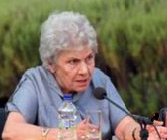
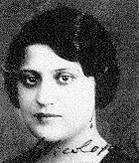
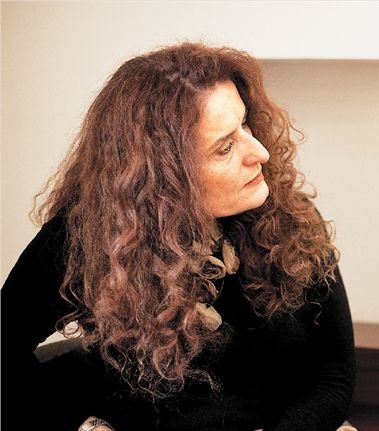
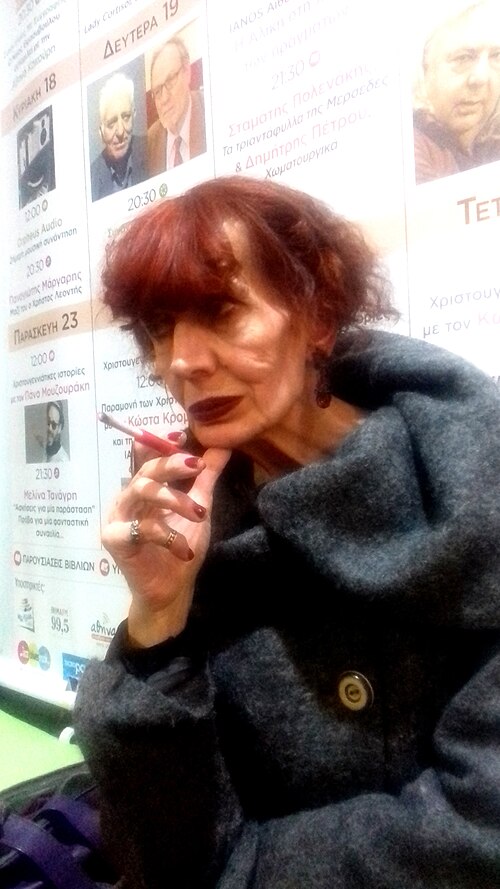
Tatiana Gritsi was born in Athens in October 1920; the Archive of Greek Writers of the National Book Centre (EKEBI) places her birth in the Thiseio district. She finished secondary school with lessons at home and briefly studied dance. In 1942 she enrolled at the University of Athens but soon left, turning to French at the French Institute of Athens and to singing at the Hellenic Conservatory. At the Institute she met the French scholar and philhellene Roger Milliex, whom she married; they had two children. During the German Occupation she joined the National Liberation Front (EAM) and volunteered with the Hellenic Red Cross.
From 1945 to 1975 she lived largely abroad, with returns to Greece. In Paris (1945–1946) she attended art-history classes at the Louvre and spoke at an international women’s congress about Greek women in the Resistance. Back in Athens from 1947 to 1959, she worked at the Centre for Asia Minor Studies, exhibited paintings and wrote steadily. The couple then spent 1959–1971 in Cyprus, where she supported the island’s cultural life, and moved on to Genoa. The Papadopoulos dictatorship stripped her of Greek citizenship. After 1974 she worked for Greek public radio and ERT2, wrote criticism for newspapers such as Avgi and Kyriakatiki Eleftherotypia, and chaired the Stegi Kalon Technon kai Grammaton (1981–1986). She died in Athens in February 2005.
Works
Her first literary appearance came in 1945, with short stories in the magazine Ελεύθερα Γράμματα (Free Letters). During the Occupation she had already circulated, illegally, a Greek translation of Vercors’s Le Silence de la mer, published officially in 1945 as Η σιωπή της θάλασσας (The Silence of the Sea). Πλατεία Θησείου (1947) opened a steady series of books, among them Ημερολόγιο (Diary, 1952), Σε πρώτο πρόσωπο (In the First Person, 1958) and …Και ιδού ίππος χλωρός… (1963), whose title quotes the Book of Revelation. According to Kathimerini’s 2005 obituary, her first books were woven from childhood memories and the experiences of people close to her.
Σπαράγματα (Fragments, 1973) published part of her archive that had escaped confiscation under the dictatorship, and Χρονικό ενός εφιάλτη (Chronicle of a Nightmare, 1986) returned to the years 1966–1974. The EKEBI archive describes her prose as focused on psychological processes, with a loosened structure, a poetic voice and a strong presence of imagination, memory and inner time. The Greek school anthology for the last year of upper secondary school places her early work in the literature of Occupation and Resistance and notes that later books left established forms under the influence of the modern French novel. She also translated, mainly from French, and some of her theatre translations were staged by Greek companies. Her honours included state prizes for the short story and the novel, the Prize of the Twelve and a prize of the Academy of Athens.
Legacy in Greece today
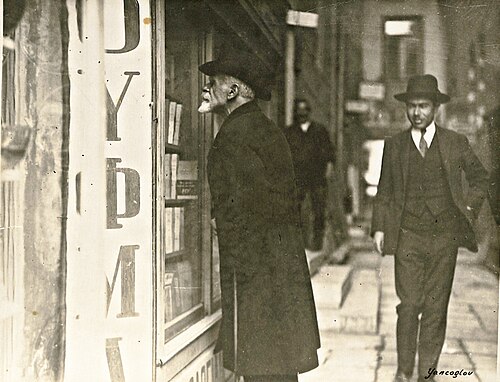
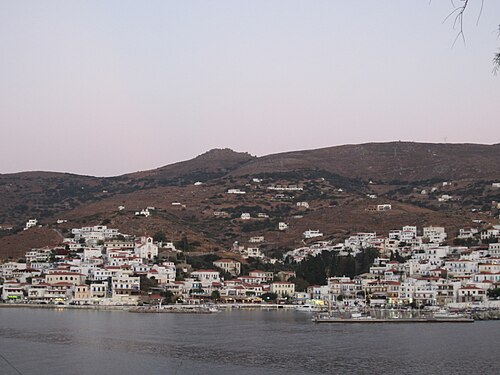
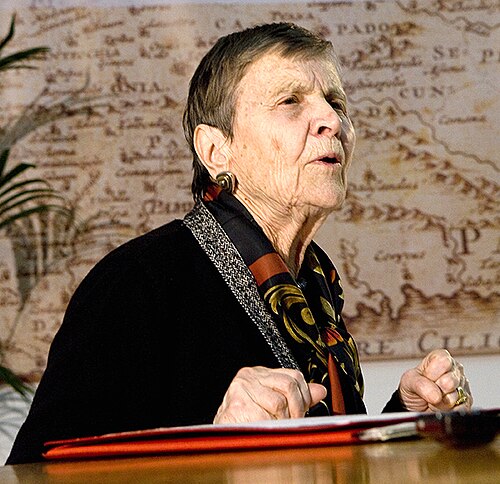
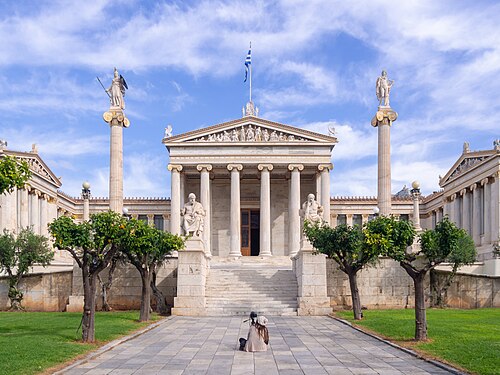
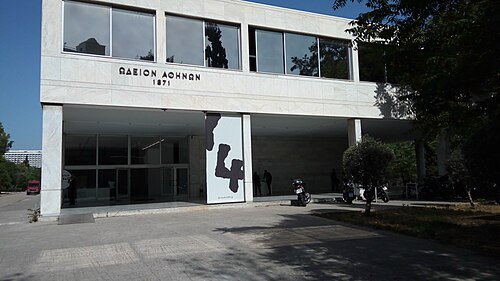
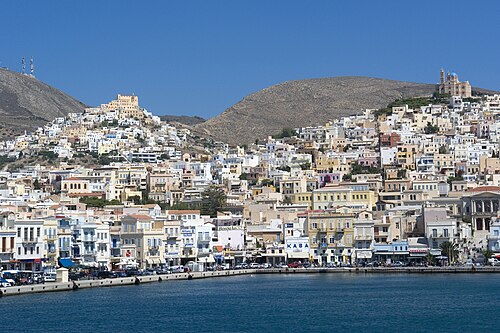
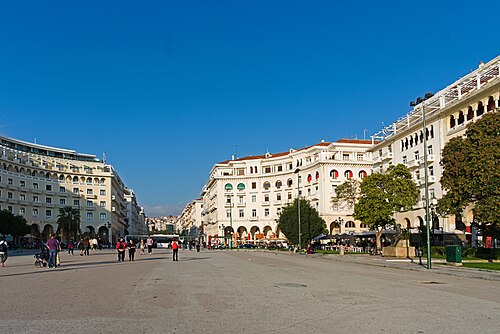
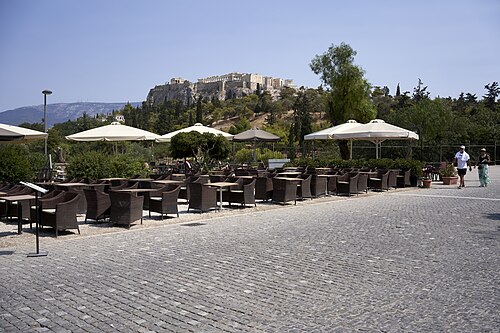
Her chronicle Μια ιστορία της αντίστασης (A Story of the Resistance), first published in the magazine Επιθεώρηση Τέχνης in 1961, is included in the Greek school literature textbook for the last year of upper secondary school, so many Greek students meet her there. In 2000 the ERT series Αντ’ αυτού devoted an episode to her, in which the historian Eleni Glykatzi-Arveler spoke about her. As a learner, start from a place rather than a plot: look at the photograph of Thiseio Square on this page and describe a short route in Modern Greek with στην πλατεία (in the square) and από την πλατεία (from the square), for example Από την πλατεία φαίνεται η Ακρόπολη (From the square you can see the Acropolis). Then report a friend’s sentence with Μου είπε ότι… (He told me that…).
Did you know?
- Her first book, Πλατεία Θησείου (1947), is named after the Athens district where EKEBI records her birth.
- In a 1964 letter from Cyprus she told the novelist Stratis Tsirkas that she hoped the fighting on the island would not last forever.
- The Greek military dictatorship took away her Greek citizenship; she returned to Greece after 1974.
- She was a founding member of the Society of Writers (Εταιρεία Συγγραφέων) in Athens.
Key works
| Greek title | Title | Year |
|---|---|---|
| Πλατεία Θησείου | Thiseio Square — novella | 1947 |
| Ημερολόγιο | Diary — novella | 1952 |
| Σε πρώτο πρόσωπο | In the First Person — novella | 1958 |
| …Και ιδού ίππος χλωρός… | And Behold a Pale Horse — novel | 1963 |
| Σπαράγματα | Fragments | 1973 |
| Χρονικό ενός εφιάλτη | Chronicle of a Nightmare | 1986 |
A line to remember
Θα προσπαθήσω όχι να γράψω —ούτε να μετουσιώσω σε τέχνη μια στιγμή της Αντίστασης— μα απλώς να καταγράψω ένα γεγονός…
Tha prospathíso óchi na grápso —oúte na metousióso se téchni mia stigmí tis Antístasis— ma aplós na katagrápso éna gegonós…
I will try not to write — nor to turn a moment of the Resistance into art — but simply to record an event…