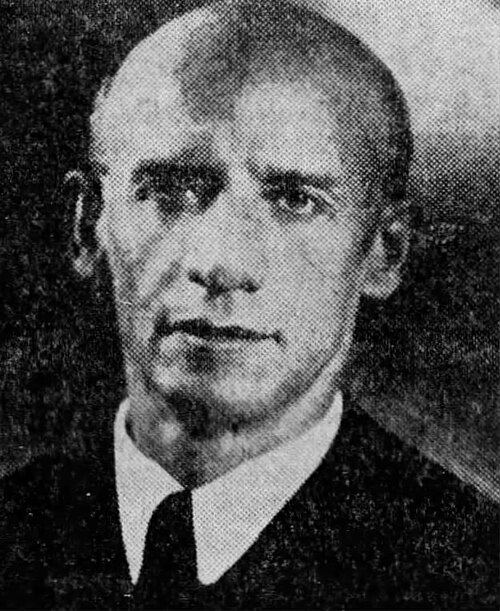
Life
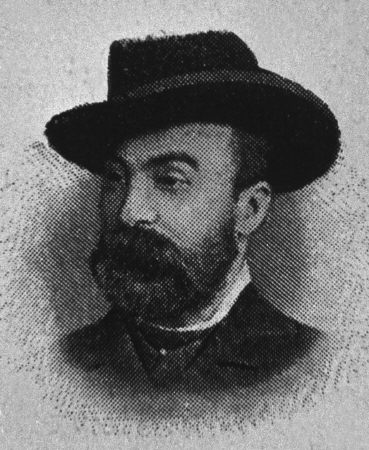
Mitropoulos was born in Athens in 1896 into a deeply religious family; as a boy he even thought of becoming a monk, and the monastic ideal of poverty and service stayed with him all his life. He studied piano and composition at the Athens Conservatory, and in May 1919 his opera Soeur Béatrice, after Maeterlinck, was performed there. In 1920 he left to study in Brussels and then Berlin, where he worked with the composer and pianist Ferruccio Busoni and was an assistant conductor at the Berlin State Opera.
Back in Athens in the mid-1920s he became the conductor of the Conservatory orchestra. His international breakthrough came in Berlin in 1930: when the soloist in Prokofiev's Third Piano Concerto withdrew, Mitropoulos played the piano part and conducted the Berlin Philharmonic from the keyboard. Invitations followed across Europe and then America. In 1937 he became music director of the Minneapolis Symphony Orchestra, which he led until 1949, and he became an American citizen in 1946. In 1949 he moved to the New York Philharmonic, at first sharing the post with Leopold Stokowski and then, from 1951 to 1957, as its sole music director; Leonard Bernstein, whom he had encouraged as a young man, succeeded him. From 1954 he also conducted regularly at the Metropolitan Opera. After heart attacks in 1952 and 1959 he kept working, and on 2 November 1960 he collapsed and died during a rehearsal of Mahler's Third Symphony at La Scala in Milan.
Works

Mitropoulos was a conductor of extraordinary intensity. He conducted with his bare hands, without a baton, and his whole body took part: musicians and critics described his gestures as clawing, trembling, almost wrestling with the sound. His memory was legendary. He learned huge and complex scores, symphonies and whole operas, by heart and conducted rehearsals without the music, calling out page and bar numbers to the orchestra from memory.
His repertoire was as bold as his style. At a time when American audiences wanted mainly the classics, he fought for the music of his own century: Schoenberg, Berg, Krenek, Prokofiev, and above all Mahler, whose symphonies were rarely played then and which he helped to bring back. His concert performance of Berg's opera Wozzeck in New York in 1951 was a landmark. At the Metropolitan Opera he conducted the world premiere of Samuel Barber's Vanessa in 1958, as well as Verdi, Puccini and Strauss. As a young man he had also composed, in a style influenced by Greek folk music and by modernism, though he gave up composing to devote himself to conducting. Off the podium he lived simply and gave away much of what he earned. For many musicians of his time he was an example of art as a vocation rather than a career.
Legacy in Greece today
In Athens the Μέγαρο Μουσικής Αθηνών (Athens Concert Hall) has a hall named after him, the Αίθουσα «Δημήτρης Μητρόπουλος», where concerts are given throughout the season, so you can literally go to a concert in his name. Recordings of Mitropoulos with the New York Philharmonic and the Metropolitan Opera are still reissued and can be found easily online. Greek radio and the concert societies regularly mark his anniversaries. For a learner, the vocabulary of his career is the vocabulary of any concert programme in Greek: ο μαέστρος, η ορχήστρα, η συμφωνία, η πρόβα.
Did you know?
- In 1930 he played the solo part of Prokofiev's Third Piano Concerto and conducted the Berlin Philharmonic at the same time.
- He conducted without a baton and, very often, without a score.
- He died on 2 November 1960 during a rehearsal of Mahler's Third Symphony at La Scala.
- Leonard Bernstein, whom he had encouraged early on, succeeded him at the New York Philharmonic.
Key works
| Greek title | Title | Year |
|---|---|---|
| Soeur Béatrice (όπερα) | Soeur Béatrice (opera, after Maeterlinck) | 1919 |
| Κοντσέρτο για πιάνο αρ. 3 του Προκόφιεφ με τη Φιλαρμονική του Βερολίνου | Prokofiev's Third Piano Concerto with the Berlin Philharmonic, as soloist and conductor | 1930 |
| Μουσικός διευθυντής της Συμφωνικής Ορχήστρας της Μινεάπολης | Music director of the Minneapolis Symphony Orchestra | 1937–1949 |
| Φιλαρμονική της Νέας Υόρκης | The New York Philharmonic (music director 1951–1957) | 1949–1958 |
| Βανέσα του Σάμιουελ Μπάρμπερ, πρώτη παγκόσμια παρουσίαση | World premiere of Samuel Barber's Vanessa, Metropolitan Opera | 1958 |
From the works
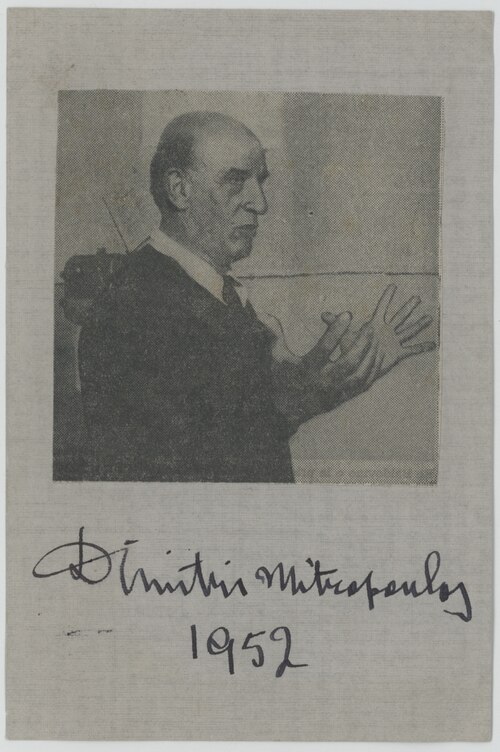

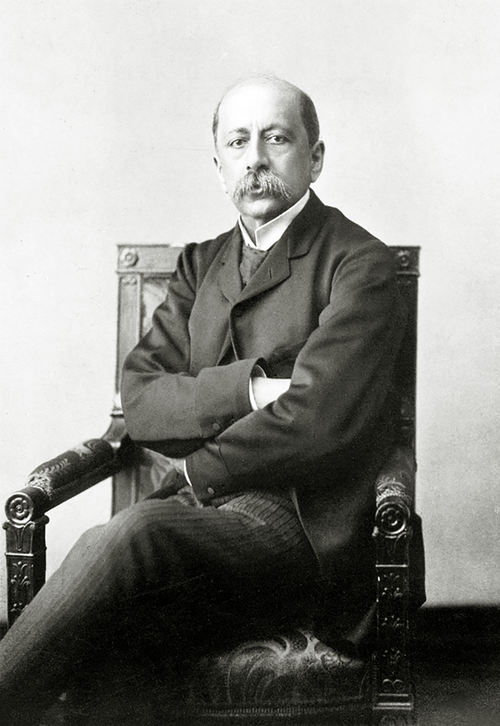
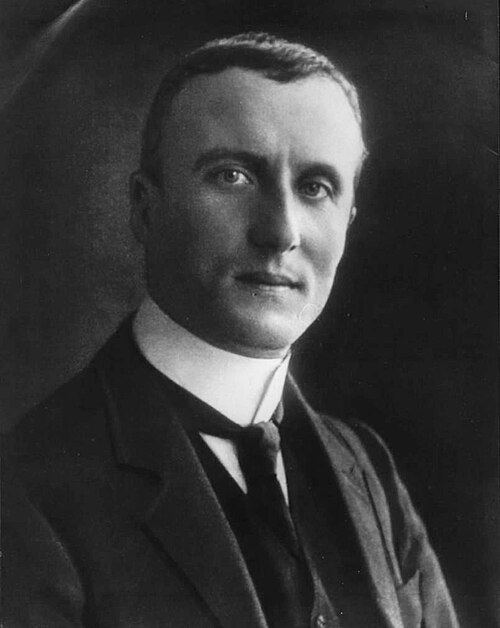
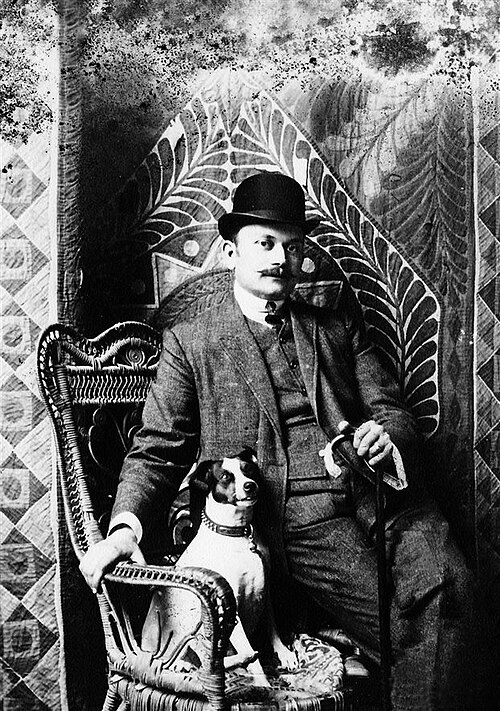
Public-domain pictures from Wikimedia Commons.
A line to remember
Αίθουσα «Δημήτρης Μητρόπουλος»
Aithousa «Dimitris Mitropoulos»
The Dimitri Mitropoulos Hall