Life
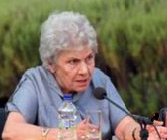
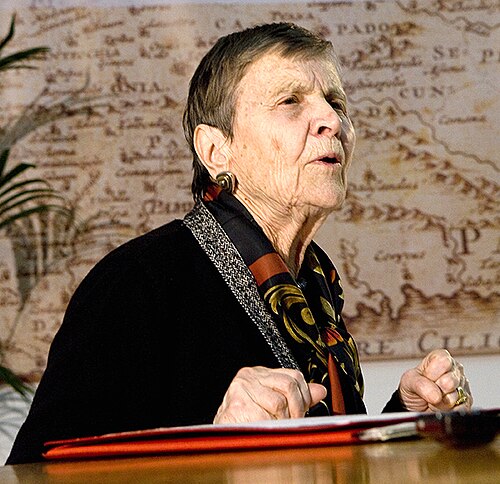
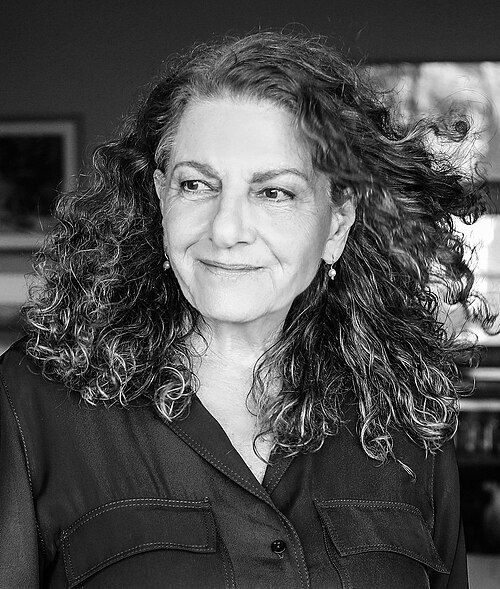
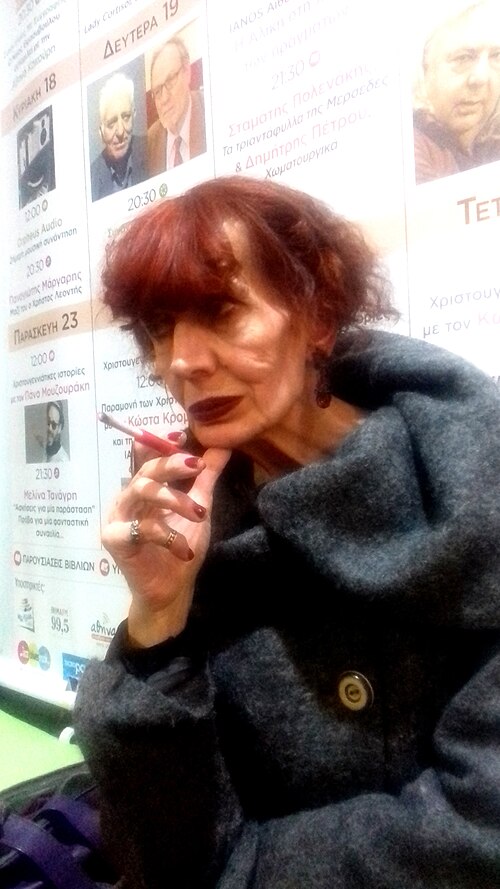
Margarita Karapanou was born in Athens in 1946 and grew up between Greece and France. Her mother was the novelist and playwright Margarita Lymberaki; the shared first name belongs to two distinct literary careers. Karapanou studied cinema in Paris and, after returning to Athens, worked for a period as a kindergarten teacher. The movement between Athens and Paris forms part of her professional and linguistic background. It helps place her within a literary world that crossed national borders while retaining Greek as the language of her novels.
Η Κασσάνδρα και ο λύκος (Kassandra and the Wolf) appeared in Greek in 1976. Its child narrator announced a writer interested in the strangeness inside familiar situations. Ο υπνοβάτης (The Sleepwalker) followed in 1985; its French edition appeared in 1987 and received the Prix du Meilleur Livre Étranger in 1988. Later books include the Greek novel with the French title Rien ne va plus in 1991 and Μαμά (Mother) in 2004. In a 2004 interview she discussed the work needed to make a short phrase precise. She died in 2008. Her papers, preserved by the American School of Classical Studies at Athens, include literary manuscripts, correspondence and photographs, with material documenting both her own career and her mother’s.
Works

Karapanou makes the reader ask who is speaking and how much that voice understands. In Η Κασσάνδρα και ο λύκος, a child’s observations break the adult world into strange, disturbing scenes. The work is a novel for adult readers, despite its young narrator. Familiar objects and family words can acquire frightening or unexpected meanings. In the extract Εθνική εορτή (National Celebration), selected by the Centre for the Greek Language, the child watches a public spectacle and speaks about Greece as a figure on stage. The reader has to consider the distance between what the child describes and the event’s wider significance.
Ο υπνοβάτης places a mixed community on a Greek island and combines satire, mystery and dreamlike events. Rien ne va plus returns to the same relationship through accounts that change the reader’s sympathies and confidence. Its French title belongs to a Greek-language novel. Μαμά compresses family memory and address into short passages. In her 2004 interview, Karapanou explained that a tiny piece of writing could require repeated revision. Brevity is therefore an artistic choice, not a promise of effortless comprehension. For a learner, these books invite work on narrators, contrast, perception verbs and the difference between a statement and its possible meaning. A short annotated selection is a useful first encounter with that method.
Legacy in Greece today
On the Centre for the Greek Language website, open the Kassandra and the Wolf selection Εθνική εορτή in Ιστορία και Λογοτεχνία (History and Literature). Read the opening with vocabulary support and find πήγε and είδα. Ask who the first-person speaker is and what she sees at the stadium. Then describe the same scene in one neutral sentence, separating the child’s impression from your interpretation. Write a sentence of your own beginning Χθες. In the interview quotation, compare ό,τι, whatever, with όσο, as much as. These are small, usable language tasks drawn from an identifiable Greek text. The novel’s short sentences still need attention to irony and viewpoint; the adapted B2 passage provides a supported introduction.
Did you know?
- Margarita Lymberaki was her mother, a separate novelist and playwright.
- Rien ne va plus is a Greek-language novel with a French title.
- The 2004 interview quotation was republished by LiFO in 2016.
Key works
| Greek title | Title | Year |
|---|---|---|
| Η Κασσάνδρα και ο λύκος | Kassandra and the Wolf — first Greek edition | 1976 |
| Ο υπνοβάτης | The Sleepwalker | 1985 |
| Rien ne va plus | Rien ne va plus (No More Bets) | 1991 |
| Μαμά | Mother | 2004 |
A line to remember
Γράφω ό,τι μπορώ. Ζω όσο μπορώ.
Grafo o,ti boro. Zo oso boro.
I write whatever I can. I live as much as I can.