Life
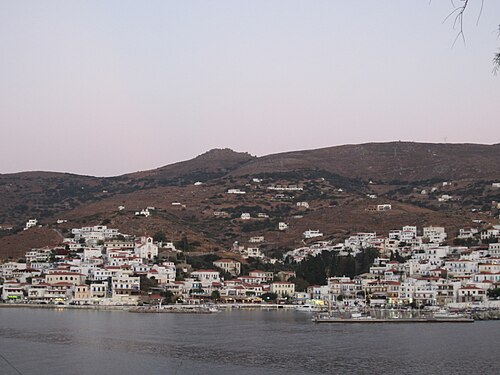
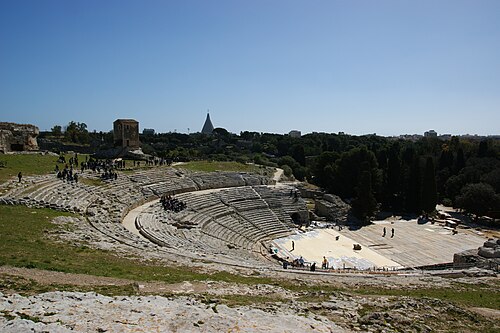
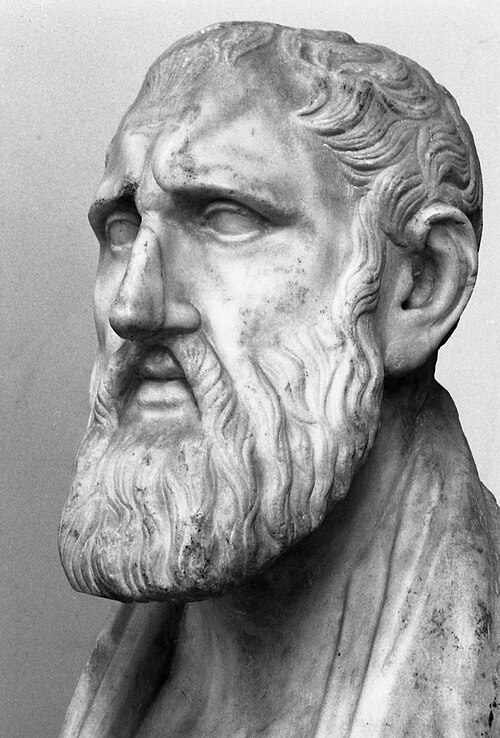
Ancient biographical tradition places Stesichorus between the last quarter of the 7th century and the first half of the 6th century BC. Malcolm Davies and Patrick Finglass, editors of the standard modern edition (2014), date his activity mainly to the first half of the 6th century. Ancient sources connect him with Himera, a Greek city on the north coast of Sicily, while others name Mataurus (Metauros) in southern Italy; scholars still debate whether he was born in one and moved to the other. According to tradition his real name was Teisias, and Στησίχορος, roughly “the one who sets up the chorus”, was a name taken from his work with choral song. The spellings Stesichorus, Stesichoros and Stisichoros all refer to the same poet.
Few facts about his life are secure, and most stories about him were told long after his death. The most famous is reported by Plato in the Φαῖδρος (Phaedrus): Stesichorus lost his sight after speaking badly of Helen of Troy, understood the reason, composed a palinode, a song saying the opposite, and could see again at once. This is an ancient tradition, not a documented event. Some ancient testimony also links him with a stay in Sparta, where Helen was honoured. What can be said with more confidence is that he worked in the Greek cities of the West, in a Doric literary language rich in Homeric words.
Works

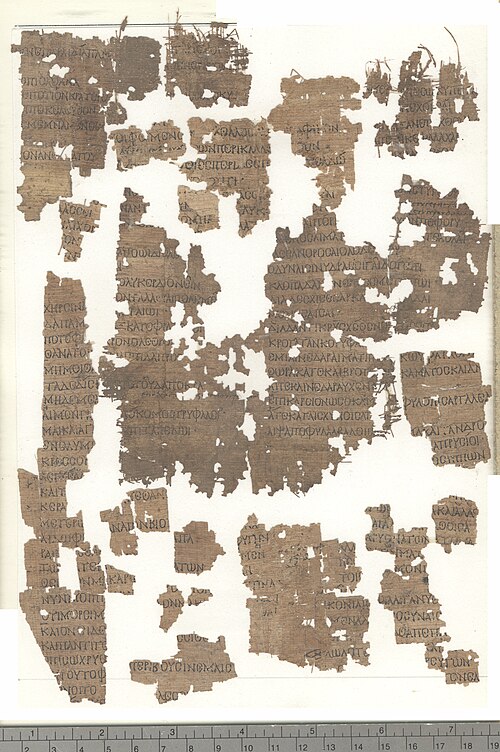
Alexandrian scholars collected Stesichorus’s poetry into 26 books, but only about a hundred fragments survive, most of them short. His titles show his range: the Γηρυονηίς (Geryoneis), on Heracles and the three-bodied monster Geryon; the Ἰλίου Πέρσις (Sack of Troy) and Νόστοι (Returns) from the Trojan cycle; an Ὀρέστεια (Oresteia); and Ἐριφύλη (Eriphyle) from Theban myth. The Roman critic Quintilian wrote that he carried the weight of epic poetry on the lyre. The poems were long: a papyrus of the Geryoneis published in 1967 (P.Oxy. 2617) carries the line number 1300 in its margin, though only about 180 lines are readable. A papyrus at Lille, published in 1976, preserves a mother’s speech to her sons Eteocles and Polynices; its editors gave it to Stesichorus, but not all scholars accept this.
Ancient writers also credited him with the first choral triad of strophe, antistrophe and epode, remembered in the saying τρία Στησιχόρου (the three of Stesichorus). His most discussed poems concern Helen. In the Palinode he denied that she ever sailed to Troy: the lines quoted by Plato begin “this story is not true”. In the version linked with the Palinode, only a phantom (εἴδωλον) of Helen went to Troy. Whether there was one Palinode or two is still debated. Euripides’s play Ἑλένη (Helen) follows this alternative version.
Legacy in Greece today
Stesichorus is read today in Greek anthologies of archaic lyric, including the online handbook of the Centre for the Greek Language (Κέντρο Ελληνικής Γλώσσας), which lists the palinode fragment. His phantom Helen also lives on through Euripides’s Ἑλένη. Try this: read the three quoted lines with our Modern Greek rendering, then write two sentences in Modern Greek. First: Ο Όμηρος λέει ότι η Ελένη πήγε στην Τροία (Homer says that Helen went to Troy). Second: Ο Στησίχορος, όμως, γράφει ότι δεν πήγε ποτέ (Stesichorus, however, writes that she never went). Then add one sentence beginning λέγεται ότι (it is said that) about the blindness story. The B2 level describes this adapted practice, not independent reading of the ancient Doric original.
Did you know?
- According to tradition, his given name was Teisias; Stesichorus means roughly “setter-up of choruses”.
- One Geryoneis papyrus fragment carries the line number 1300.
- Palinode comes from πάλιν (back, in reverse) and ᾠδή (song): a song that says the opposite.
- The ancient saying τρία Στησιχόρου (the three of Stesichorus) refers to the strophe, antistrophe and epode.
Key works
| Greek title | Title | Year |
|---|---|---|
| Γηρυονηίς | Geryoneis — Heracles and Geryon | ? |
| Ἰλίου Πέρσις | The Sack of Troy | ? |
| Ὀρέστεια | Oresteia | ? |
| Ἑλένα | Helen | ? |
| Παλινῳδία | Palinode — the retraction about Helen | ? |
| Θηβαϊκό ποίημα (πάπυρος της Λιλ) | Theban poem — Lille papyrus, attribution debated | ? |
A line to remember
οὐκ ἔστ᾽ ἔτυμος λόγος οὗτος, οὐδ᾽ ἔβας ἐν νηυσὶν εὐσέλμοις, οὐδ᾽ ἵκεο Πέργαμα Τροίας.
In today's GreekΔεν είναι αληθινή αυτή η ιστορία· δεν μπήκες στα καλοφτιαγμένα καράβια, δεν έφτασες στα κάστρα της Τροίας.
ouk ést’ étymos lógos hoûtos, oud’ ébas en nēusìn eusélmois, oud’ híkeo Pérgama Troíās.
This story is not true: you never boarded the well-built ships, you never reached the towers of Troy.