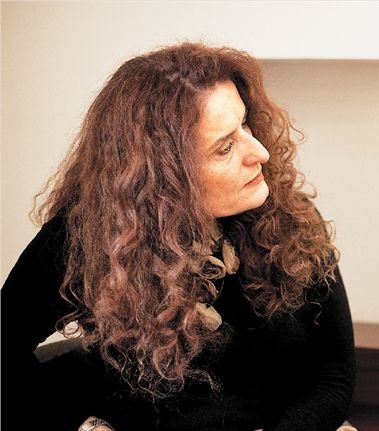
Life
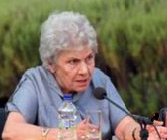
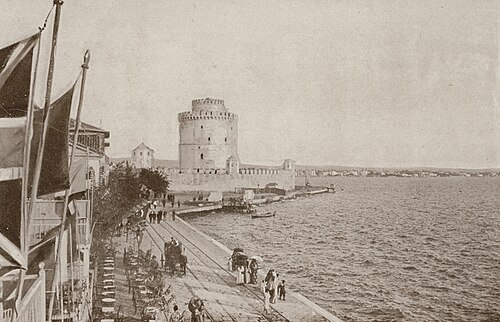
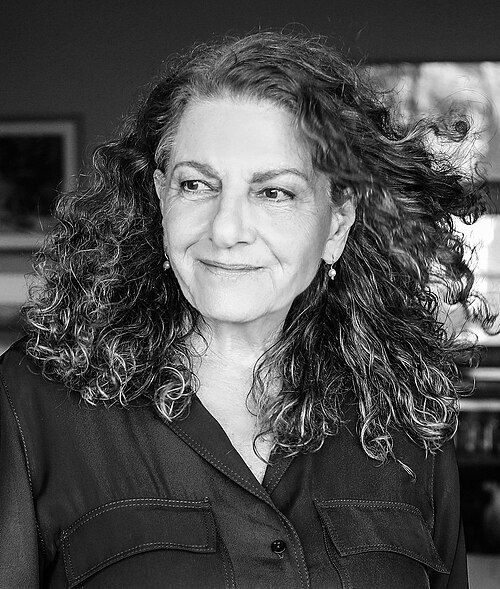
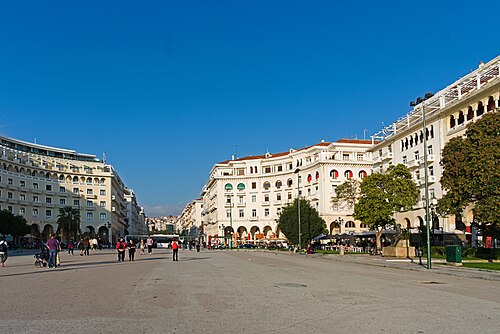
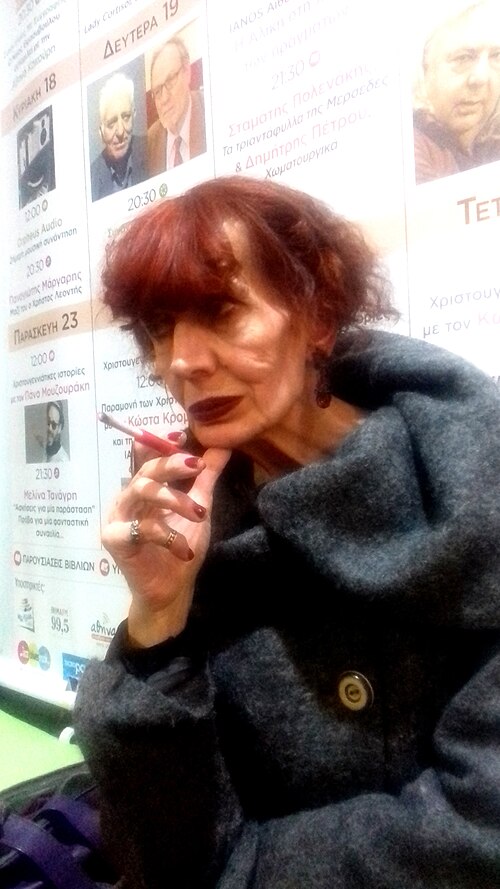
Filippidou was born and raised in Thessaloniki. She studied German Philology at the Aristotle University of Thessaloniki and theatre at the city’s State Conservatory, and spent a year in postgraduate study of dramaturgy at the same university. Her stage experience began in the theatre workshop of the Thessaloniki society Τέχνη (Art), where she was a member from 1971 to 1979, and continued in its Experimental Stage between 1980 and 1985. For eight years she also taught German as an hourly-paid teacher in Sindos, leaving the post soon after it became permanent.
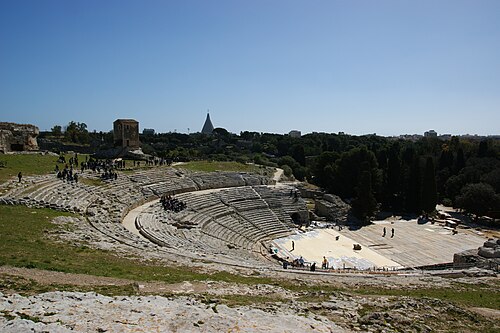
In 1985 she moved to Athens, where she has worked ever since as an actress, director and writer. Her career has taken her to the National Theatre, the Art Theatre Karolos Koun, the Theatre of Kykladon Street “Lefteris Voyiatzis”, the ancient theatre of Epidaurus, the Odeon of Herodes Atticus and festivals such as the Aeschylia. In 2000 she founded the student group Ιδαίοι Δάκτυλοι (Idaean Dactyls) at the cultural foundation Κρητική Εστία (Cretan Hearth), staging twelve productions built from poems, prose and plays. Between 2002 and 2005 she taught theatre and acting in adult-education seminars across Greece. Since 2010 she has been artistic director of the non-profit company τ3χνη, concentrating on research, translation and directing.
Works
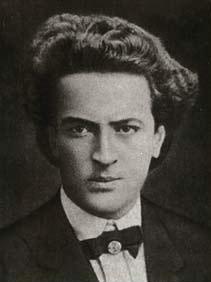
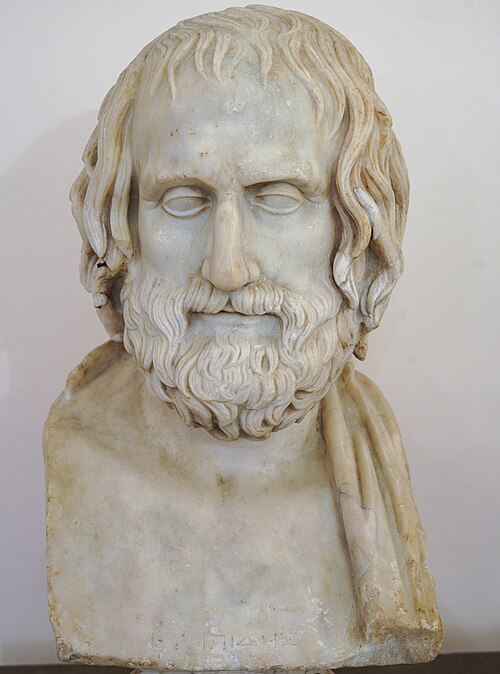
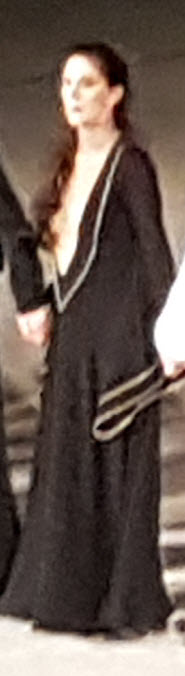
The National Theatre archive lists three of her productions there. In 1997 she played the title role in Φαύστα ή Η απωλεσθείς κόρη (Fausta, or The Lost Daughter), Bostantzoglou’s 1964 parody, directed by Nikos Chatzipapas on the New Stage. In summer 2011 she appeared in Stamatis Fasoulis’s Σκηνοβάτες (Stage-Walkers), a show built from scenes of ancient theatre that opened at Epidaurus and toured Greece; she played Cassandra and a comic phlyax figure called Κλαυταιμνήστρα. In 2015 she translated Samuel Beckett’s Happy Days as Ευτυχισμένες μέρες and played Winnie, the woman buried in a mound of earth who keeps on talking, in Giorgos Maniotis’s production at the Rex theatre.
Translation and directing shape much of her work. In 2018 she staged her translation of J. M. R. Lenz’s wild comedy Η ιστορία του πρίγκιπα της Κούμπα Τάντι (The History of Prince Tandi of Kuba) at the Athens Theatre, also designing sets, costumes and movement. In 2021 she adapted two plays by Konstantinos Christomanos into one performance, Τα τρία φιλιά… Η Σταχτιά γυναίκα (The Three Kisses… The Ash-Grey Woman). She has also published Με μια σκάλα στο φεγγάρι (With a Ladder to the Moon, 2015), which collects her newspaper column Η ματιά της Σοφίας (Sofia’s Gaze), and wrote the play Συγγνώμη, Κύριε Μπέκετ (Sorry, Mr Beckett), staged in 2025.
Legacy in Greece today
Filippidou’s recent work shows another side of Greek theatre: small, independent and close to its audience. In 2023 she turned her rehearsal room in Athens into a 35-seat theatre with free admission and staged Gombrowicz’s Υβόννη, πριγκίπισσα της Βουργουνδίας (Yvonne, Princess of Burgundy); her own Beckett-inspired comedy followed there in 2025. For learners, the National Theatre’s online archive is a good starting point. Open its record for Ευτυχισμένες μέρες (2015) and read the Greek cast list. Then describe the stage picture Beckett asks for in a passive sentence: Η Γουίννυ είναι θαμμένη ως τη μέση σε έναν λόφο από χώμα (Winnie is buried up to her waist in a mound of earth). Finally, report her interview line with είπε ότι (she said that). These practice sentences are our own; Beckett wrote the play in English, and the Greek stage text was her translation.
Did you know?
- As a child, she has said, she answered the question of what she wanted to become with one word: “independent”.
- The National Theatre archive credits her as both the translator of Happy Days and its Winnie in 2015.
- She finished her translation of Lenz’s comedy in 2007, more than ten years before staging it.
- For her 2021 Christomanos production, about 130 actors auditioned over Zoom for three places.
Key works
| Greek title | Title | Year |
|---|---|---|
| Φαύστα ή Η απωλεσθείς κόρη | Fausta, or The Lost Daughter — title role, National Theatre | 1997 |
| Σκηνοβάτες | Stage-Walkers — Cassandra, Epidaurus | 2011 |
| Ευτυχισμένες μέρες | Happy Days — translation and the role of Winnie | 2015 |
| Με μια σκάλα στο φεγγάρι | With a Ladder to the Moon — collected newspaper columns | 2015 |
| Η ιστορία του πρίγκιπα της Κούμπα Τάντι | The History of Prince Tandi of Kuba — translation and direction | 2018 |
| Συγγνώμη, Κύριε Μπέκετ | Sorry, Mr Beckett — her own play | 2025 |
A line to remember
Όταν μικρή με ρωτούσαν τι θέλω να γίνω σαν μεγαλώσω, εγώ απαντούσα «ανεξάρτητη».
Ótan mikrí me rotoúsan ti thélo na gíno san megalóso, egó apantoúsa «anexártiti».
When I was little and people asked me what I wanted to be when I grew up, I would answer “independent”.