grecfacilegrecfacile
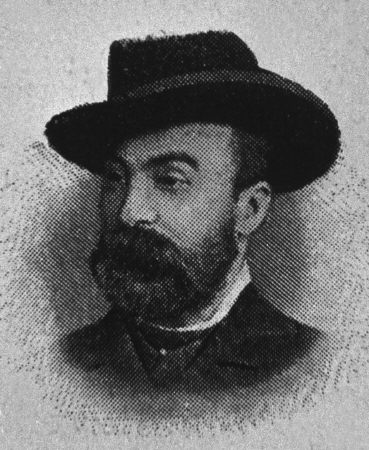
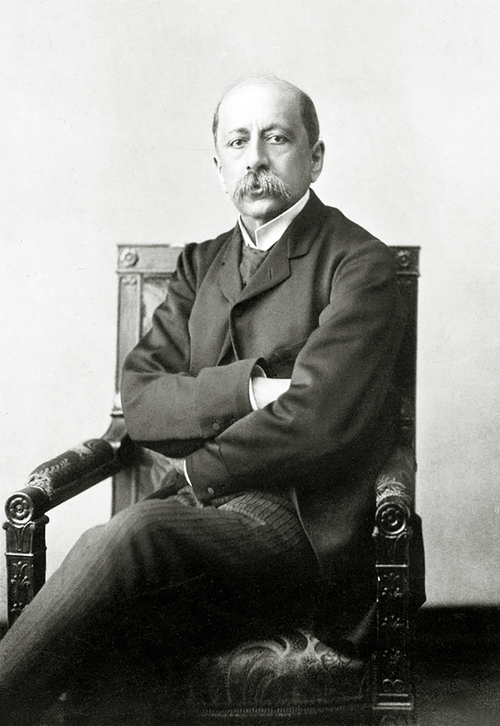
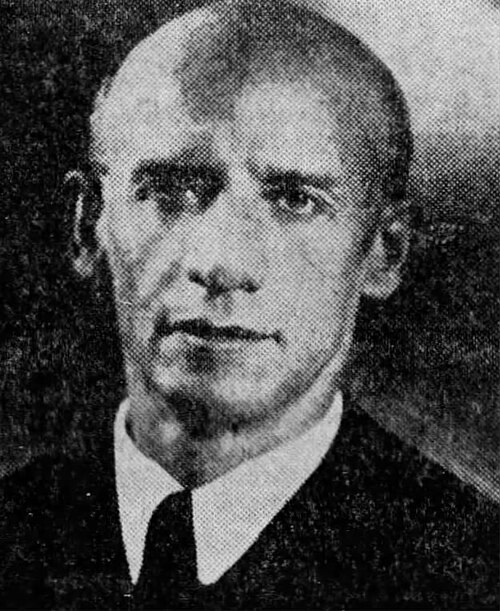
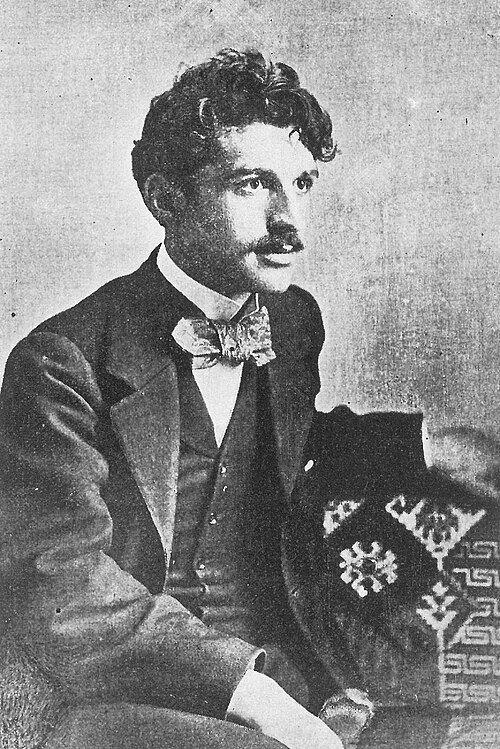
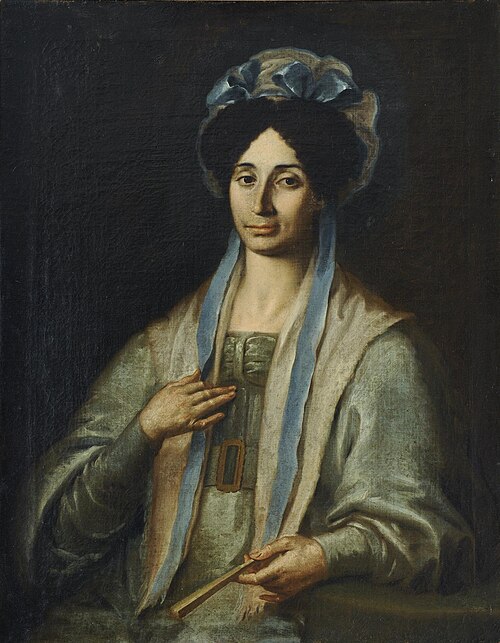
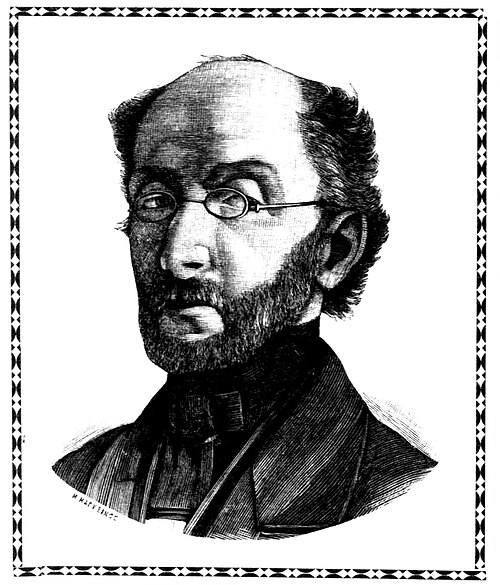
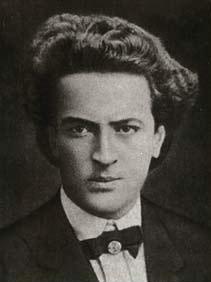
Nikolaos Mantzaros
Unknown author · Public domain · Wikimedia Commons

B2Modern Greece · Composer and music teacher

Nikolaos Mantzaros

Νικόλαος Μάντζαρος

1795 – 1872 · Corfu · Naples

Nikolaos Halikiopoulos Mantzaros (1795–1872) was a composer and teacher from Corfu. He is remembered above all for the music of the Ύμνος εις την Ελευθερίαν (Hymn to Liberty), the poem by Dionysios Solomos whose first two stanzas became the national anthem of Greece in 1865 and later of Cyprus. Research now also highlights his Italian-trained theory teaching and his long, unpaid work for the Philharmonic Society of Corfu.

Life

Mantzaros was born in Corfu in October 1795, the only son of an aristocratic family; his father, Iakovos, was a lawyer. His mother, Regina Turini, whose family came from Zadar in Dalmatia, gave him his first lessons in theory and piano. His father had hoped he would study medicine, but the boy went on to train with the best teachers on the island. Like his family, he never treated music as a profession: until the end of his life he described himself as a κτηματίας (landowner), and he taught without accepting fees.

His first works, three concert arias and the one-act comic piece Don Crepuscolo, were presented in Corfu in 1815. From 1819 he spent long periods in Italy, especially Naples, where he came to know the veteran composer Niccolò Zingarelli. He settled in Corfu again in 1826 and later declined an offer to direct a music school in Naples. When Dionysios Solomos moved to Corfu in 1828, the two became close friends. In April 1841 Mantzaros became artistic director for life of the Philharmonic Society of Corfu, founded in 1840, which combined a free music school with concerts. The Ionian Islands, under British protection since 1815, joined Greece in 1864. He died in Corfu in 1872.

Works

Mantzaros’s early works, written between 1815 and 1827, absorbed the operatic style of Italy; their texts were in Italian. From the late 1820s he began setting Greek poetry, much of it by Solomos. His first setting of the Ύμνος εις την Ελευθερίαν, written around 1828–1830 for four-part male choir, is the one whose opening became the anthem. He returned to the poem several times. In 1844 he offered King Otto a new, more elaborate setting in the hope that it would become the national anthem; it was not adopted, but he received the Silver Cross of the Order of the Redeemer. In 1861, at the request of the minister for military affairs, he made a further version in march style.

The words and the music have different authors: Solomos wrote the poem in 1823, and Mantzaros composed the music later. After the union of 1864, King George I heard the hymn in Corfu, and in 1865 its first two stanzas were made the official national anthem. Mantzaros also wrote sacred music, piano sinfonie and works for band. From the 1840s he turned increasingly to counterpoint and wrote harmony manuals such as the Studio pratico dell’Armonia for his students. A 2023 doctoral thesis at the Ionian University describes him as the first Greek to teach Western music theory systematically.

Legacy in Greece today

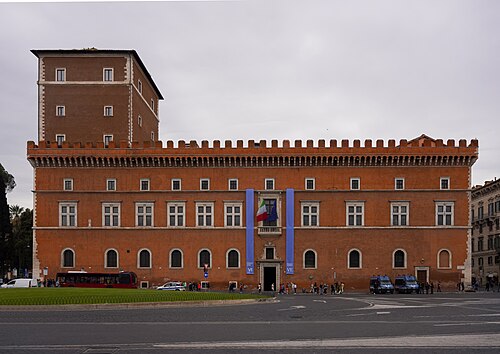
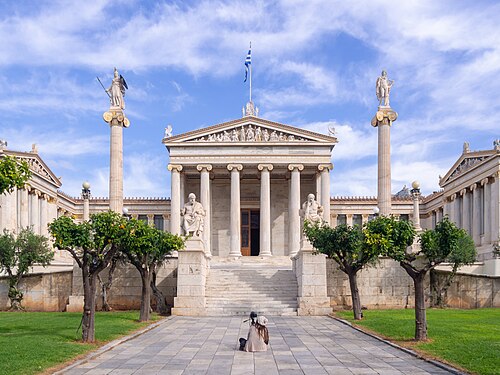
Greek school celebrations, medal ceremonies and national holidays feature Mantzaros’s melody, usually without his name. In Corfu his legacy is especially visible: the Philharmonic Society of Corfu still teaches music and plays in public processions, another band is named “Mantzaros”, and in 2022 the island’s philharmonic bands were entered in Greece’s National Inventory of Intangible Cultural Heritage. In 2025 the Academy of Athens presented an exhibition about him. Try this: listen to a choral performance of the anthem, which is sung in Solomos’s Greek, while reading the first stanza, which begins Σε γνωρίζω από την κόψη (I know you by the edge). Then write two sentences with ο ένας… ο άλλος…, for example Ο ένας έγραψε τους στίχους, ο άλλος τη μουσική (One wrote the words, the other the music).

Did you know?

  • The same melody serves as the national anthem of both Greece (since 1865) and Cyprus (since 1966).
  • Mantzaros called himself a landowner, not a professional musician, and taught without fees.
  • His one-act comic piece Don Crepuscolo of 1815 has an Italian libretto.
  • A handwritten piano sinfonia by him is shown in the Music Museum of the Philharmonic Society of Corfu.

Key works

Greek titleTitleYear
Don CrepuscoloDon Crepuscolo — one-act comic piece (Italian libretto)1815
Τρεις άριες του 1815Three concert arias for voice and orchestra1815
Ύμνος εις την Ελευθερίαν (α΄ μελοποίηση)Hymn to Liberty — first setting, for male choirc. 1830
Ύμνος εις την Ελευθερίαν (μελοποίηση για τον Όθωνα)Hymn to Liberty — setting offered to King Otto1844
Ύμνος εις την Ελευθερίαν (εκδοχή εμβατηρίου)Hymn to Liberty — version in march style1861

A line to remember

…ολοένα αναδεικνύεται σε μέχρι προσφάτως λανθάνοντα συνδετικό κρίκο μεταξύ επτανησιακών μορφών…

…oloéna anadeiknýetai se méchri prosfátos lanthánonta syndetikó kríko metaxý eptanisiakón morfón…

…he increasingly emerges as a link, hidden until recently, between figures of the Ionian Islands…
Κώστας Καρδάμης, μουσικολόγος, για τον Μάντζαρο· βιογραφία «Νικόλαος Χαλικιόπουλος Μάντζαρος» (Fagotto), όπως παρατίθεται στο «Το Βήμα», 26.2.2016
B2

Read about Nikolaos Mantzaros in Greek (B2)

Words from the passage

  • line of verse; lyric
  • I set to music
  • I establish officially
  • payment; fee
  • education
  • accessible
  • scholar; researcher
  • I tell apart

Try a free B2 lessonNo account needed for the first three exercises.

Others at level B2

Modern Greece · PoetKiki Dimoula1931 – 2020Modern Greece · PoetAngelos Sikelianos1884 – 1951Antiquity · TragedianEuripidesc. 480 BC – 406 BCModern Greece · PoetKostis Palamas1859 – 1943Modern Greece · Short-story writer and poetGeorgios Vizyinos1849 – 1896Antiquity · Historian and soldierXenophonc. 430 BC – c. 354 BCAntiquity · Biographer and essayistPlutarchc. 46 – c. 120Antiquity · PhilosopherHeraclitusc. 535 BC – c. 475 BCAntiquity · StatesmanPericlesc. 495 BC – 429 BCModern Greece · StatesmanEleftherios Venizelos1864 – 1936Modern Greece · First Governor of GreeceIoannis Kapodistrias1776 – 1831Modern Greece · PoetLorentzos Mavilis1860 – 1912Modern Greece · Novelist, short-story writerAndreas Karkavitsas1865 – 1922Modern Greece · Film and theatre directorMichael Cacoyannis1922 – 2011Modern Greece · ComposerVangelis1943 – 2022Modern Greece · NovelistDido Sotiriou1909 – 2004Modern Greece · Playwright and lyricistIakovos Kambanellis1922 – 2011Modern Greece · Prime minister, reformerCharilaos Trikoupis1832 – 1896Modern Greece · Novelist, essayistGiorgos Theotokas1905 – 1966Modern Greece · NovelistPantelis Prevelakis1909 – 1986Modern Greece · PoetTasos Livaditis1922 – 1988Modern Greece · MathematicianConstantin Carathéodory1873 – 1950Modern Greece · PainterKonstantinos Parthenis1878 – 1967Modern Greece · PainterYannis Moralis1916 – 2009Modern Greece · SculptorTakis (Panagiotis Vassilakis)1925 – 2019Modern Greece · ConductorDimitri Mitropoulos1896 – 1960Modern Greece · Stage actressMarika Kotopouli1887 – 1954Modern Greece · Writer, art criticZacharias Papantoniou1877 – 1940Modern Greece · ArchaeologistSpyridon Marinatos1901 – 1974Modern Greece · BenefactorEvangelos Zappas1800 – 1865Modern Greece · Rock singer, songwriterPavlos Sidiropoulos1948 – 1990Modern Greece · Rebetiko composer, bouzoukiYannis Papaioannou1913 – 1972Modern Greece · ChemistLeonidas Zervas1902 – 1980Modern Greece · ArchaeologistGeorge Mylonas1898 – 1988Modern Greece · PainterAglaia Papa1904 – 1984Antiquity · Choral poetAlcmanModern Greece · Stage actressAmalia MoutousiModern Greece · Choreographer · dancerAngeliki Stellatou1963Antiquity · Literary compilerAthenaeus2nd c. ADAntiquity · Biographer · history of philosophyDiogenes Laertius3rd c. ADModern Greece · Historian · ByzantinistEleni Glykatzi-Arveler1926 – 2026Modern Greece · AutobiographerElisavet Moutzan-Martinengou1801 – 1832Antiquity · Comic poetEpicharmusc. 540 BC – c. 460 BCModern Greece · Novelist · poetErsi Sotiropoulou1953Modern Greece · Novelist; short-story writerGalateia Saranti1920 – 2009Modern Greece · Film director · screenwriterYorgos Lanthimos1973Modern Greece · Speculative novelist and storytellerIoanna Bourazopoulou1968Modern Greece · Actress · theatre managerKakia Analyti1934 – 2002Modern Greece · Stage and TV actorKatia Dandoulaki1948Antiquity · Bronze sculptorLysipposModern Greece · Actress · acting teacherMary Aronic. 1914 – 1992Modern Greece · NovelistMargarita Karapanou1946 – 2008Modern Greece · Poet, playwright and translatorMaria Laina1947 – 2023Modern Greece · Singer · songwriterMaria PapageorgiouModern Greece · Novelist · essayistMaro Vamvounaki1948Modern Greece · Poet; translatorMatsi Hatzilazarou1914 – 1987Modern Greece · Singer · composerMichalis Hatzigiannis1978Modern Greece · Film directorNikos Panagiotopoulos1941 – 2016Modern Greece · Painter · sculptorOpy Zouni1941 – 2008Antiquity · Historian · political inquiryPolybiusc. 200 BC – c. 118 BCModern Greece · Novelist · historical fictionRea Galanaki1947Modern Greece · Novelist · playwrightRina Katselli1938 – 2021Modern Greece · Poet · translatorRita Boumi-Papa1906 – 1984Modern Greece · Stage actress · director · translatorSofia FilippidouAntiquity · Lyric poetStesichorusc. 630 BC – c. 555 BCModern Greece · Novelist · short-story writerTatiana Gritsi-Milliex1920 – 2005Modern Greece · Novelist · journalistVassilis Alexakis1943 – 2021Antiquity · Philosopher · Stoic founderZeno of Citiumc. 334–333 BC – c. 262–261 BCModern Greece · Film and stage actressZoe Laskaric. 1942 – 2017Modern Greece · Novelist · short-story writerZyranna Zateli1951

All personalities →