Life
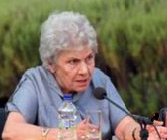
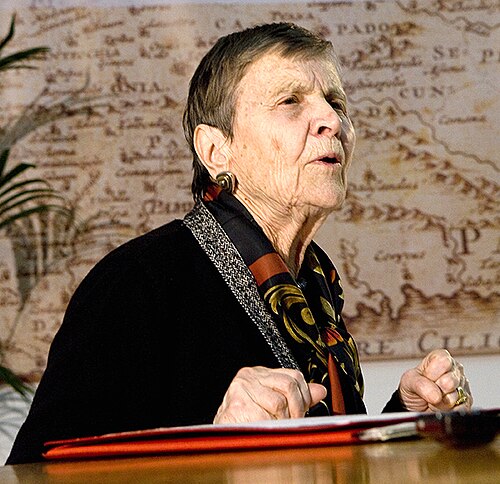
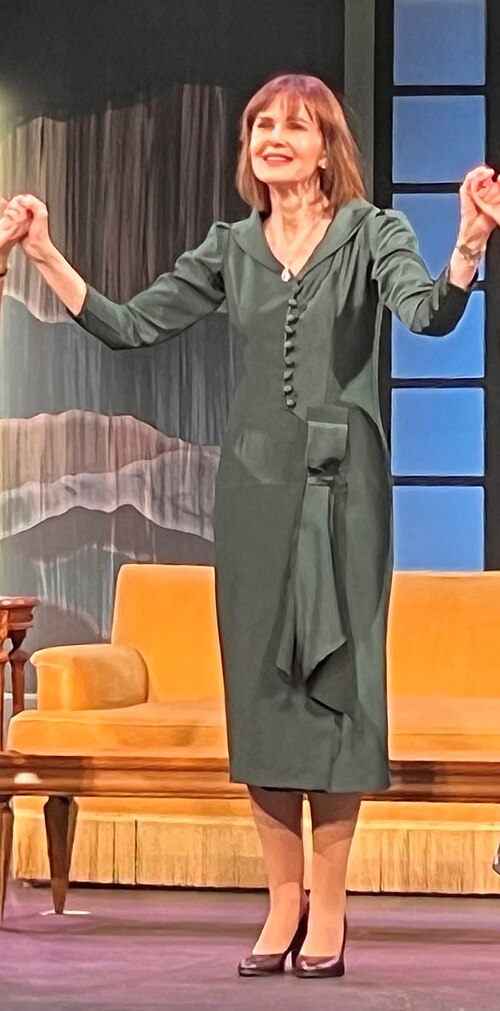
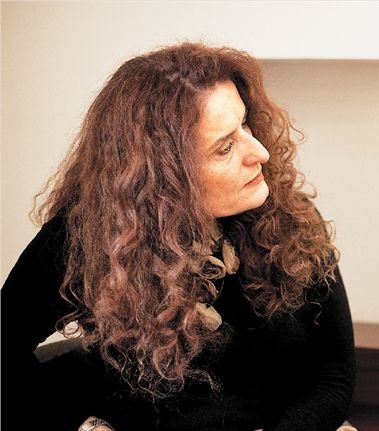
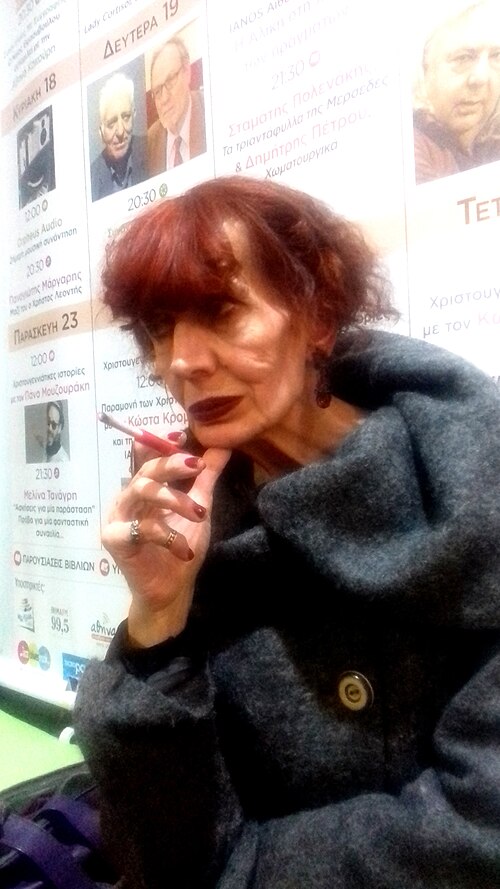
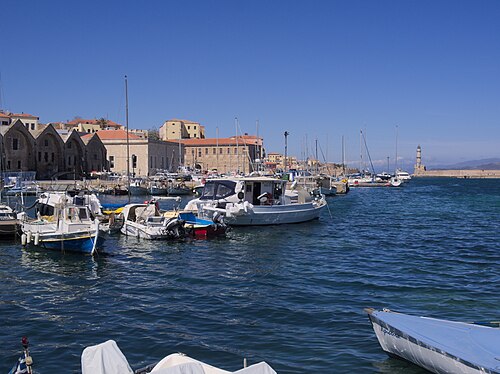
Maro Vamvounaki, also spelled Vamvounakis, was born in Chania, Crete, in 1948 and spent her early childhood there. While she was still a child, her family moved to Athens: her publisher says she was ten, other biographies say nine, and in a 2015 interview she recalled leaving just as she was starting the sixth grade of primary school. Her first picture of Athens, she said, was arriving at the port of Piraeus at dawn. She went on to study law and psychology.
From 1972, for eleven years, she lived on Rhodes and worked as a notary. In the same 2015 interview she called Rhodes the homeland she chose, since she could not return to Chania. In a 2020 interview with Athens Voice she explained that writing had never been her profession: she was a notary for many years and then a psychologist, and those jobs supported her and her son. She now lives in Athens.
Her first book, the short-story collection Ο Αρχάγγελος του καφενείου (The Archangel of the Coffee House), came out in 1978. Since then she has published dozens of books with several Athens publishers. Psichogios, her main publisher today, lists twenty-one of her works and says that her books have been translated in France, Germany, Korea, Russia, Armenia and the Netherlands.
Works
Vamvounaki writes mainly about love and what it does to people: desire, jealousy, waiting, loneliness and the fear of being hurt. Her best-known novel, Το χρονικό μιας μοιχείας (Chronicle of an Adultery), first appeared in 1981 with the publisher Domos and is still reprinted by Psichogios. The publisher introduces it with a series of questions: do we love people, or only love itself? Do we love what others give us, or what we expect them to give?
Other novels from her first decades include Ντούλια (Doulia, 1984), Η μοναξιά είναι από χώμα (Loneliness Is Made of Earth, 1987) and Οι παλιές αγάπες πάνε στον παράδεισο (Old Loves Go to Paradise, 1990). In a 2016 interview she named Ντούλια as the book closest to her and the one that hurt her most to write. The Centre for the Greek Language includes Ντούλια among the books in its online literary guide to Chania.
Her studies in psychology also shaped a series of essays and books about relationships and the unconscious. Later novels such as Η δικηγόρος (The Lawyer, 2015) and Γυναίκες της αναμονής (Women of Waiting, 2020) return to the same questions. She describes her method as impulsive: she does not plan a book in advance, but lets the story and the characters lead her.
Legacy in Greece today
Vamvounaki's books have been on Greek bookshop shelves for more than four decades, and many of her early novels have been reissued by Psichogios. Her name also appears in the Centre for the Greek Language's literary guide to Chania, beside writers such as Maro Douka and Nikos Kazantzakis. For a Greek task, open the Psichogios page for Το χρονικό μιας μοιχείας and read the questions in its description. Find the verbs αγαπάμε (we love) and περιμένουμε (we wait for, we expect). Then write two sentences of your own about something in your life: Μου αρέσει… γιατί… (I like… because…) and Με φοβίζει… γιατί… (…frightens me because…). Notice that μου αρέσει and με φοβίζει both put the person who feels in a pronoun, μου or με, and not as the subject.
Did you know?
- As a child she wanted to become a ballerina, she told LiFO in 2009.
- She says she has no writing routine at all, because a routine would unsettle her.
- She calls herself a σπιτόγατος (a homebody, literally "house cat") since childhood.
- For her, psychology, and psychoanalysis in particular, is in itself a great path to poetry.
Key works
| Greek title | Title | Year |
|---|---|---|
| Το χρονικό μιας μοιχείας | Chronicle of an Adultery | 1981 |
| Ντούλια | Doulia | 1984 |
| Η μοναξιά είναι από χώμα | Loneliness Is Made of Earth | 1987 |
| Οι παλιές αγάπες πάνε στον παράδεισο | Old Loves Go to Paradise | 1990 |
| Η δικηγόρος | The Lawyer | 2015 |
| Γυναίκες της αναμονής | Women of Waiting | 2020 |
A line to remember
Συνεχώς κάτι γράφω από παιδί, είτε εκδίδεται είτε όχι. Γράφοντας καταλαβαίνω τι μου γίνεται καλύτερα.
Synechós káti gráfo apó paidí, íte ekdídetai íte óchi. Gráfontas katalavéno ti mou gínetai kalýtera.
I have always been writing something since I was a child, whether it gets published or not. By writing, I understand better what is happening to me.