Life
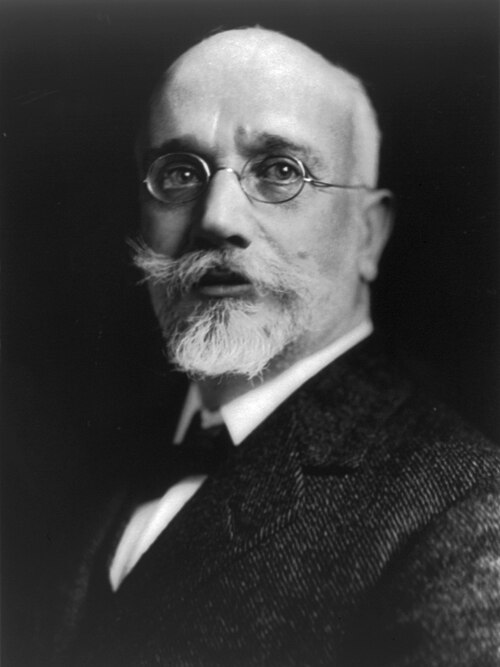
Venizelos was born on 23 August 1864 in Mournies, a village outside Chania, when Crete was still an Ottoman province. He studied law in Athens and returned to Chania as a lawyer and journalist. In the autonomous Cretan State created in 1898 he served as minister of justice, quarrelled with its ruler Prince George, and in 1905 led the armed revolt of Therisos, which forced the prince out and made Venizelos the leading man on the island.
In 1909 Greek officers staged the coup of Goudi and invited the Cretan outsider to Athens. He arrived in 1910, won the elections and became prime minister in October. Reforms followed at speed: a revised constitution in 1911, labour laws, a rebuilt army and navy. He then built the Balkan League, and in the Balkan Wars of 1912–13 Greece took Thessaloniki, Ioannina, Macedonia, Epirus, Crete and the eastern Aegean islands, growing from 2.7 to 4.8 million inhabitants.
The First World War set him against King Constantine I, who insisted on neutrality while Venizelos wanted to join the Entente. He resigned twice in 1915, set up a rival government in Thessaloniki in 1916 and returned to power in 1917 after the king was forced to leave. This Εθνικός Διχασμός (National Schism) poisoned politics for decades. The Treaty of Sèvres (1920) brought Smyrna, but he lost the elections of November 1920 and the Asia Minor campaign ended in the Catastrophe of 1922. He signed the Treaty of Lausanne in 1923, governed again in 1928–32, and after a failed coup by his supporters in 1935 fled to Paris, where he died on 18 March 1936.
Works

Venizelos' achievements are treaties, reforms and borders. The constitution of 1911 modernised the Greek state, and his first government passed the first social legislation. The Balkan Wars, prepared by his diplomacy and the alliance with Serbia, Bulgaria and Montenegro, are the reason Thessaloniki, Crete and Ioannina are Greek today.
The Treaty of Sèvres, signed in August 1920, was the high point of the Μεγάλη Ιδέα (Great Idea), the dream of a Greece including all the Greeks of the East: it gave Greece eastern Thrace and the region of Smyrna, «the Greece of two continents and five seas». Within three years it was dead. His most lasting work was the opposite of Sèvres: the Treaty of Lausanne of July 1923, which fixed the Greek–Turkish border on the Evros and, with the exchange of populations agreed in January 1923, moved some 1.2 million Orthodox Christians from Turkey to Greece and about 400,000 Muslims the other way. The settlement of the refugees, in new quarters around Athens, Piraeus and Thessaloniki, transformed Greek society, its music and its food.
His government of 1928–32 built roads and schools, drained the marshes of Macedonia and, in 1930, signed a friendship agreement with Kemal Atatürk's Turkey, closing the century of war between the two nations; in 1934 Venizelos nominated Atatürk for the Nobel Peace Prize. He was a brilliant parliamentary speaker and negotiator, charming the statesmen of Paris and London in fluent French and English; Lloyd George called him the greatest statesman Greece had produced since Pericles.
Legacy in Greece today
Arriving in Greece most visitors land at Athens International Airport «Eleftherios Venizelos», opened in 2001, and the main avenue of central Athens, Panepistimiou, is officially named Ελευθερίου Βενιζέλου, as is a street in almost every Greek town. His house in the Chalepa district of Chania is a museum, run by the National Research Foundation that bears his name, and the Venizelos Museum in Eleftherias Park in Athens preserves the house where he lived; his grave, with that of his son Sophoklis, stands on the hill of Profitis Ilias at Akrotiri above Chania, looking over the bay. Greek school history books treat his years as a chapter of their own, and the words βενιζελικός and αντιβενιζελικός, Venizelist and anti-Venizelist, still describe a family's political tradition. The site's B1 listening exercise on a history lesson is a good place to hear these events told in Greek.
Did you know?
- He was born an Ottoman subject and did not live in Athens until he was forty-five; within months of arriving he was prime minister.
- He survived two assassination attempts: at the Gare de Lyon in Paris in August 1920, days after signing the Treaty of Sèvres, and on the road to Kifisia in June 1933, when his wife Helena was wounded.
- In 1934 he nominated Mustafa Kemal Atatürk, the man who had defeated the Greek army in 1922, for the Nobel Peace Prize.
- After his death in Paris his body was taken by ship straight to Crete, bypassing Athens, to avoid clashes between his supporters and opponents.
Key works
| Greek title | Title | Year |
|---|---|---|
| Επανάσταση του Θερίσου | Therisos revolt in Crete | 1905 |
| Αναθεώρηση του Συντάγματος | Revision of the Greek constitution | 1911 |
| Βαλκανικοί Πόλεμοι | Balkan Wars | 1912–13 |
| Συνθήκη των Σεβρών | Treaty of Sèvres | 1920 |
| Συνθήκη της Λωζάννης | Treaty of Lausanne | 1923 |
| Ελληνοτουρκικό Σύμφωνο Φιλίας | Greek–Turkish friendship agreement with Atatürk | 1930 |
From the works


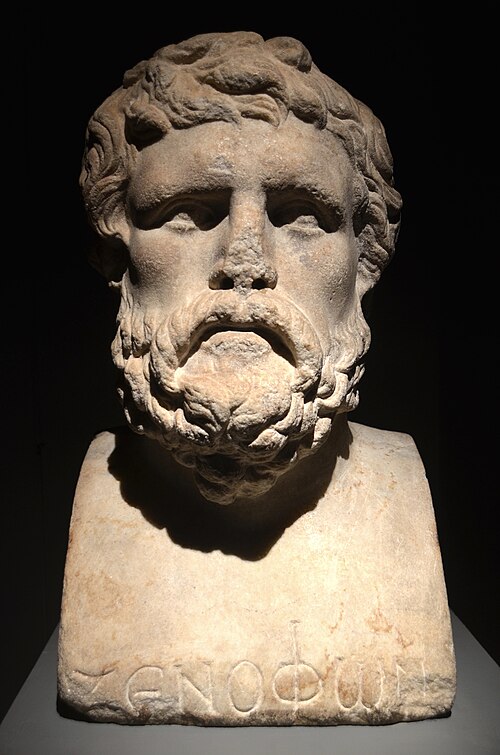
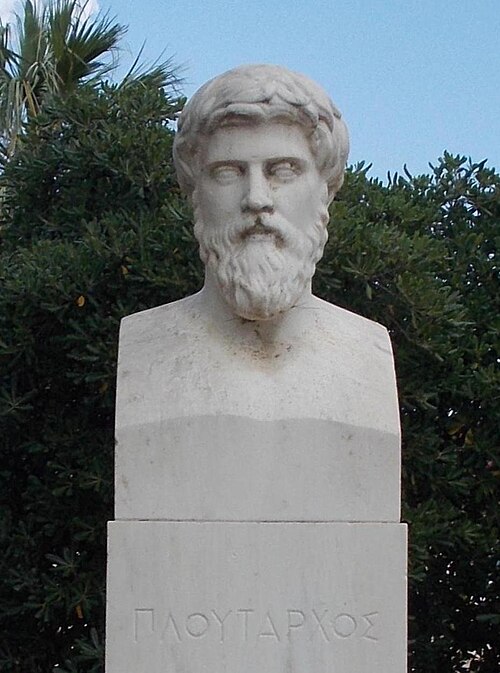
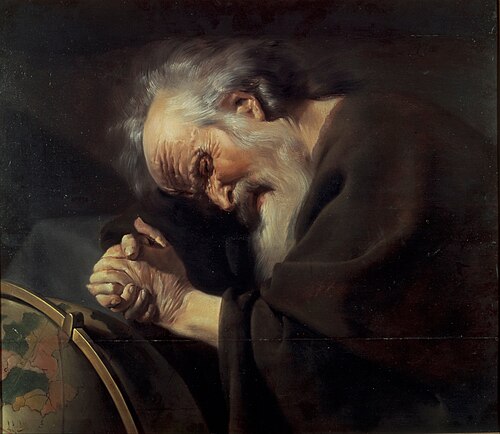
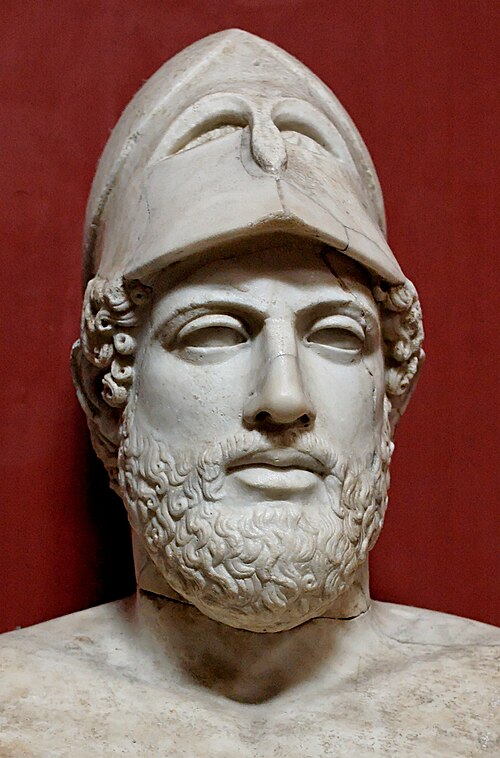
Public-domain pictures from Wikimedia Commons.
A line to remember
Η Ελλάς των δύο ηπείρων και των πέντε θαλασσών
I Ellas ton dyo ipeiron kai ton pente thalasson
The Greece of two continents and five seas
From the original
The text as Eleftherios Venizelos wrote it, out of copyright, with our own translation beside it.
«Θουκυδίδου Ἱστορίαι, μετάφρασις Ἐλευθερίου Βενιζέλου»Thucydides, History, in Venizelos' translation
Venizelos' own prose rather than a speech: in the years out of office he translated the whole of Thucydides, and this is Pericles' portrait of Athenian democracy in the Funeral Oration as the statesman rendered it into the Greek of his own day.
Thucydides 2.37 (Pericles' Funeral Oration) in Venizelos' translation, written in the 1920s and published in 1940 · Public-domain text, source: el.wikisource.org