Life
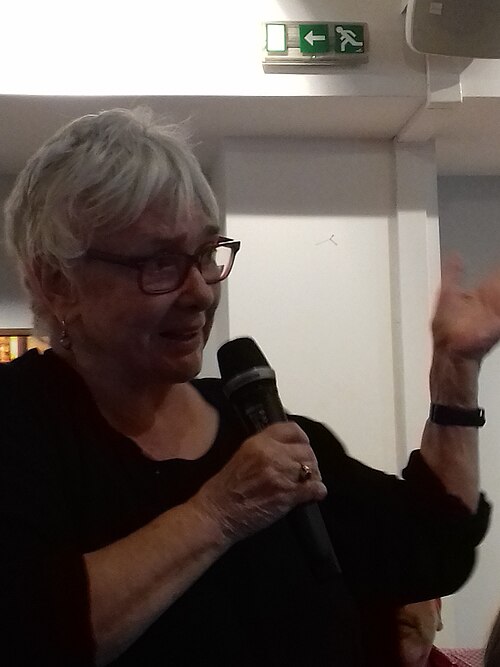
Nora Valsami was born Eleonora Valsamidou in Cairo, where she grew up and learned dance and rhythmics. The biographical site San Simera gives her birth date as 24 January 1945; the Finos Film website gives 1948. In Athens she trained at the drama school of Giorgos Theodosiadis, and while still a student she made her stage debut in 1965 in Aristophanes’ Εκκλησιάζουσες (Assemblywomen). A brief appearance as a schoolgirl in the 1963 comedy Ο καζανόβας (The Casanova) is also listed in her filmography.
Her real start in cinema came with Dinos Dimopoulos’s comedy Τζένη Τζένη (Jenny Jenny, 1966), in which she played a nightclub singer whose song was dubbed by Keti Chomata. Producer Filopimin Finos then offered her an exclusive contract, and twenty of her twenty-three films were made by his company. She played a girl held in a reformatory, opposite Zoe Laskari, in Η Στεφανία (Stefania, 1967) and moved between comedy and drama until Οι βάσεις και η Βασούλα (The Bases and Vasoula, 1975), her last film.
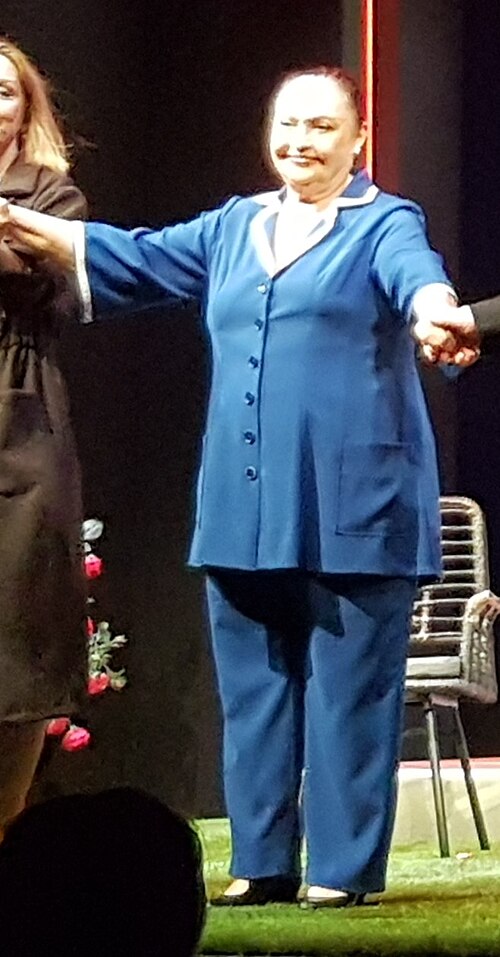
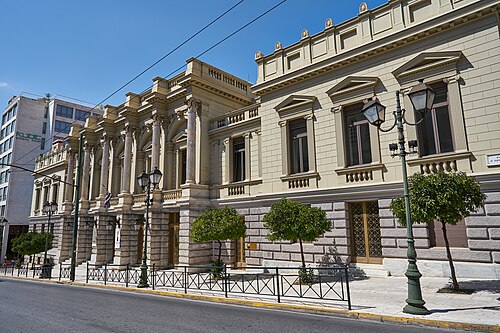
After Finos’s death in 1977 she worked with leading theatre companies. In 1979 she signed with the National Theatre, where she played the Bride in Lorca’s Blood Wedding (1980) and, in 1992, her first tragic role in Sophocles’ Antigone. She married the director Errikos Andreou in 1973; he died in 2023.
Works
Valsami’s screen persona was shaped inside Finos Film in the late 1960s, the studio that dominated popular Greek cinema with comedies, musicals and melodramas. Its own profile of her says that she played her parts with ease and naturalness. She took a leading role in Οι κυρίες της αυλής (The Ladies of the Court, 1966), met the demands of dramatic parts in Η Στεφανία and Πυρετός στην άσφαλτο (Fever on the Asphalt, 1967), and brought a light, natural touch to comedies such as Η θεία μου η χίπισσα (My Aunt the Hippie, 1970).
Television gave her a second career. Her husband Errikos Andreou adapted novels by Grigorios Xenopoulos for state television, and she played the lead in series such as Αφροδίτη (Aphrodite, 1977), a serial of 26 episodes, Η Αναδυομένη (Rising from the Sea, 1978) and Μυστικοί αρραβώνες (Secret Engagements). In 1980 she played Dafni in Αστροφεγγιά (Starlight), ERT’s adaptation of I. M. Panagiotopoulos’s autobiographical story about a generation growing up in Athens between the First World War and 1922. On stage, the National Theatre’s Blood Wedding, directed by Alexis Solomos with music by Manos Hadjidakis, revealed a tragic intensity far from her film ingénues. Later she appeared in Wilde’s An Ideal Husband and Sartre’s Dirty Hands.
Legacy in Greece today
Finos Film still presents Valsami in its artist archive, and her films remain part of its catalogue. For learners, her work offers spoken Modern Greek of the 1960s to the 1980s in clear, everyday situations. Choose a short scene from Οι κυρίες της αυλής or an episode of Αστροφεγγιά in the ERT archive (archive.ert.gr). Listen for one request and its answer, and notice how tone, politeness or irony change what is meant. Then write a new four-line dialogue of your own that makes the same kind of request in a different setting, starting for example with Θα μπορούσατε να μου πείτε…; (Could you tell me…?). Paraphrase rather than copy the script, and compare a formal and a familiar version of your dialogue.
Did you know?
- Her birth name is Eleonora Valsamidou.
- In Τζένη Τζένη (1966) she is seen singing, but the voice is Keti Chomata’s.
- Filopimin Finos used to say «Η Νόρα είναι δικό μας παιδί» (Nora is our own child).
- Her first tragic role came in 1992, in Sophocles’ Antigone at the National Theatre.
Key works
| Greek title | Title | Year |
|---|---|---|
| Οι κυρίες της αυλής | The Ladies of the Court | 1966 |
| Η Στεφανία | Stefania | 1967 |
| Αφροδίτη (τηλεοπτική σειρά) | Aphrodite — TV series after Xenopoulos | 1977 |
| Η Αναδυομένη (τηλεοπτική σειρά) | Rising from the Sea — TV series after Xenopoulos | 1978 |
| Αστροφεγγιά (τηλεοπτική σειρά) | Starlight — ERT TV series, as Dafni | 1980 |
| Ματωμένος γάμος (Εθνικό Θέατρο) | Blood Wedding — the Bride, National Theatre | 1980 |
A line to remember
Η Φίνος Φιλμ ήταν ένας παραμυθένιος κόσμος.
I Fínos Film ítan énas paramythénios kósmos.
Finos Film was a fairy-tale world.