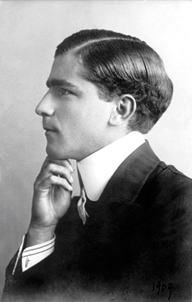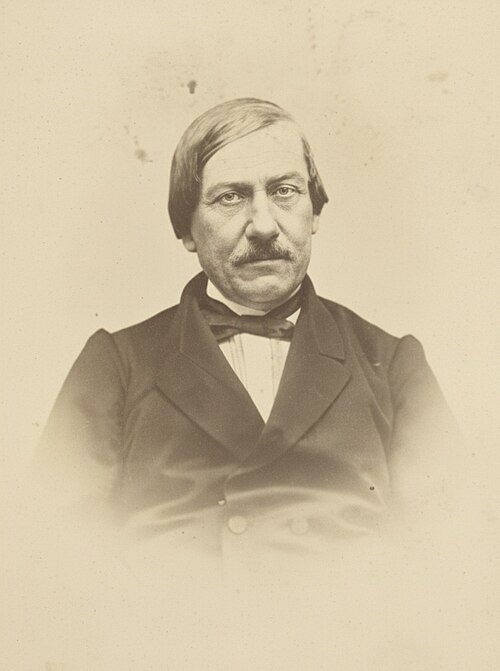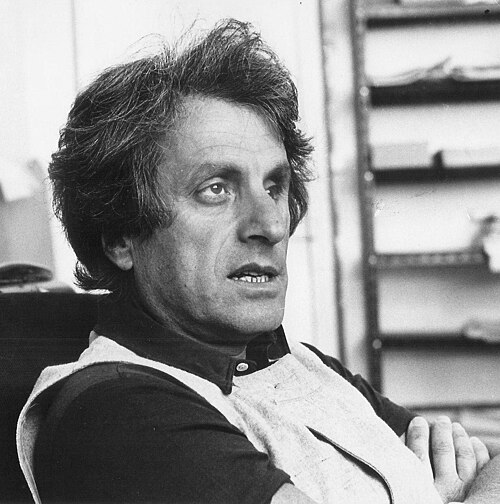
Life
Xenakis was born in 1922 in Brăila, a Danube port in Romania with a prosperous Greek community. His mother died when he was a child, and at ten he was sent to a boarding school on the island of Spetses, where he discovered ancient Greek literature, mathematics and music. In 1940 he entered the Athens Polytechnic to study civil engineering, but the war came first. During the Occupation he joined the left-wing Resistance, and in the fighting that broke out in Athens between the Left and the British-backed government in December 1944, he was hit in the face by a shell fragment at the turn of the year 1945. He lost his left eye and carried the scar all his life.
He graduated in 1947 but, as a known leftist in a country sliding into civil war, he was in danger. He left Greece secretly for Paris, and was condemned in absentia. In Paris he found work as an engineer in the studio of Le Corbusier, where he stayed until 1959, becoming an architect in his own right. At the same time he studied composition and took Olivier Messiaen's classes; Messiaen famously advised him not to start again from traditional harmony but to use his mathematics and his architecture in music. Xenakis took French citizenship in 1965. He could return to Greece only after the fall of the dictatorship in 1974, and from then on he came back often. He died in Paris in 2001.
Works

Xenakis's music begins where architecture and mathematics meet. In Metastaseis (Μεταστάσεις, 1953–54), first performed in Donaueschingen in 1955, every one of the many string players has an individual part, and dozens of glissandi slide together to form vast curved surfaces of sound; the same ruled surfaces, the hyperbolic paraboloids, reappear in the walls of the Philips Pavilion that he designed for Le Corbusier at the Brussels World's Fair of 1958. Remembering the noise of crowds and gunfire in occupied Athens, he asked how thousands of individual events could form one mass of sound, and he answered with the laws of probability: in Pithoprakta (1955–56) the statistics of gas molecules shape the movement of the orchestra. He called this stochastic music and explained it in his book Musiques formelles (1963).
His Greekness runs through everything, from the titles, almost all in Greek, to his return to ancient drama. His Oresteia (1965–66), after Aeschylus, for choirs and ensemble, is one of the high points of his work, and he wrote music for other ancient tragedies as well. In the Polytopes he united light, architecture and sound into immense spectacles, from Montreal (1967) and Persepolis (1971) to Mycenae in 1978, where the ancient citadel itself became the stage. As an architect he also designed the undulating glass façades of Le Corbusier's monastery of La Tourette.
Legacy in Greece today
In Greece, Xenakis has become a symbol of the Greek who carried his country into the avant-garde: the national broadcaster, orchestras and the major festivals regularly perform his works, and anniversaries such as the centenary of his birth in 2022 brought concerts and exhibitions. His titles are a lesson in Greek in themselves, Μεταστάσεις, Πιθοπράκτα, Ορέστεια, Πέρσεπολις, and the challenge for a learner is to decode them. Listen to Metastaseis once with your eyes closed, then read about the Philips Pavilion; it is the best way to understand how one mind could be both architect and composer. His Oresteia also leads straight back to Aeschylus.
Did you know?
- He lost his left eye after being hit by a shell fragment in the Athens fighting of 1944–45.
- The same curved surfaces appear in the score of Metastaseis and the walls of the Philips Pavilion.
- Messiaen told him not to study traditional harmony but to compose with his mathematics.
- His Polytope of Mycenae (1978) turned the ancient citadel into a stage of light and sound.
Key works
| Greek title | Title | Year |
|---|---|---|
| Μεταστάσεις (Metastaseis) | Metastaseis, for orchestra | 1953–1954 |
| Πιθοπράκτα (Pithoprakta) | Pithoprakta, for orchestra | 1955–1956 |
| Περίπτερο της Philips, Έκθεση των Βρυξελλών | Philips Pavilion, Brussels World's Fair (with Le Corbusier) | 1958 |
| Ορέστεια | Oresteia, after Aeschylus | 1965–1966 |
| Πολύτοπο των Μυκηνών | Polytope of Mycenae | 1978 |
From the works


Public-domain pictures from Wikimedia Commons.
A line to remember
Μεταστάσεις
Metastaseis
Metastaseis: transformations, movements beyond stillness