Life
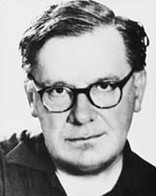
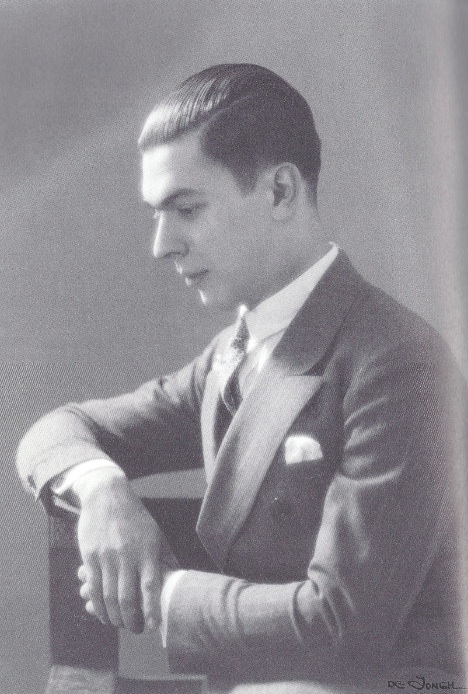
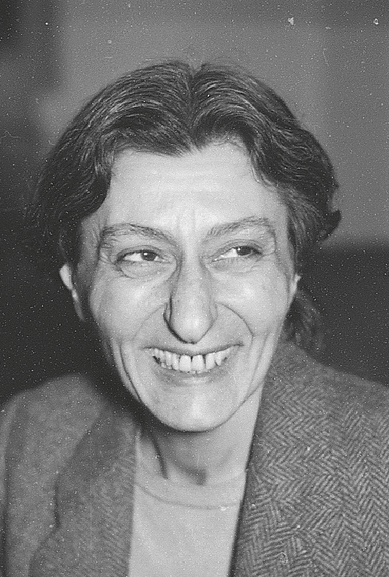
Castoriadis was born in Constantinople on 11 March 1922, and his family moved to Athens a few months later, as the Greek presence in Turkey came to an end. He studied law, economics and political science at the University of Athens, and as a teenager he joined the communist youth under the Metaxas dictatorship. During the Occupation he broke with the Communist Party and joined a Trotskyist group, which made him a target of both the Stalinists and the right.
In December 1945 he left Piraeus on the ship Mataroa, which carried a group of young Greek intellectuals and artists with French scholarships to Paris, among them Kostas Axelos and Kostas Papaioannou. In Paris he soon left the Trotskyist movement and, with Claude Lefort, founded the group and review Socialisme ou Barbarie (1949–1965), whose critique of bureaucracy in both East and West influenced the generation of May 1968. To earn a living he worked from 1948 to 1970 as an economist at the OEEC, later the OECD; as a foreign national he wrote his political texts under pseudonyms such as Pierre Chaulieu and Paul Cardan.
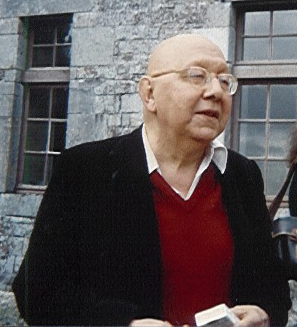
After becoming a French citizen in 1970 he left the OECD, trained as a psychoanalyst and practised from the early 1970s. In 1980 he became director of studies at the École des Hautes Études en Sciences Sociales. He returned often to Greece for lectures and interviews, which drew large audiences. He died in Paris on 26 December 1997.
Works

Castoriadis began as a Marxist critic of the Soviet Union, which he analysed as a society ruled by a new bureaucratic class. By the early 1960s he concluded that Marxism itself, with its faith in economic laws and historical necessity, could not explain how societies really change, and he abandoned it.
His answer is set out in L'Institution imaginaire de la société (1975), in Greek Η φαντασιακή θέσμιση της κοινωνίας (The Imaginary Institution of Society). Every society, he argues, creates itself: its gods, laws, values and meanings are not dictated by nature, God or history but are inventions of a collective «radical imaginary». Most societies hide this from themselves and attribute their rules to an external source; he calls them heteronomous. An autonomous society is one that knows that it makes its own laws and can therefore question and change them, and an autonomous individual is one who reflects on what he thinks and does.
For Castoriadis this project of autonomy was born twice: in the ancient Greek polis, with democracy and philosophy, and in modern Western Europe, with its revolutions and its critical thought. He insisted that Athens was not a model to copy but a germ to develop. His essays, collected from 1978 in the series Les Carrefours du labyrinthe (Crossroads in the Labyrinth), range from psychoanalysis to ecology, and in La montée de l'insignifiance (The Rise of Insignificance, 1996) he denounced a consumer society that had lost its political passion.
Legacy in Greece today
In Greece Castoriadis has become something of a household name among readers of philosophy and politics: his books are translated, mostly by the publisher Ύψιλον, his televised interviews of the 1980s and 1990s circulate widely online, and phrases such as «η άνοδος της ασημαντότητας» (the rise of insignificance) and the «project of autonomy» turn up in newspaper columns and in debates about direct democracy. A good place to start is one of those Greek interviews, where he speaks a clear, lively Greek, or his lectures on ancient Athens. His central notions, the imaginary institution and autonomy, are part of the vocabulary of social theory worldwide.
Did you know?
- He sailed to France on the Mataroa in December 1945, with dozens of young Greek intellectuals who would make careers abroad.
- For more than twenty years he was a senior economist at the OECD while writing revolutionary texts under pseudonyms.
- He was philosopher, economist and practising psychoanalyst at once.
- He saw the Athenian polis as a germ to develop, not a model to copy.
Key works
| Greek title | Title | Year |
|---|---|---|
| Socialisme ou Barbarie (επιθεώρηση) | Socialisme ou Barbarie (review) | 1949–1965 |
| Η φαντασιακή θέσμιση της κοινωνίας | The Imaginary Institution of Society | 1975 |
| Τα σταυροδρόμια του λαβυρίνθου | Crossroads in the Labyrinth | 1978 |
| Η αρχαία ελληνική δημοκρατία και η σημασία της για μας σήμερα | Ancient Greek Democracy and Its Significance for Us Today (lecture) | 1986 |
| Η άνοδος της ασημαντότητας | The Rise of Insignificance | 1996 |
From the works


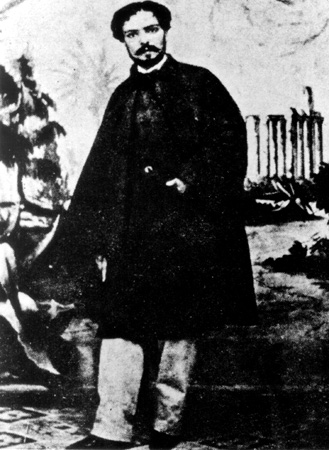
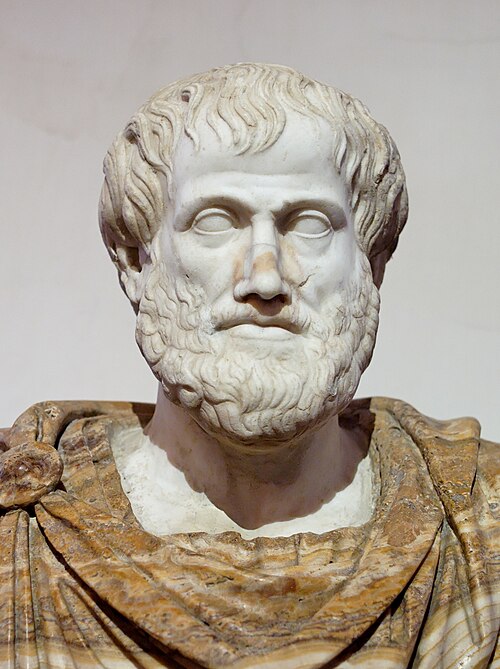
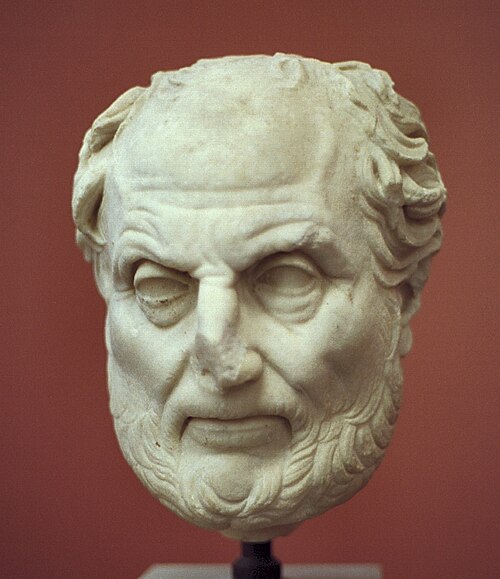
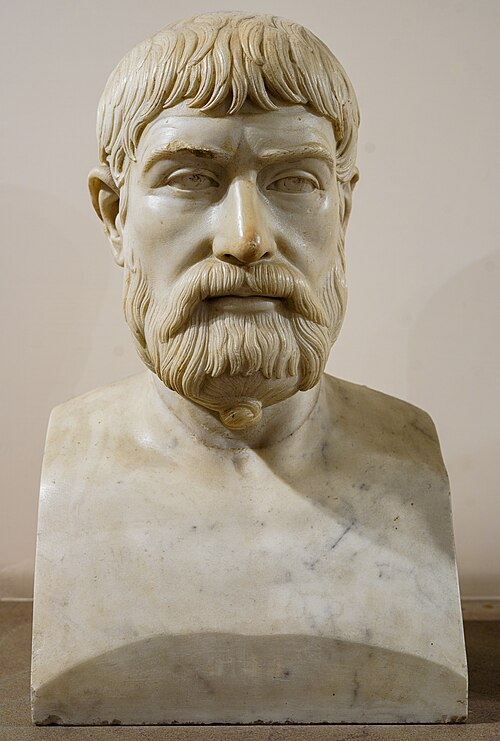
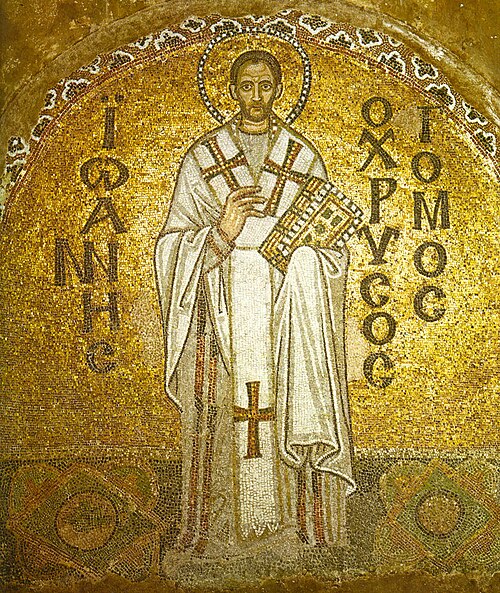
Public-domain pictures from Wikimedia Commons.
A line to remember
Η άνοδος της ασημαντότητας
I anodos tis asimantotitas
The rise of insignificance