Life
Alexandra Papadopoulou was born in Constantinople in 1867; one Greek reference work gives 1876, but her age at death points to 1867. She trained at the well-known Pallas girls’ school of the city and qualified as a teacher. She taught there and also worked as a private tutor, including for the children of the doctor Fotis Fotiadis, a leading supporter of the spoken language in education. In 1887 she published the women’s almanac Ημερολόγιον των Κυριών (Ladies’ Almanac).
Her public activity attracted hostility. In 1893 she founded a Progressive Ladies’ Society, which the Constantinople newspaper Νεολόγος (Neologos) attacked harshly. In 1896 she co-edited the literary review Φιλολογική Ηχώ (Literary Echo) with the poet Ioannis Gryparis. In 1899 the Patriarchate’s Central Educational Committee barred her from teaching in its schools, and she moved to Bucharest. There she taught without pay at the girls’ school of the Evangelismos school and wrote for the Greek newspaper Πατρίς (Patris).
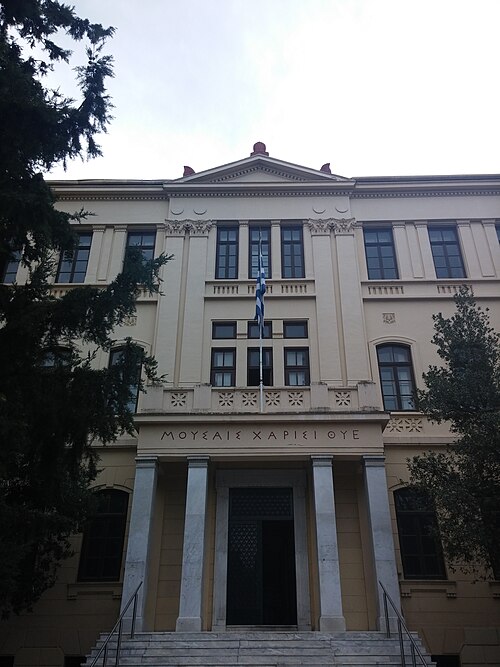
Around 1905 she became head of a practical girls’ school in Thessaloniki, then still part of the Ottoman Empire. She died of cancer at the Balıklı Greek hospital in Constantinople on 8 March 1906, aged 39.
Works

Papadopoulou wrote mainly short stories, around 140 of them, scattered across periodicals such as Εστία (Estia), Παναθήναια (Panathinaia) and Πινακοθήκη (Pinakothiki). She used at least seven pseudonyms, among them Βυζαντίς (Byzantine woman), Ανατολίτισσα (Woman of the East) and Θρακοπούλα (Thracian girl). Her first collection, Δεσμίς διηγημάτων (A Bundle of Stories), appeared in Constantinople in 1889 with a preface by the young Grigorios Xenopoulos, who praised her sparkling style, wit, tenderness and irony. A further volume of 1891 included the novella Περιπέτειαι μιας διδασκαλίσσης (Adventures of a Schoolmistress), which draws on her own experience as a teacher. The novella Ημερολόγιον της δεσποινίδος Λεσβίου (Diary of Miss Lesviou) followed in 1894 and is noted for its psychological insight.
Most of her stories are urban: middle-class and wealthy Greek women of Constantinople, their families, marriages and social pretensions. Later she also wrote Byzantine stories such as Στο μοναστήρι (At the Monastery, 1902–1903), about ninth-century court intrigue; a novel on Anna Komnene survived only in manuscript and is now lost. Her language moves between the learned katharevousa and the spoken language. In Η γιαγιά (The Grandmother), set in Therapia on the Bosphorus, an almost blind grandmother raises five grandchildren by making needle lace, and the youngest asks for a gift of eyes for her.
Legacy in Greece today
For decades Papadopoulou was almost forgotten. The philologist Giannis Papakostas reconstructed her life in a 1980 study and later edited her stories; since 1987 several Greek publishers have reissued them, and scholars of women’s writing and education now cite her as a pioneer. Her story Η γιαγιά (The Grandmother) can be read free on Greek Wikisource. Read the final scene and list every way the characters are named or addressed: η γιαγιά (the grandmother), το Γεωργάκι (little Giorgos), η μανούλα (mummy), μάτια μου (my darling, literally my eyes). Note who speaks and who stays silent. Then rewrite two learned phrases in today’s Greek, for example διά να ιδή as για να δει (so that she may see).
Did you know?
- She was the only woman among the authors of Ελληνικά διηγήματα (Greek Short Stories), an anthology published in 1896.
- One of her pseudonyms was Σατανίσκη (Little She-devil).
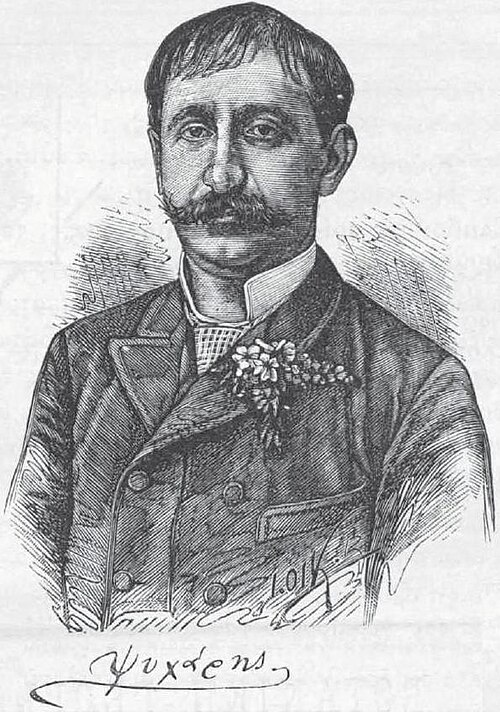
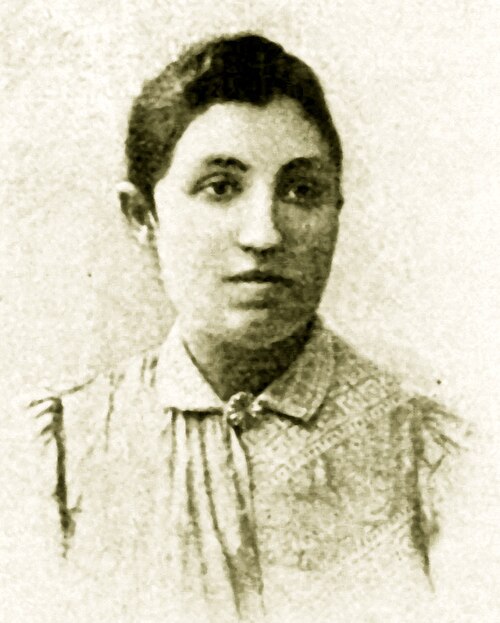
- Only one photograph of her is known; it appeared in a Greek almanac of 1907, the year after her death.
- Her novel about the Byzantine princess and historian Anna Komnene is lost.
Key works
| Greek title | Title | Year |
|---|---|---|
| Ημερολόγιον των Κυριών | Ladies’ Almanac — women’s almanac | 1887 |
| Δεσμίς διηγημάτων | A Bundle of Stories | 1889 |
| Περιπέτειαι μιας διδασκαλίσσης | Adventures of a Schoolmistress — novella | 1891 |
| Ημερολόγιον της δεσποινίδος Λεσβίου | Diary of Miss Lesviou — novella | 1894 |
| Φιλολογική Ηχώ | Literary Echo — review co-edited with Ioannis Gryparis | 1896 |
| Στο μοναστήρι | At the Monastery — Byzantine novella | 1902–1903 |
A line to remember
— Μάτια μου... μάτια μου... Πολλά χείλη το λένε χαϊδευτικά το μάτια μου, μα στης γιαγιάς τα χείλη έχουν άλλη σημασία.
— Mátia mou... mátia mou... Pollá chíli to léne chaïdeftiká to mátia mou, ma stis giagiás ta chíli échoun álli simasía.
“My eyes… my eyes…” Many lips say “my eyes” as a caress, but on the grandmother’s lips the words have another meaning.