Life
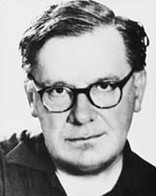
Engonopoulos was born in Athens on 21 October 1907 to a family with roots in Constantinople, where he spent part of his childhood during the First World War. From 1923 to 1927 he attended a lycée in Paris, and he returned to Greece to do his military service with French as a second mother tongue. He worked for some years as a clerk and a translator, and in 1932 entered the Athens School of Fine Arts, studying under Konstantinos Parthenis; at the same time he worked in the studio of Fotis Kontoglou, who taught him and Yannis Tsarouchis the technique of Byzantine painting. The two teachers, one a modernist and one a traditionalist, remained the poles of his art.
His first collections, «Μην ομιλείτε εις τον οδηγόν» (Do Not Speak to the Driver, 1938) and «Τα κλειδοκύμβαλα της σιωπής» (The Clavichords of Silence, 1939), provoked ridicule in the Athenian press and jokes in the satirical revues; «Engonopoulos» became for a while a byword for nonsense. He did not answer and did not change. In 1940–41 he fought on the Albanian front; captured by the Germans, he was held in a labour camp and escaped back to Athens. In the winter of 1942–43, in occupied Athens, he wrote «Μπολιβάρ».
From 1945 he taught drawing and painting at the School of Architecture of the National Technical University (the Polytechnic), becoming a full professor in 1969 and retiring in 1973. He represented Greece at the Venice Biennale in 1954, won the First State Prize for Poetry twice, in 1958 and 1979, and died in Athens on 31 October 1985, ten days after his seventy-eighth birthday.
Works

The title of his first book is the notice on a Greek bus; inside are poems whose images come from dreams, from Lautréamont and de Chirico, from Byzantine chronicles and the klephtic songs, in a Greek that jumps without warning from street demotic to the most formal katharevousa. Critics saw a joke; he was serious. His surrealism, like that of his friend Andreas Embirikos, was a way of letting all the layers of the Greek language and the Greek past speak at once.
«Μπολιβάρ, ένα ελληνικό ποίημα» (1944) is the proof. Simón Bolívar, the liberator of South America, is summoned as a Greek hero and set beside Odysseus Androutsos and the fighters of 1821; he appears on the mountains of Roumeli and the islands of the Aegean, «beautiful as a Greek», and the poem, part hymn, part folk lament, part manifesto, is a defiant answer to the Occupation. After the war it entered the school anthologies. Later collections, «Έλευσις» (Eleusis, 1948), «Εν ανθηρώ Έλληνι λόγω» (In Blossoming Greek Speech, 1957) and «Στην κοιλάδα με τους ροδώνες» (In the Valley of the Rose Gardens, 1978), keep the same voice, now calmer, often elegiac, always proudly Greek in its materials.
As a painter he developed a world of his own: elongated figures without faces, like dressmakers' dummies, standing in courtyards, harbours and neoclassical rooms under a hard Greek light, dressed in costumes from the War of Independence or in nothing at all, among columns, ships and musical instruments. The colours are those of Byzantine icons and of the folk painter Theophilos, the space that of de Chirico. Poems and pictures illustrate each other.
Legacy in Greece today
«Μπολιβάρ» is the Engonopoulos that Greeks know: its line «Μπολιβάρ, είσαι ωραίος σαν Έλληνας» is proverbial, the poem is in the lyceum anthologies together with the short «Ποίηση 1948», his answer to the question of how one writes poetry during a civil war, and the composer Nikos Mamangakis set «Μπολιβάρ» to music in 1968. The National Gallery in Athens holds his paintings, and the centenary of his birth in 2007 was marked with exhibitions and new editions, and his work is now read with Elytis and Embirikos as one of the three great voices of Greek surrealism. A learner can start by reading «Μπολιβάρ» aloud, slowly, and letting the changes of register happen, before turning to the site's pages on Elytis and Tsarouchis, his fellow students and friends.
Did you know?
- The title of his first book, «Μην ομιλείτε εις τον οδηγόν», is the sign that stood above the driver's seat in every Greek bus; readers of 1938 thought it was a prank.
- «Μπολιβάρ» circulated in handwritten and typed copies and was read at clandestine gatherings in occupied Athens before its first printing in 1944.
- He won the First State Prize for Poetry twice, twenty-one years apart (1958 and 1979), and represented Greece as a painter at the 1954 Venice Biennale.
- He learned Byzantine painting technique from Fotis Kontoglou alongside Yannis Tsarouchis, and taught drawing to generations of Greek architects at the Polytechnic for nearly thirty years.
Key works
| Greek title | Title | Year |
|---|---|---|
| Μην ομιλείτε εις τον οδηγόν | Do Not Speak to the Driver (poems) | 1938 |
| Τα κλειδοκύμβαλα της σιωπής | The Clavichords of Silence (poems) | 1939 |
| Μπολιβάρ, ένα ελληνικό ποίημα | Bolivar, a Greek Poem | 1944 |
| Έλευσις | Eleusis (poems) | 1948 |
| Εν ανθηρώ Έλληνι λόγω | In Blossoming Greek Speech (poems) | 1957 |
| Στην κοιλάδα με τους ροδώνες | In the Valley of the Rose Gardens (poems) | 1978 |
From the works


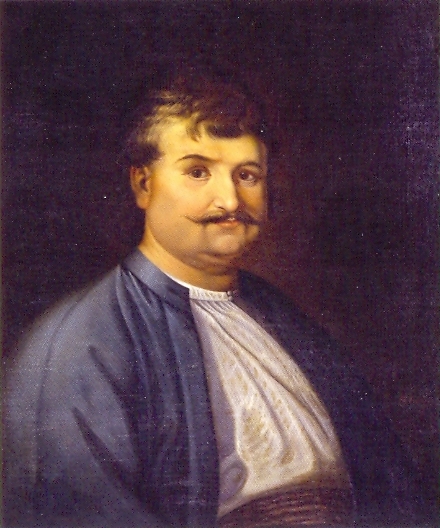
Public-domain pictures from Wikimedia Commons.
A line to remember
Μπολιβάρ, είσαι ωραίος σαν Έλληνας
Bolivar, eisai oraios san Ellinas
Bolivar, you are beautiful like a Greek