Life
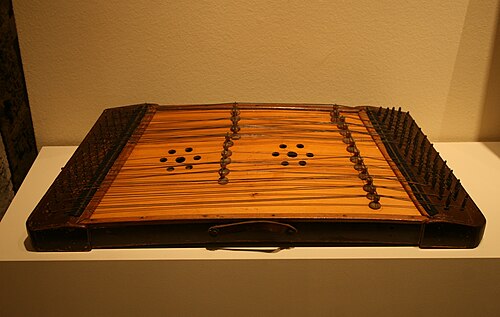
Eleni Vitali was born Eleni Lavida in Athens on 19 September 1954; some online biographies name Trikala instead, but the Greek discography catalogue gives Athens. Her father, Takis Lavidas, played the santouri, the hammered dulcimer of Greek popular music, and her mother, Lucy Karageorgiou, sang at festivals. In a 2000 television portrait she spoke about the family’s Roma (Gypsy) origins. At thirteen she recorded a small disc with her father, and at about fourteen she followed her mother to her first panigyri, a village saint’s-day festival. Until she was fifteen or sixteen she kept travelling to festivals with musicians who were friends of her father, from the Peloponnese to Epirus.
Tired of the festival circuit, she turned to musicians in Athens, and a friend sent her to Alekos Patsifas, head of the Lyra record company. By her own account she recorded Άι γαρούφαλλό μου, by Argyris Kounadis and Vangelis Goufas, on the day of her audition; it appeared on Kounadis’s album Δεν περισσεύει υπομονή (No Patience to Spare) with Sotiria Bellou. She soon sang at the Thessaloniki Song Festival with Χωρίς δεκάρα (Without a Penny), remembered by its refrain about Manolios, and took part in a 1974 Lyra recording of Mikis Theodorakis’s 18 λιανοτράγουδα της πικρής πατρίδας (18 Short Songs of the Bitter Homeland). In 2000 ERT filmed her return to the stage after seven years away.
Works

Vitali’s repertoire moves between three worlds that she learned in turn: the demotic songs of the festivals, the urban laïko of the bouzouki, and the éntechno, or art song, of composers writing for records and the stage. Albums such as Τα δημοτικά της Ελένης (Eleni’s Folk Songs, 1981) and Βάρα μου το ντέφι (Beat the Tambourine for Me, 1983) drew on the first. Χορέψτε γιατί χανόμαστε (Dance, for We Are Vanishing, 1984) revisited two songs she had first recorded as a child with her father. She also worked with the laïko composer Christos Nikolopoulos and with the art-song composer Stamatis Spanoudakis, on the album 7 Παρακλήσεις (7 Supplications).
From the late 1980s she increasingly wrote her own material. Το απέναντι μπαλκόνι (The Balcony Opposite, 1989) and Ποιος φοβάται τη Βιρτζίνια Γουλφ; (Who’s Afraid of Virginia Woolf?, 1994; some accounts give 1993) carry her own lyrics and music. Προσκήνιο (Forestage, 2000), a live recording from the Aeriko music venue, gathers the stages of that career in one programme. Her own memories explain part of her style. At her first studio session, she recalled, Nikolopoulos and the pianist Tasos Karakatsanis told her to sing with no vibrato and to pronounce every word clearly. That attention to diction makes her recordings rewarding for anyone listening closely to Greek, while the festival repertoire keeps the older modal colour of the santouri tradition she grew up with.
Legacy in Greece today
Vitali’s career links the oral world of the panigyri, where Roma and other professional musicians played for village dances, with Greek studio and concert life. In 2016 she shared a winter programme with Giannis Parios at the Iera Odos venue in Athens and told journalists that the festivals had taught her, above all, love. For a concrete task, find the ERT Archive record Οι φίλοι μου: Ελένη Βιτάλη (My Friends: Eleni Vitali, 2000) at archive.ert.gr. Read its timed Greek description, which notes where she speaks and where a song follows. Then write two sentences of your own with αφού and πριν, for example: Αφού μίλησε για τον πατέρα της, ακούστηκε ένα τραγούδι (After she had spoken about her father, a song was heard). These practice sentences are ours, not lyrics.
Did you know?
- Her first panigyri, she recalled, was at Examilia near Corinth, on the very day the village priest died.
- As a girl she said she wanted to become a paediatrician, not a singer.
- She laughed that on her childhood disc with her father her voice sounded like a kitten.
- In 2016 she explained that panigyris, a festival, means a circular dance and therefore love.
Key works
| Greek title | Title | Year |
|---|---|---|
| 18 λιανοτράγουδα της πικρής πατρίδας | 18 Short Songs of the Bitter Homeland — Theodorakis and Ritsos, with other singers | 1974 |
| Τα δημοτικά της Ελένης | Eleni’s Folk Songs | 1981 |
| Χορέψτε γιατί χανόμαστε | Dance, for We Are Vanishing | 1984 |
| Το απέναντι μπαλκόνι | The Balcony Opposite | 1989 |
| Ποιος φοβάται τη Βιρτζίνια Γουλφ; | Who’s Afraid of Virginia Woolf? | 1994 |
| Προσκήνιο | Forestage — live at Aeriko | 2000 |
A line to remember
Μεγάλο σχολείο τα πανηγύρια.
Megálo scholeío ta panigýria.
The festivals were a great school.