Life
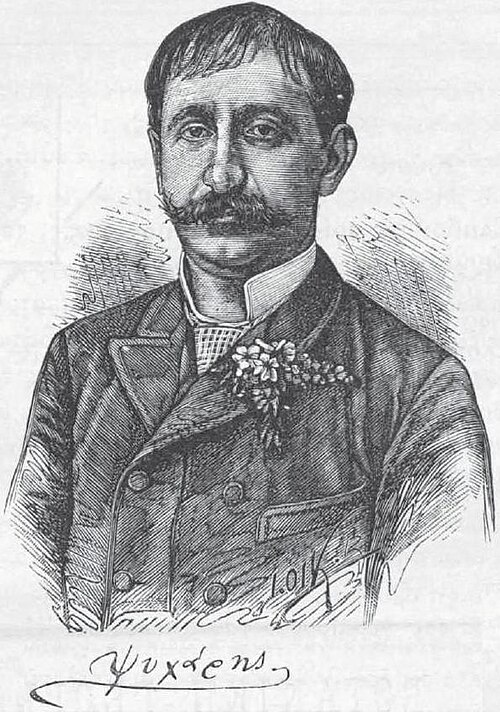
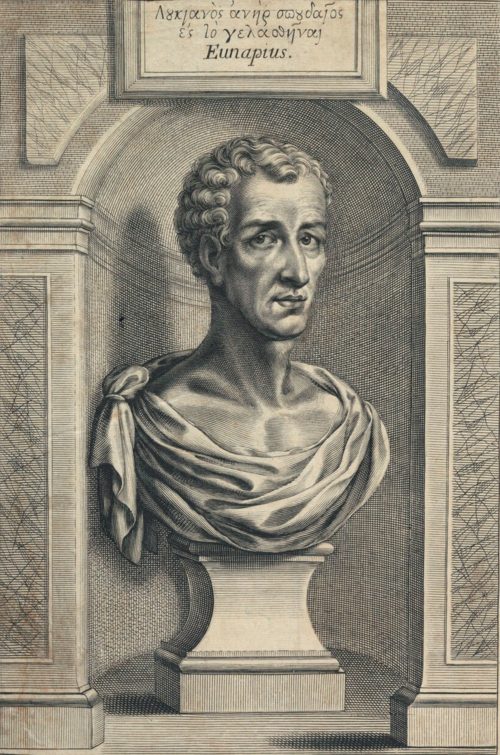
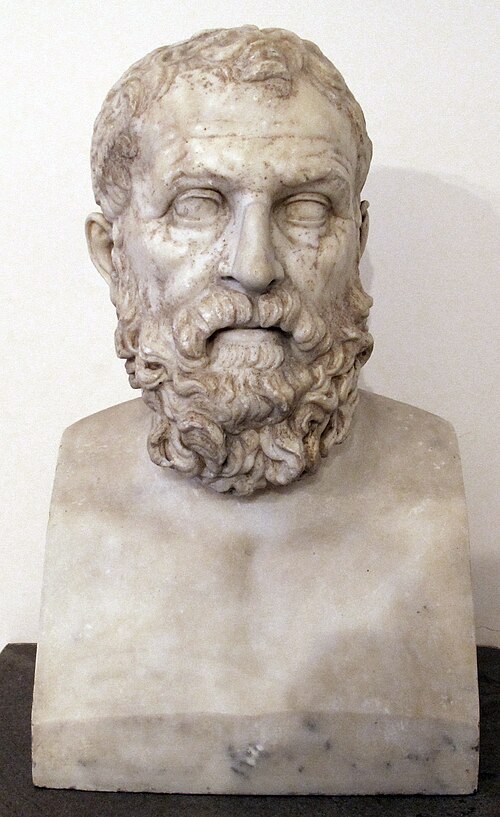
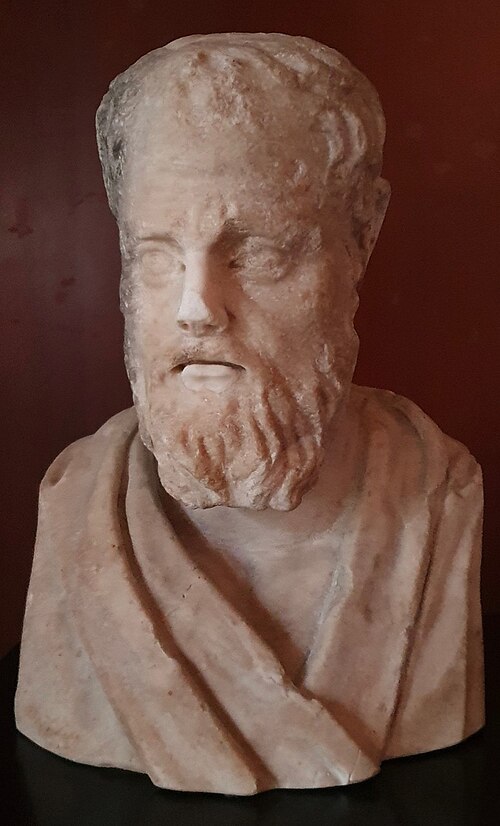
Aristophanes was born in Byzantium, the city later called Constantinople and today Istanbul, around 257 BC; some reference works place his birth a few years earlier. The Byzantine encyclopedia known as the Suda says that his father, Apelles, was a military commander. Aristophanes came to Alexandria as a boy and, according to the same source, studied there with Zenodotus, the first editor of Homer at the Library, and later with the poet Callimachus. The Latin form Aristophanes Byzantius and the Greek Αριστοφάνης ο Βυζάντιος name the same scholar, who must not be confused with the comic poet Aristophanes of Athens.
Around 195 BC he succeeded Eratosthenes as head of the Library of Alexandria. A Suda entry that modern scholars connect with him, although it gives a different name, says that he took charge at sixty-two, was suspected of planning to leave for King Eumenes II of Pergamon, home of a rival library, and was imprisoned for a time. It adds that he died at seventy-seven, which points to about 180 BC. The Roman architect Vitruvius tells a later story: as a judge at a royal poetry contest, Aristophanes exposed copied verses by fetching the original books from the Library’s shelves. His best-known pupil was Aristarchus of Samothrace.
Works

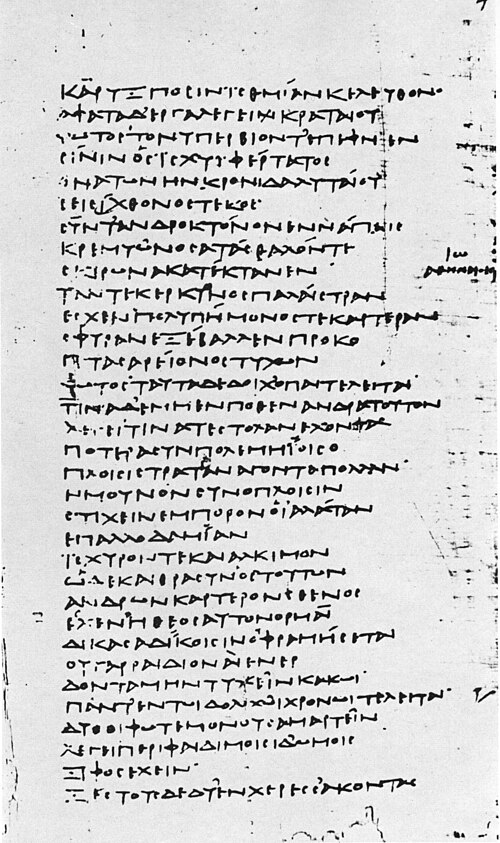
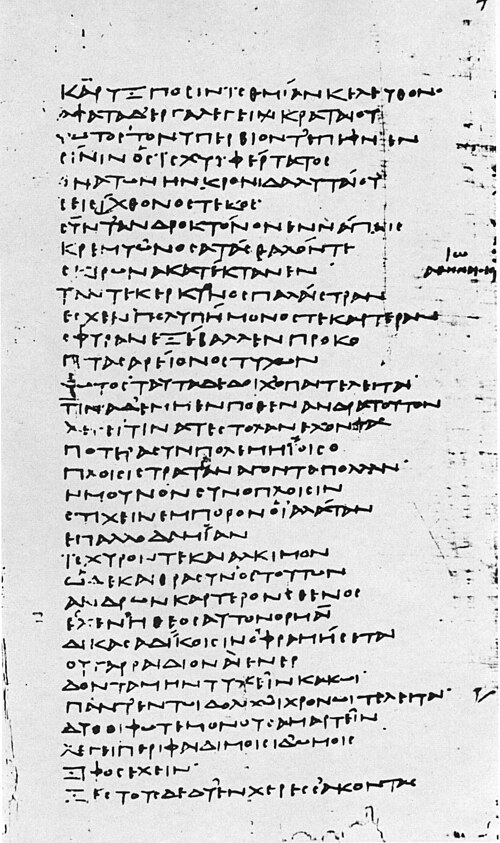
Aristophanes worked on almost every major area of earlier Greek poetry. For Homer he prepared a new edition that corrected the text of Zenodotus; like all his books, it is lost and known through later scholarly notes, the scholia. These notes report that he and Aristarchus placed the “end” of the Odyssey at Book 23, line 296, a judgement still debated. He also edited Hesiod and the lyric poets. A Life of Pindar preserved on papyrus says that he divided Pindar’s songs into seventeen books, arranged by type of song, and scholars trace the short lines, or cola, of later lyric manuscripts back to his work.
For the theatre he is credited with many of the ancient ὑποθέσεις (hypotheses): short introductions giving a play’s plot, characters and details of its first performance. Several still stand at the head of tragedies and comedies in medieval manuscripts. His Λέξεις (Lexeis, “Words”) collected and explained unusual vocabulary, with sections on words for ages and on kinship terms; hundreds of fragments survive in later works. With Aristarchus he is linked to lists of the best authors in each genre.
A text in two sixteenth-century manuscripts says that he invented the signs for accent, breathing and vowel length. Modern scholars treat this cautiously, and some think he systematised marks already in use. He also admired Menander, and a late commentator quotes his famous question about the playwright and life.
Legacy in Greece today
Aristophanes’s name returns whenever Greek accents are discussed. Polytonic spelling used three accents, the acute, the grave and the circumflex, together with breathings. In 1982 Greece adopted the monotonic system, which keeps a single mark, the τόνος, written like the old acute. Try the change on the line quoted on this page. In the ancient spelling, ὦ and ὑμῶν carry a breathing and a circumflex; in monotonic spelling they become ω and υμών. Then use the τόνος to separate two Modern Greek words: πότε (when?) and ποτέ (never). Write one sentence with each, for example «Πότε διάβασες Μένανδρο;» (When did you read Menander?) and «Δεν τον έχω διαβάσει ποτέ» (I have never read him). The C2 level describes this page’s Modern Greek passage, not independent reading of the ancient texts.
Did you know?
- Byzantium, his birthplace, is the city later called Constantinople and today Istanbul.
- The ancient word ὑπόθεσις, used for his play introductions, lives on in Modern Greek as υπόθεση, “plot” or “case”.
- According to Vitruvius, his memory of the Library’s books decided a royal poetry contest against the crowd’s favourites.
- His pupil Aristarchus of Samothrace later also headed the Library of Alexandria.
Key works
| Greek title | Title | Year |
|---|---|---|
| Ὁμήρου ἔκδοσις | Edition of Homer — lost, known through the scholia | c. 200 BC |
| Πινδάρου ἔκδοσις (ιζʹ βιβλία) | Edition of Pindar in seventeen books — lost, described on papyrus | c. 200 BC |
| Ὑποθέσεις δραμάτων | Introductions to plays — partly preserved in manuscripts | c. 200 BC |
| Λέξεις | Lexeis (Words) — glossary surviving in fragments | c. 200 BC |
A line to remember
ὦ Μένανδρε καὶ βίε, πότερος ἄρ᾽ ὑμῶν πότερον ἀπεμιμήσατο;
In today's GreekΜένανδρε και ζωή, ποιος από τους δυο σας μιμήθηκε τον άλλον;
ô Ménandre kaì bíe, póteros ár’ hymôn póteron apemimḗsato?
O Menander and life, which of you, then, imitated the other?