Life
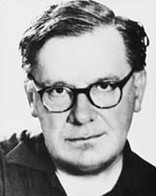
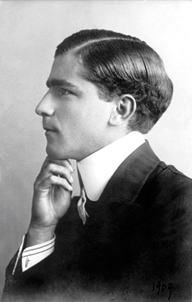
Tsatsos was born in Athens on 1 July 1899. He studied law at the University of Athens (1914–1918) and from 1925 did postgraduate studies in Heidelberg, where the philosophy of law of the neo-Kantian schools shaped his thinking. Back in Greece he took a doctorate in law in Athens in 1929 and in 1933 a chair of the Philosophy of Law at the University of Athens, and through his lectures and books he was, for a generation of students, the voice of a liberal, humanist idea of law and the state.
He was closely linked to the literary world. In 1930 he married Ioanna Seferiadi, the sister of the poet Giorgos Seferis, herself a writer, and he was part of the circle of the so-called Generation of the Thirties, the writers and artists who sought a modern Greek culture. With Seferis he carried on, in 1938–39, a public exchange of essays on poetry that is still read today.
After the liberation he entered politics: he was a minister in 1945, was first elected to parliament in 1946, and held ministerial posts in several governments, including Education (1949–1950), and was for many years a close collaborator of Konstantinos Karamanlis. After the fall of the dictatorship in 1974 he chaired the parliamentary committee that drafted the new Constitution of 1975. In June 1975 the Parliament elected him President of the Republic, a post he held until 1980, when he was succeeded by Karamanlis. He had been elected to the Academy of Athens in 1961 and was its president in 1966. He continued writing until the end of his life and died in Athens on 8 October 1987.
Works

As a philosopher, Tsatsos worked on the nature of law and its interpretation, on the relation between law, morality and the state, and on the social and political thought of the ancient Greeks. He belonged to the humanist tradition: for him law was not only a technique of rules but an expression of values, and the polis of the Greeks remained a model of the community of free citizens. His style was classical and clear, close to the essay rather than the treatise, and he wrote a substantial study of Kostis Palamas, Παλαμάς (1936).
His most widely read literary moment is the dialogue on poetry with Seferis. In 1938 Tsatsos, writing as a reader trained in classical aesthetics, criticised modern poetry for its obscurity and its break with clear meaning and form. Seferis answered with his Διάλογος πάνω στην ποίηση (Dialogue on Poetry), defending the freedom and the difficulty of modern verse, and Tsatsos replied in turn. The exchange became the classic Greek debate on modernism, the moment when the two sides of the Generation of the Thirties put their ideas into words. The texts were later collected as Ένας διάλογος για την ποίηση (A Dialogue on Poetry, 1975). Later in life Tsatsos turned to the short form, publishing the volumes of Αφορισμοί και διαλογισμοί (Aphorisms and Meditations, 1965–1969), brief reflections on life, art, power and death, in the line of the French moralists.
Legacy in Greece today
Tsatsos is one of those Greek figures who connected the university, literature and the state. His role in the first years of the restored democracy after 1974 belongs to the modern history every Greek pupil learns. For readers, the essential text is the Seferis–Tsatsos exchange on poetry, regularly reprinted and studied as the classic Greek argument about modern poetry: read it alongside a poem by Seferis and decide which side you are on. His aphorisms are short enough for an advanced learner to read one a day, as an exercise in dense, polished Greek prose.
Did you know?
- He was the brother-in-law of Giorgos Seferis: his wife, Ioanna Tsatsou, was the poet's sister.
- He was elected to the Academy of Athens in 1961 and was its president in 1966.
- He was the first President of the Republic elected under the Constitution of 1975.
- Late in life he wrote volumes of aphorisms, a rare genre in Greek.
Key works
| Greek title | Title | Year |
|---|---|---|
| Παλαμάς | Palamas (critical study) | 1936 |
| Διάλογος για την ποίηση (με τον Γιώργο Σεφέρη) | The dialogue on poetry with Giorgos Seferis | 1938–1939 |
| Αφορισμοί και διαλογισμοί | Aphorisms and Meditations (several volumes) | 1965–1969 |
| Σύνταγμα του 1975 | Chair of the committee that drafted the Constitution of 1975 | 1975 |
| Πρόεδρος της Δημοκρατίας | President of the Hellenic Republic | 1975–1980 |
From the works


Public-domain pictures from Wikimedia Commons.
A line to remember
Αφορισμοί και διαλογισμοί
Aforismoi kai dialogismoi
Aphorisms and meditations