Life
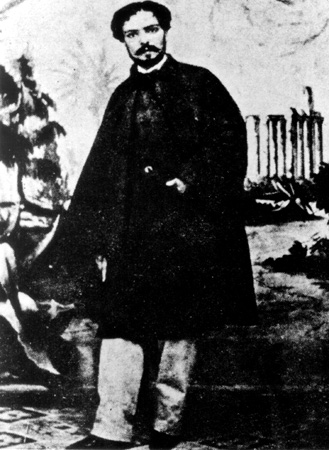
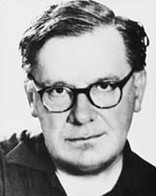
Kosmas Politis was born Paraskevas (Paris) Taveloudis in Athens on 16 March 1888, but his family moved to Smyrna, the great Greek-speaking port of Asia Minor, in 1890, and it was there that he grew up. Smyrna before 1922 was a rich, many-languaged city of Greeks, Turks, Armenians, Jews and Levantines, and its streets, quays and gardens filled his imagination for the rest of his life. He did not become a writer at first: from the age of seventeen he worked in banks in Smyrna, and after the Asia Minor Catastrophe of 1922 that ended Greek Smyrna his banking career took him to Paris, London, Athens (1924) and Patras (1934).
He began to publish fiction late, in his early forties, under the name Kosmas Politis, and in the 1930s he found himself, although older, among the writers of the Generation of the Thirties, who welcomed his novels as part of the renewal of Greek prose. He lost his bank post in 1942, and from then on he lived mainly by translating: Shakespeare, Boccaccio, Poe, Joyce, Faulkner, Steinbeck. In 1944 he joined the Communist Party, later he was a founding member of the left-wing EDA, and his political choices cost him dearly in the years after the Civil War; on the day of the 1967 coup he was arrested and questioned. For a long period he published little; then, in his seventies, he returned with his finest book, Στου Χατζηφράγκου (1963). He died in Athens in 1974, the year democracy returned to Greece.
Works

Λεμονοδάσος (Lemon Grove, 1930), his first novel, is a story of love and desire set in the lemon groves on the coast opposite the island of Poros, written in a lyrical, sensual prose that surprised readers used to realistic village tales. Eroica (1937), whose title echoes Beethoven's symphony, tells of a group of adolescent boys in a seaside town, their games, their first love and their first meeting with death; it won a State Prize in 1938, it is often called the finest Greek novel of adolescence, and in 1960 Michael Cacoyannis made it into a film, known in English as Our Last Spring. Later novels such as Εκάτη (Hecate, 1933) and Το Γυρί (Gyri, 1944) continue his experiments with time, memory and point of view.
His masterpiece is Στου Χατζηφράγκου (In Hatzifrangou, 1963). Hatzifrangou was a working-class neighbourhood of Smyrna, and the novel follows a crowd of its children, craftsmen, sailors, priests, prostitutes and dreamers in the years before 1922, mixing Greek, Turkish and Levantine voices, local slang and memory. There is no single plot: the book is a chronicle, half comic and half tragic, of a world that the reader knows is about to be destroyed by fire. Politis is a modernist in the European sense, close in spirit to Proust and Joyce in his handling of time and inner voice, but his subject is profoundly Greek: childhood, the sea, loss, and the city that every Greek refugee family remembered as paradise.
Legacy in Greece today
Politis is a writer's writer: less famous with the general public than Venezis or Dido Sotiriou, but admired by critics as one of the most original Greek novelists of the twentieth century. Στου Χατζηφράγκου is now considered a classic of the literature of Asia Minor, and it is the book to read if you want to hear the Greek of old Smyrna. Eroica is studied as a model of the novel of growing up, and Cacoyannis's film, with its seaside scenes, is still easy to find. His novels have been reprinted in Greece, and their place in university courses on modern Greek literature is secure. For a C2 learner, a chapter of Eroica is a demanding but rewarding first step.
Did you know?
- Kosmas Politis was a pen name; he was born Paraskevas (Paris) Taveloudis.
- He published his first novel at about forty-two, after a career in banking.
- Michael Cacoyannis filmed his novel Eroica in 1960, under the English title Our Last Spring.
- His last and greatest novel, about a neighbourhood of Smyrna, appeared when he was seventy-five.
Key works
| Greek title | Title | Year |
|---|---|---|
| Λεμονοδάσος | Lemon Grove (novel) | 1930 |
| Εκάτη | Hecate (novel) | 1933 |
| Eroica | Eroica (novel) | 1937 |
| Το Γυρί | Gyri (novel) | 1944 |
| Στου Χατζηφράγκου | In Hatzifrangou (novel) | 1963 |
From the works

Public-domain pictures from Wikimedia Commons.
A line to remember
Υπάρχει ζωή. Πληθώρα ζωής.
Yparchei zoi. Plithora zois.
There is life. An abundance of life.