Life
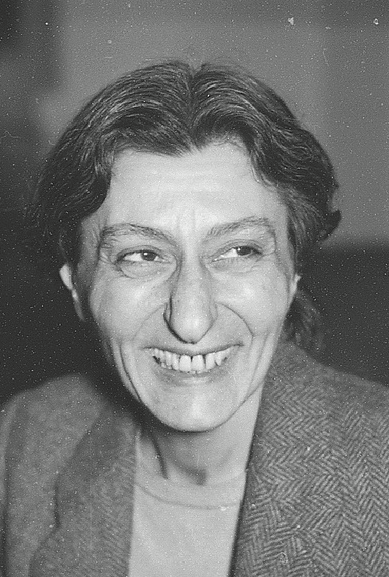
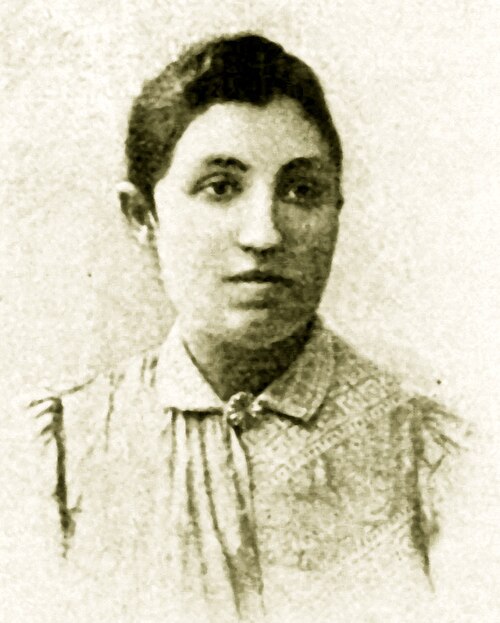
Elli Alexiou was born in Heraklion on 22 May 1894, the fourth child of the publisher and journalist Stylianos Alexiou. Her eldest sister was the writer Galatea Kazantzaki, and her brother Lefteris Alexiou also wrote. After teacher training she was appointed in 1914 to the Third Christian Girls’ School in the Agia Paraskevi district of Heraklion, a poor school that locals mocked as a “scabby school”. She later taught French. In 1920 she married Vasos Daskalakis and settled in Athens. One evening she told him an episode from her classroom and he insisted that she write it down. The story, Frantzeskos, appeared in 1923 in Fotis Kontoglou’s magazine Filiki Etaireia, under the pen name Elli Klirodeti.
Alexiou joined the Communist Party of Greece in 1928. Under the Metaxas dictatorship she was arrested and questioned, and during the Occupation she worked in the writers’ group of the resistance front EAM. A French scholarship took her to Paris in 1945, where she studied at the Sorbonne and met Paul Éluard and Louis Aragon. From 1949 to 1962 she lived in Romania, advising on nurseries, boarding schools and schoolbooks for Greek refugee children. She returned to Greece after Galatea’s death in 1962. In 1966 she was jailed on a warrant issued in 1952, then acquitted after public protest. She died in Athens on 28 September 1988.
Works

Alexiou’s first book, the short-story collection Σκληροί αγώνες για μικρή ζωή (Hard Struggles for a Small Life, 1931), gathered the classroom stories that began with Frantzeskos. Three years later came Γ΄ Χριστιανικόν Παρθεναγωγείον (Third Christian Girls’ School, 1934), drawn from her years in Heraklion. Its title keeps the formal older ending -ον; today’s word is παρθεναγωγείο. In the novel a first-year class is split between two teachers. Mrs Kalliopi’s section is perfectly silent. The new teacher, Mrs Elli, runs a lively room where, as the pupils put it, nobody is beaten, nobody shouts and there are frequent little outings. Girls from the strict section start slipping into the other lessons, and Mrs Kalliopi reacts harshly. Through this simple conflict the book asks what school is for.
Poor children, orphans, sick pupils and children who must work appear again and again in her stories; an ERT documentary credits her with 121 short stories. In Bucharest she published the novel Με τη λύρα (With the Lyre, 1959). Back in Greece she wrote Για να γίνει μεγάλος (To Become Great, 1966), a biography of Nikos Kazantzakis, her former brother-in-law, and the novel Δεσπόζουσα (Dominant, 1972). She also wrote children’s books, plays and memoirs, and translated Maxim Gorky’s memories of Tolstoy, Andreyev and Chekhov.
Legacy in Greece today
Her stories are back in print: in 2022 Kastaniotis published Τα Διηγήματα 1923–1983 (The Short Stories), with a preface by the literary scholar Anta Katsiki-Givalou. The ERT online archive keeps a 1984 Μονόγραμμα (Monogram) documentary in which Alexiou, then about ninety, recalls her Cretan childhood, her teaching and the Resistance; the documentary is in Greek. Part of her papers is held by ELIA, the Hellenic Literary and Historical Archive.
Try a short task. Read the C2 passage and the novel’s line about the new teacher’s class. Underline η δασκάλα, η μαθήτρια, η τάξη and το διάλειμμα. Then write five Greek sentences about one school day, from the bell to the walk home, using πρώτα, έπειτα, ενώ and στο τέλος. Finally compare the title’s formal Παρθεναγωγείον with the everyday παρθεναγωγείο.
Did you know?
- Her first story appeared under a pen name because, as she later recalled, she was too embarrassed to sign it.
- She was about ninety when ERT filmed her for its Monogram series in 1984.
- She lived in Romania for thirteen years, organising schooling for Greek refugee children.
- She wrote a biography of Nikos Kazantzakis, who had been married to her sister Galatea.
Key works
| Greek title | Title | Year |
|---|---|---|
| Φραντζέσκος | Frantzeskos: first short story, in Filiki Etaireia | 1923 |
| Σκληροί αγώνες για μικρή ζωή | Hard Struggles for a Small Life: short stories | 1931 |
| Γ΄ Χριστιανικόν Παρθεναγωγείον | Third Christian Girls’ School: novel | 1934 |
| Με τη λύρα | With the Lyre: novel, published in Bucharest | 1959 |
| Για να γίνει μεγάλος | To Become Great: biography of Nikos Kazantzakis | 1966 |
| Δεσπόζουσα | Dominant: novel | 1972 |
A line to remember
…στην τάξη της καινούργιας δασκάλας, καλοπερνάει κανείς. Ξύλο δεν πέφτει.
…stin táxi tis kenoúrgias daskálas, kaloperná-i kanís. Xýlo den péfti.
…in the new teacher’s class, you have a good time. Nobody gets beaten.