grecfacilegrecfacile
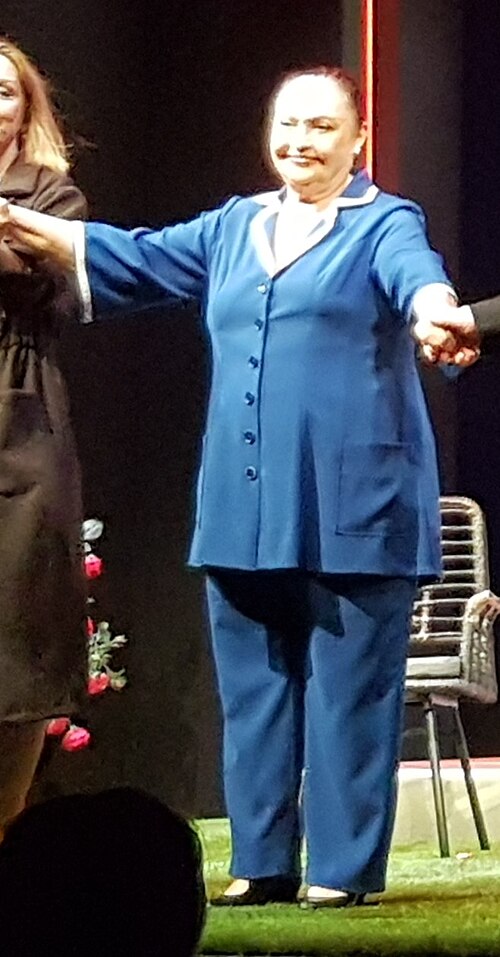
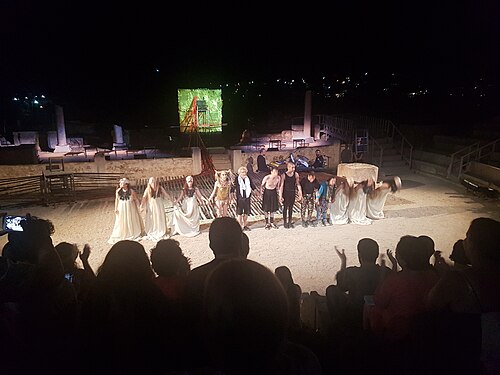
Οι ηθοποιοί και ο χορός υποκλίνονται στο τέλος του «Προμηθέα Δεσμώτη» του Αισχύλου, σε σκηνοθεσία Μάρθας Φριντζήλα, στο Μικρό Θέατρο της Αρχαίας Επιδαύρου, Αύγουστος 2018
Οι ηθοποιοί και ο χορός υποκλίνονται στο τέλος του «Προμηθέα Δεσμώτη» του Αισχύλου, σε σκηνοθεσία Μάρθας Φριντζήλα, στο Μικρό Θέατρο της Αρχαίας Επιδαύρου, Αύγουστος 2018 · FocalPoint · CC BY-SA 4.0 · Wikimedia Commons

C2Modern Greece · Singer · actress · director

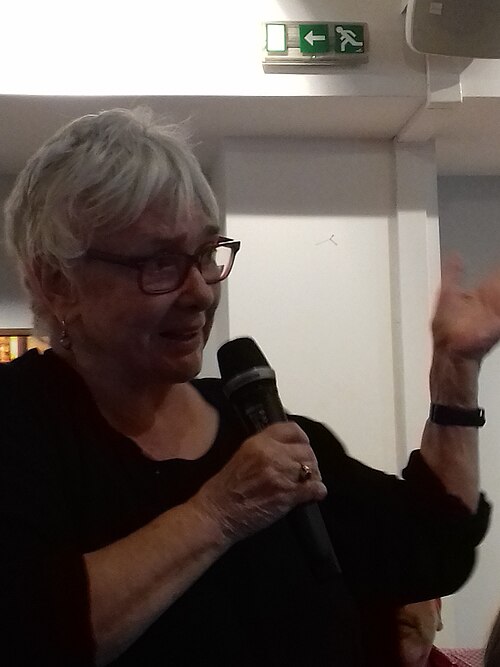
Martha Frintzila

Μάρθα Φριντζήλα

1972 · Elefsina · Athens

Martha Frintzila (also spelled Fritzila) is a singer, actress and theatre director born in Elefsina in 1972. Since 1993 she has acted at the National Theatre of Greece, and she has sung with Thanasis Papakonstantinou, Maria Farantouri and Haris Alexiou. She directs the company Δρόμος με Δέντρα (Road with Trees) and runs Baumstrasse, an Athens space for theatre and music. Her stagings of ancient tragedy are often built around live music and song.

Life

Martha Frintzila was born in 1972 in Elefsina (ancient Eleusis), west of Athens, and grew up there. She studied music and theatre, and in 1993 began working as a professional actress. Her first roles were at the National Theatre of Greece, in Euripides’ Medea directed by Nikos Charalambous and George Orwell’s Animal Farm directed by Dimitris Potamitis. In the following years she appeared in Sophocles’ Electra directed by Lydia Koniordou (1996), Aristophanes’ Lysistrata (1997) and Euripides’ Iphigenia in Aulis (2002), and in Alexandros Papadiamantis’s Η Φόνισσα (The Murderess), directed by Sotiris Hatzakis at the Politeia Theatre from 1998 to 2000.

She has also directed since 1996. In 1999 she became director of the company Δρόμος με Δέντρα (Road with Trees), and from 2000 to 2009 she co-ran the Kratiras arts space in Athens. In 2010 she began running Baumstrasse, an independent space for theatre, music and workshops in the Votanikos district of Athens, and in 2012 the Attiko School of Ancient Drama, which has held seminars in Elefsina. She taught acting at the National Theatre’s drama school and has given lessons in traditional Greek song since 2002. Abroad, she has worked with Princeton University, Stockton University in New Jersey and the Brooklyn Academy of Music.

Works

As a singer, Frintzila moves between traditional song, rebetiko and Greek art song. Her earliest recording credit is Vasilis Skoulas’s album Αναστορούμαι (I Remember, 1998). From 2003 she performed with the composer Thanasis Papakonstantinou and sang on his live album Τα ζωντανά (The Live Ones, 2004). She later gave concerts with Maria Farantouri, Tania Tsanaklidou and Lena Platonos, and shared a live programme with Haris Alexiou in 2010. She is the lead singer of the Kubara Project, and her own albums include Η Μάρθα Φριντζήλα τραγουδά Θέμο Σκανδάμη (Martha Frintzila Sings Themos Skandamis, 2011) and a live recording with the pianist Takis Farazis (2014).

In the theatre she has directed Euripides, Aeschylus and Sophocles, often for festivals connected with Elefsina. Her Βάκχες (The Bacchae) was staged at the Aischyleia festival in Elefsina in 2013 and in 2017 at the Ancient Stadium of Epidaurus, with music by Vasilis Mantzoukis; she directed, acted and sang. In January 2021, with theatres closed by the pandemic, the National Theatre streamed her Μήδεια – Medea’s Son(g)s from its new Research Stage, in a translation by Nikoletta Frintzila; she directed it and played Medea herself. The English subtitle plays on the words sons and songs. Before the stream she compared theatre on a screen to a wedding or a baptism that relatives follow only from their screens.

Legacy in Greece today

Frintzila’s influence runs through teaching as much as performance. Baumstrasse in Votanikos is home to her company Δρόμος με Δέντρα and hosts workshops on traditional song, the voice and ancient tragedy, alongside concerts by other musicians. The Attiko School of Ancient Drama began in 2012 in Elefsina, the town of the ancient Mysteries where she was born; its seminars now take place at Baumstrasse. The National Theatre’s digital archive, searchable through SearchCulture.gr, keeps the credits and Karol Jarek’s photographs of her Medea.

A task for learners: read her Greek sentence «αυτό είναι και το θέατρο: ένα μυστήριο που δεν υφίσταται χωρίς μάρτυρες» (that is what theatre is too: a mystery that does not exist without witnesses) aloud twice, first pausing at the colon, then running straight through, and note which word each version stresses.

Did you know?

  • In 2007 the ARTE series Visages d’Europe devoted a documentary to her, Bienvenue chez Martha (Welcome to Martha’s), by Timon Koulmasis and Iro Siafliaki.
  • In February 2015 she gave a demonstration of Greek songs titled Α-Ω (A to Omega) with student musicians at Princeton University.
  • The 2021 livestream of her Medea offered optional English subtitles, so viewers abroad could follow a Greek tragedy performed in Modern Greek.

Key works

Greek titleTitleYear
ΑναστορούμαιI Remember — on Vasilis Skoulas’s album1998
Τα ζωντανάThe Live Ones — Thanasis Papakonstantinou live album2004
Η Μάρθα Φριντζήλα τραγουδά Θέμο ΣκανδάμηMartha Frintzila Sings Themos Skandamis2011
ΒάκχεςThe Bacchae — her staging of Euripides, Elefsina2013
Μάρθα Φριντζήλα – Τάκης Φαραζής, ζωντανή ηχογράφησηMartha Frintzila and Takis Farazis — live recording2014
Μήδεια – Medea’s Son(g)sMedea — Medea’s Son(g)s, National Theatre livestream2021

A line to remember

Γιατί, αυτό είναι και το θέατρο: ένα μυστήριο που δεν υφίσταται χωρίς μάρτυρες.

Giatí, aftó eínai kai to théatro: éna mystírio pou den yfístatai chorís mártyres.

Because that is what theatre is too: a mystery that does not exist without witnesses.
Μάρθα Φριντζήλα, συνέντευξη στην Έρρικα Ρούσσου, ATHENS VOICE, 7 Ιανουαρίου 2021
C2

Read about Martha Frintzila in Greek (C2)

Words from the passage

  • mystery; sacrament
  • witness; martyr
  • I exist (learned)
  • ceremony
  • pause
  • I compare
  • I broadcast
  • learned, formal

Try a free C2 lessonNo account needed for the first three exercises.
Others at level C2

Modern Greece · Novelist, critic and satiristEmmanouil Roidis1836 – 1904Modern Greece · PoetAndreas Kalvos1792 – 1869Antiquity · Philosopher and prose writerPlatoc. 427 BC – c. 347 BCAntiquity · Epic and didactic poetHesiodc. 750–650 BCModern Greece · Revolutionary writer and poetRigas Feraiosc. 1757 – 1798Antiquity · PhilosopherAristotle384 BC – 322 BCAntiquity · HistorianThucydidesc. 460 BC – c. 400 BCAntiquity · Lyric poetPindarc. 518 BC – c. 438 BCRenaissance · Historian, Byzantine princessAnna Komnene1083 – c. 1153Renaissance · Archbishop and preacherJohn Chrysostomc. 347 – 407Renaissance · Byzantine historianProcopiusc. 500 – c. 565Modern Greece · Scholar of the Greek EnlightenmentAdamantios Korais1748 – 1833Modern Greece · Linguist, demoticistYannis Psycharis1854 – 1929Modern Greece · Surrealist poet and painterNikos Engonopoulos1907 – 1985Antiquity · SatiristLucian of Samosatac. 125 – after 180Antiquity · Lawgiver and poetSolonc. 630 BC – c. 560 BCModern Greece · SatiristAndreas Laskaratos1811 – 1901Modern Greece · NovelistKosmas Politis1888 – 1974Modern Greece · NovelistStratis Tsirkas1911 – 1980Modern Greece · Surrealist poet, psychoanalystAndreas Embirikos1901 – 1975Modern Greece · PoetMiltos Sachtouris1919 – 2005Modern Greece · NovelistMelpo Axioti1905 – 1973Modern Greece · Novelist, poetGiannis Skarimbas1893 – 1984Modern Greece · Philosopher, economist, psychoanalystCornelius Castoriadis1922 – 1997Modern Greece · Composer, architectIannis Xenakis1922 – 2001Modern Greece · Prose writerGiorgos Ioannou1927 – 1985Modern Greece · Novelist, playwrightPavlos Matesis1933 – 2013Modern Greece · LinguistManolis Triantafyllidis1883 – 1959Modern Greece · HistorianKonstantinos Paparrigopoulos1815 – 1891Modern Greece · Engraver, printmakerVaso Katraki1914 – 1988Modern Greece · Philosopher, jurist, PresidentKonstantinos Tsatsos1899 – 1987Modern Greece · PhilosopherIoannis Theodorakopoulos1900 – 1981Modern Greece · Short-story writer · teacherAlexandra Papadopoulou1867 – 1906Modern Greece · Folklorist · anthropologistAlki Kyriakidou-Nestoros1935 – 1988Modern Greece · Actor · stage directorAnna KokkinouModern Greece · Stage and film actressAntigoni Valakou1930 – 2013Antiquity · PainterApellesAntiquity · Grammarian and editorAristophanes of Byzantiumc. 257 BC – c. 180 BCModern Greece · Novelist; linguistDimitra Kolliakou1968Modern Greece · Theatre directorDimitris Rontiris1899 – 1981Modern Greece · Singer · songwriterEleni Vitali1954Modern Greece · Novelist · educatorElli Alexiou1894 – 1988Modern Greece · Singer · composerGiorgos Alkaios1971Antiquity · Orator and educatorIsocrates436 BC – 338 BCModern Greece · Stage and screen actorKaryofyllia Karabeti1958Modern Greece · Pop singerKostas Martakis1984Modern Greece · Stage director · actorLefteris Vogiatzis1944 – 2013Modern Greece · Choreographer · dancerLenio Kaklea1985Modern Greece · Novelist; journalistLilika Nakou1904 – 1989Modern Greece · Novelist · short-story writerMaria Mitsora1946Modern Greece · Actress · musical starMartha Karagianni1939 – 2022Modern Greece · Actor · stage and screenMirka Papakonstantinou1947Modern Greece · SculptorNausica Pastra1921 – 2011Modern Greece · Poet · prose writer · painterNiki Marangou1948 – 2013Modern Greece · ActressNora Valsami1945Modern Greece · PoetOlga Votsi1922 – 1998Antiquity · Bronze sculptor and art theoristPolykleitosModern Greece · Stage actressReni Pittakic. 1945Modern Greece · Singer · stage performerRita AntonopoulouModern Greece · Pop singerSarbel1981Modern Greece · Novelist · teacherSofia Nikolaidou1968Modern Greece · Film director · screenwriterStavros Tsiolis1937 – 2019Modern Greece · Singer · actressStefania Liberakakis2002Modern Greece · Rapper · producerStereo Mike1978Antiquity · Choral lyric poetBacchylidesc. 510 BCModern Greece · Stage actorVera Zavitsianou1927 – 2008Modern Greece · Playwright · actressXenia Kalogeropoulou1936
All personalities →