Life
Solon was born around 630 BC into one of the old noble families of Athens, but his father had spent the family fortune and Solon made his living in trade, travelling by sea. He first became known as a poet and agitator: when the Athenians, worn out by a losing war with Megara over the island of Salamis, forbade anyone to propose renewing it, Solon is said to have rushed into the agora pretending to be mad and recited an elegy, Σαλαμίς (Salamis), that shamed them into fighting again, and Salamis was eventually won.
Around 594 BC Athens was close to civil war. The poor farmers of Attica were in debt to the rich, with boundary stones, ὅροι, standing on their mortgaged fields; those who defaulted were sold into slavery. Both sides agreed to make Solon archon with full powers to reform the state. He did so in a single year, and then, the story goes, made the Athenians swear to keep his laws unchanged for ten years and left the city so that nobody could pressure him to alter them. He travelled to Egypt, where he talked with the priests at Sais, and to Lydia; Herodotus sets his famous conversation with King Croesus at Sardis during these years.
He returned to find the factions quarrelling again and his relative Peisistratos manoeuvring for a tyranny. Solon, by now an old man, warned the Athenians in verse that they were building their own slavery, and was ignored. He died around 560 BC, soon after Peisistratos seized power.
Works

Solon's reforms are known from his own poems, from Aristotle's Ἀθηναίων Πολιτεία (Constitution of the Athenians) and from Plutarch. The first was the σεισάχθεια, the «shaking-off of burdens»: all debts secured on land or on the person were cancelled, the boundary stones were pulled up, Athenians enslaved for debt were freed and those sold abroad were bought back, and enslaving a citizen for debt was forbidden for ever. In an iambic poem he calls the black Earth to witness that he freed her from the stones. He refused, however, to redistribute the land, which made him enemies on both sides, and he said so in verse with some pride.
He then rebuilt the constitution on wealth instead of birth. Citizens were divided into four classes by the yield of their land, the πεντακοσιομέδιμνοι, ἱππεῖς, ζευγῖται and θῆτες; the highest offices went to the richest, but every citizen, even the poorest, sat in the assembly and in the popular court, the Ἡλιαία, to which decisions of magistrates could be appealed. Aristotle credits him with a council of four hundred. His laws, covering everything from inheritance and the dowry to the planting of olive trees and the behaviour of mourners at funerals, were written on revolving wooden tablets, the ἄξονες, set up in public. Of his poetry about 280 lines survive: the elegy Εὐνομία (Good Order), which blames the city's troubles on the greed of its leaders, verses on the ages of man, on wealth and justice, and the line about growing old while always learning.
Legacy in Greece today
Solon's name is a byword in Greek for the wise lawgiver: a politician who drafts a sensible law is called, half seriously, «ο Σόλων», and «σολώνειος» means sound and measured. More pointedly, σεισάχθεια is a living word: every debt-relief scheme proposed in the Greek parliament since 2010 has been called a σεισάχθεια by someone, usually with a reminder of how much it fell short of the original. Pupils meet his reforms in the ancient history course of the first year of lyceum, and Herodotus' story of Solon and Croesus, with the moral «μηδένα πρὸ τοῦ τέλους μακάριζε», count no one happy before the end, is one of the ancient texts most Greeks remember. Οδός Σόλωνος in central Athens, the street of the law faculty and the bookshops, is named after him, and the Delphic maxim «μηδὲν ἄγαν», nothing in excess, has been attributed to him since antiquity. The site has C2 readings on Croesus and Solon and on the Atlantis story Plato says he brought back from Egypt.
Did you know?
- He is the earliest Athenian whose own words survive: about 280 lines of poetry, quoted by later authors.
- Plato's story of Atlantis, in the Timaeus and Critias, is presented as something Solon heard from Egyptian priests at Sais and brought back to Athens.
- His meeting with Croesus, told by Herodotus, is almost certainly impossible chronologically; Croesus became king around 560 BC, when Solon was dying.
- He refused to become tyrant of Athens when, by his own account, many urged him to, and wrote a poem mocking those who thought him a fool for it.
Key works
| Greek title | Title | Year |
|---|---|---|
| Σαλαμίς (ελεγεία) | Salamis, the elegy that renewed the war with Megara | c. 600 BC |
| Σεισάχθεια | Seisachtheia, cancellation of debts and debt-slavery | 594 BC |
| Οι νόμοι στους άξονες | The laws on the wooden axones and the four property classes | 594 BC |
| Εὐνομία (ελεγεία) | Eunomia (Good Order), elegy on the city's ills | |
| Ταξίδι στην Αίγυπτο και τη Λυδία | Travels to Egypt and Lydia; the meeting with Croesus (Herodotus 1.30–33) | c. 593–583 BC |
From the works


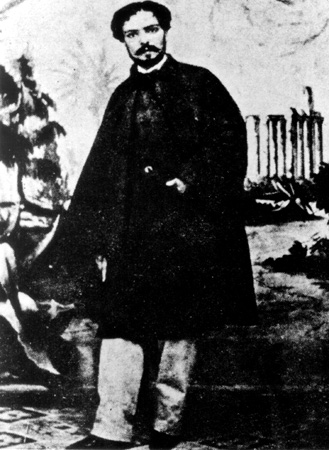
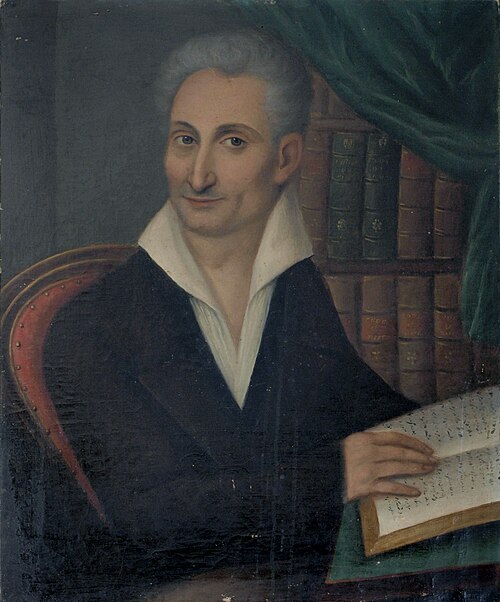
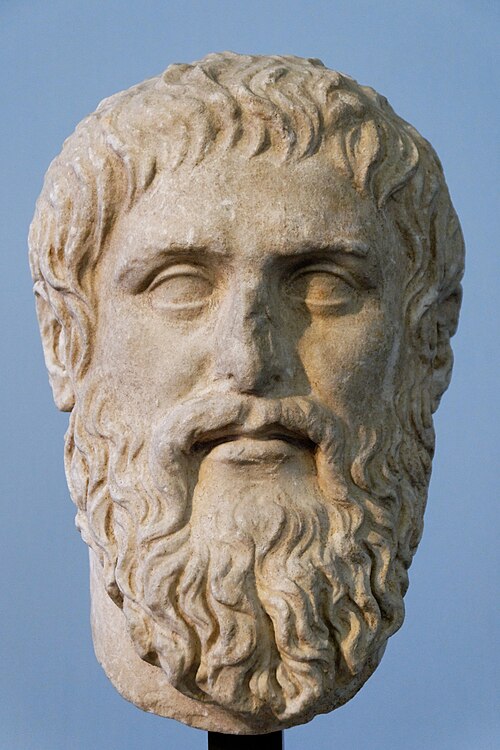
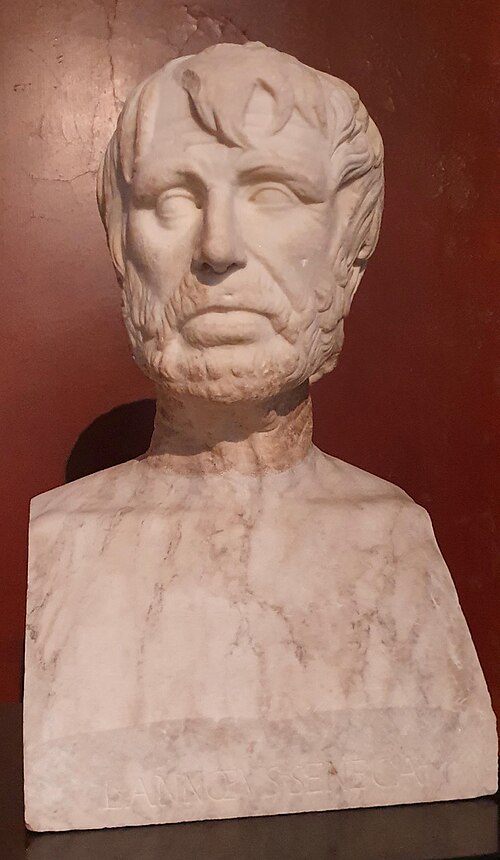
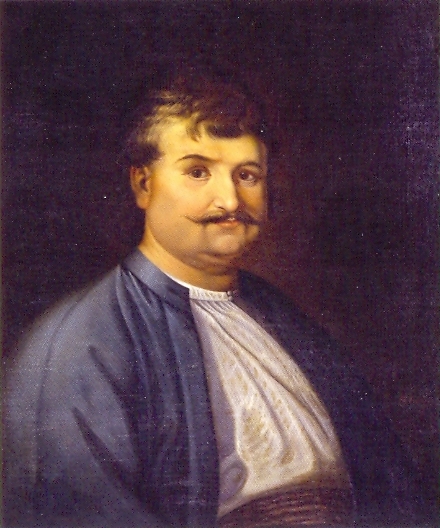
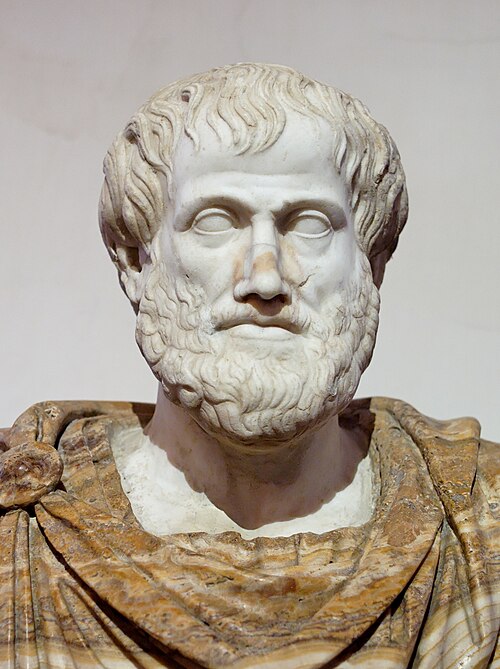
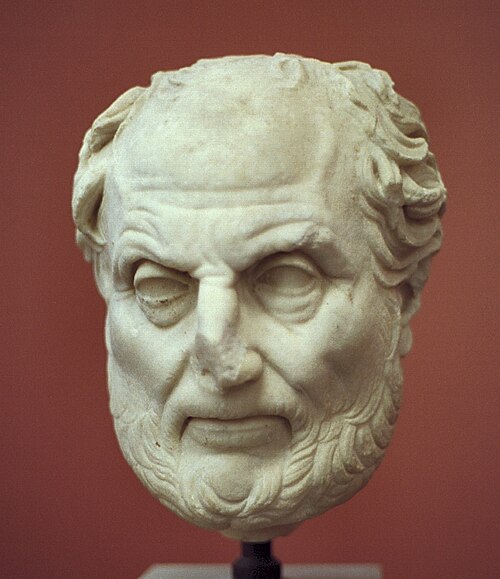
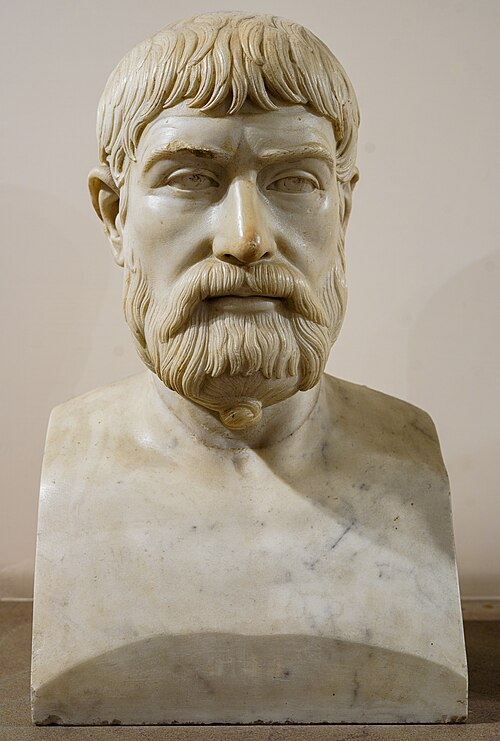
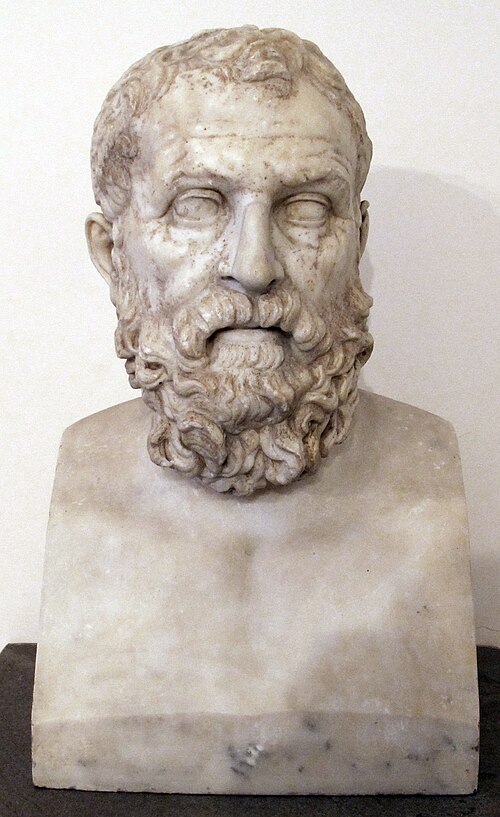
Public-domain pictures from Wikimedia Commons.
A line to remember
Γηράσκω δ' αἰεὶ πολλὰ διδασκόμενος.
In today's GreekΓερνάω μαθαίνοντας πάντα πολλά.
Girasko d' aiei polla didaskomenos.
I grow old always learning many things.
From the original
The text as Solon wrote it, out of copyright, with our own translation beside it.
«Εὐνομία»Eunomia (Good Order)
The elegy that gives Eunomia its name, preserved because Demosthenes had it read out in court two centuries later: the gods will not destroy Athens, its own citizens will; the close says what good order does instead. Lines 11–25 are omitted here.
Εὐνομία (fr. 4 West), lines 1–10 and 26–39, as quoted in full by Demosthenes, Περὶ τῆς παραπρεσβείας 255 · Public-domain text, source: perseus.tufts.edu