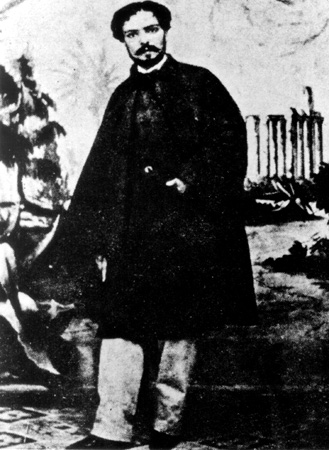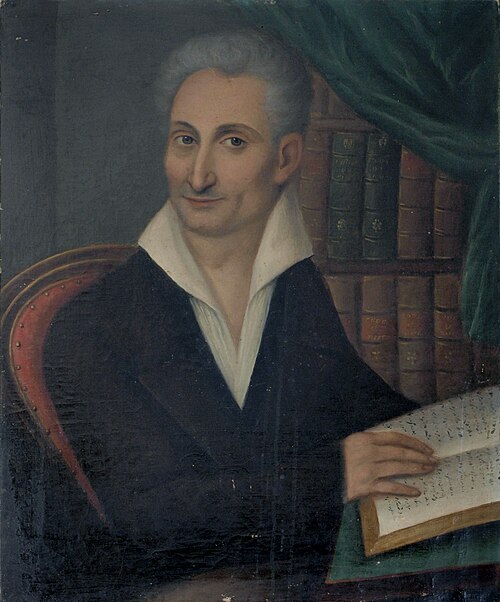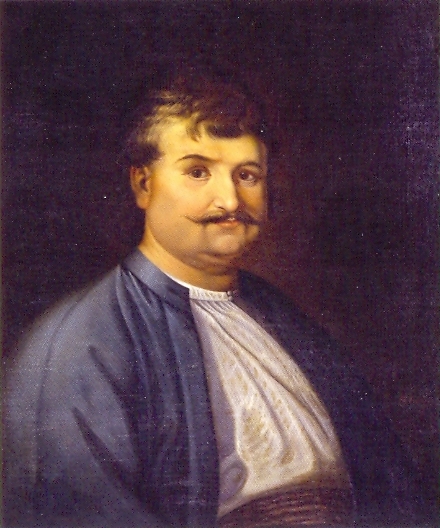
Life
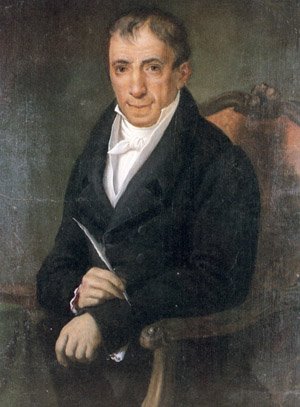
Korais was born on 27 April 1748 in Smyrna, the son of a merchant from Chios. His father intended him for trade and in 1771 sent him to Amsterdam as the firm's agent; the young man spent six years there learning languages and reading instead of selling, and the business failed. Back in Smyrna, and determined not to live under Ottoman rule, he persuaded his family to let him study medicine. From 1782 to 1788 he studied at Montpellier, taking his degree with distinction, and in May 1788 he moved to Paris, a year before the Revolution, which he watched from his window with alarm and admiration.
He lived in Paris for the remaining forty-five years of his life, poor, unmarried, working on his books from early morning in a modest flat. He turned down posts and honours, preferring independence, and earned his reputation among French scholars with editions and translations of ancient texts, beginning with Hippocrates in 1800. The Greek Revolution of 1821 found him at seventy-three; too old to go, he wrote, raised money and advised, and with the pamphlets of his last years he quarrelled bitterly with Ioannis Kapodistrias, the first governor of Greece, whom he accused of ruling like a tyrant. He corresponded with Thomas Jefferson about the constitution a free Greece should have.
He died in Paris on 6 April 1833 and was buried in Montparnasse. In 1877 the Greek state brought his remains to the First Cemetery of Athens.
Works

Korais's life work was the Ἑλληνικὴ Βιβλιοθήκη (Hellenic Library, 1805–1827), a series of editions of ancient authors, Isocrates, Plutarch, Strabo, Aristotle's Politics, Epictetus and others, financed by the Zosimas brothers, Greek merchants in Russia, and sent free to schools in Greece. What the Greeks read in them were the prefaces, the Προλεγόμενα or Αὐτοσχέδιοι στοχασμοί (Improvised Thoughts), in which the editor addressed his compatriots in plain modern Greek about education, liberty, the clergy, superstition and, above all, language. Earlier he had written the Ἀδελφικὴ Διδασκαλία (Brotherly Teaching, 1798), an angry reply to a patriarchal pamphlet that told Greeks to obey the Sultan, and the Σάλπισμα πολεμιστήριον (War Trumpet, 1801), a call to arms; in 1803 he read to a learned society in Paris his Mémoire on the state of civilisation in Greece, announcing to Europe that the Greeks were waking up.
On language he proposed the «μέση οδός», the middle way: not the artificial ancient Greek of the scholars, nor the spoken language exactly as it was, but the spoken language «corrected», its foreign words replaced and its grammar tidied towards the ancient. His key idea was μετακένωσις, the «decanting» of the Enlightenment from Europe into Greece. The corrected language became, in other hands and more rigidly than he wished, the katharevousa that remained the official Greek of the state until 1976, and the Language Question that divided Greece for 150 years begins with him. His last work, the Ἄτακτα (Miscellanies, 1828–1835), is a vast store of notes on Greek words, ancient and modern.
Legacy in Greece today
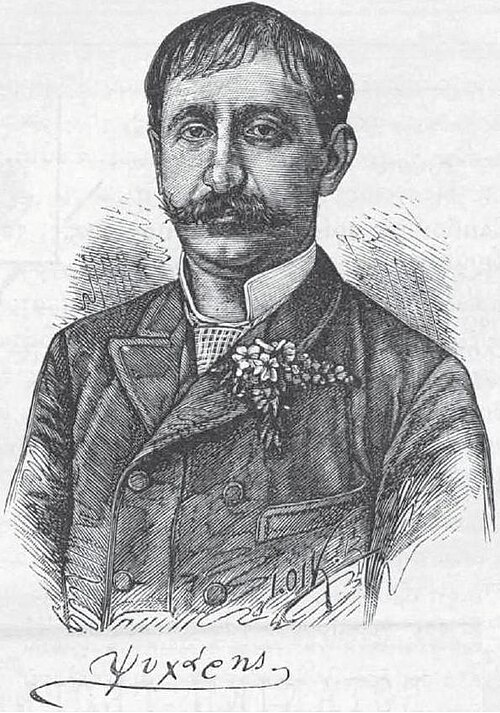
Korais is one of the four figures whose statues stand before the Propylaea of the University of Athens, and his face was on the 100-drachma banknote of 1978. In Chios, the island of his family, the Korais Library (Βιβλιοθήκη Κοραή), founded on the books he sent there, is one of the largest libraries in Greece and keeps his manuscripts and personal collection. Streets called Κοραή run through the centre of Athens and almost every Greek town, and the word Διαφωτισμός, Enlightenment, in a Greek school book almost always has his name next to it. Learners meet him in every history of the Greek language: the debate between his middle way and the demotic of Psycharis is the central story of modern Greek, and his idea of μετακένωση is still quoted whenever Greeks argue about Europe.
Did you know?
- He arrived in Paris in May 1788 and watched the French Revolution unfold from his window; he lived in the city for the next forty-five years.
- In 1823 he wrote to Thomas Jefferson, then eighty, asking advice on a constitution for Greece, and Jefferson replied at length.
- Though he spent his life working for Greece, he never visited the free Greek state; his remains arrived in Athens only in 1877.
- His face appeared on the Greek 100-drachma note issued in 1978.
Key works
| Greek title | Title | Year |
|---|---|---|
| Αδελφική Διδασκαλία | Brotherly Teaching | 1798 |
| Ιπποκράτους «Περί αέρων, υδάτων, τόπων» (έκδοση) | Edition of Hippocrates, On Airs, Waters and Places | 1800 |
| Σάλπισμα πολεμιστήριον | War Trumpet | 1801 |
| Υπόμνημα περί της παρούσης καταστάσεως του πολιτισμού εν Ελλάδι | Memoir on the Present State of Civilisation in Greece | 1803 |
| Ελληνική Βιβλιοθήκη | Hellenic Library (editions with prefaces) | 1805–1827 |
| Άτακτα | Miscellanies | 1828–1835 |
From the works


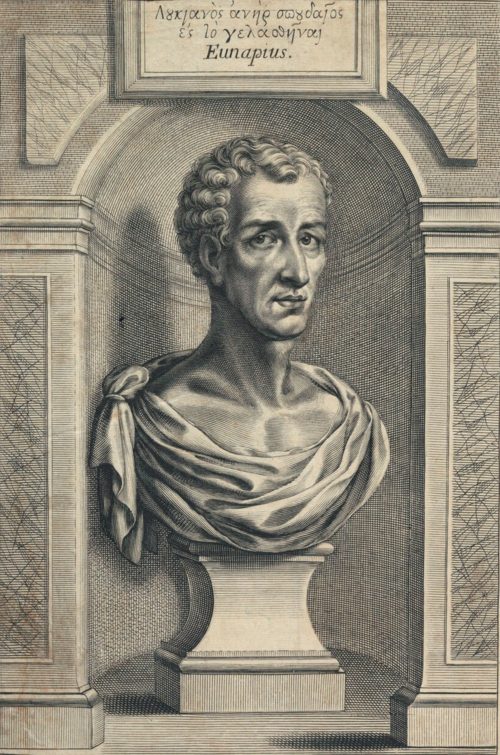
Public-domain pictures from Wikimedia Commons.
A line to remember
Μήτε τύραννοι τῶν χυδαίων, μήτε δοῦλοι τῆς χυδαιότητος αὐτῶν.
In today's GreekΟύτε τύραννοι του απλού λαού, ούτε δούλοι της χυδαιότητάς του.
Mite tyrannoi ton chydaion, mite douloi tis chydaiotitos afton.
Neither tyrants of the common people, nor slaves of their vulgarity.
From the original
The text as Adamantios Korais wrote it, out of copyright, with our own translation beside it.
«Σάλπισμα Πολεμιστήριον»War Trumpet
From the pamphlet Korais printed in Paris in 1801 for the Greeks serving with the French in Egypt: he lends his voice to Greece herself, pictured as a wounded mother running to her children, whose speech to them fills the rest of the text.
Σάλπισμα πολεμιστήριον (1801), second paragraph · Public-domain text, source: el.wikisource.org