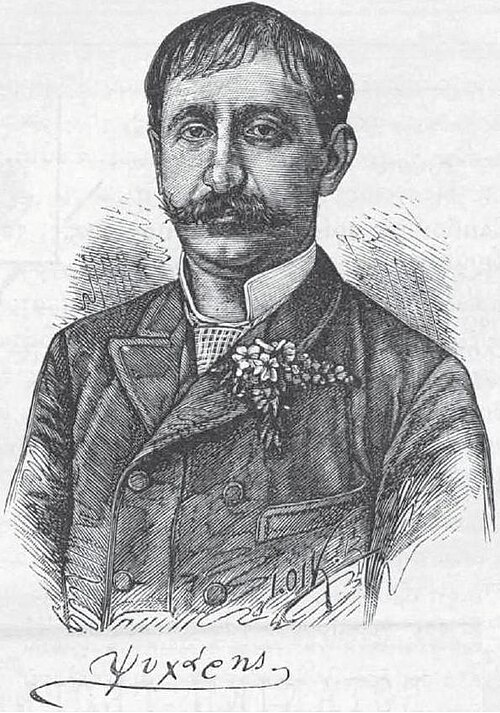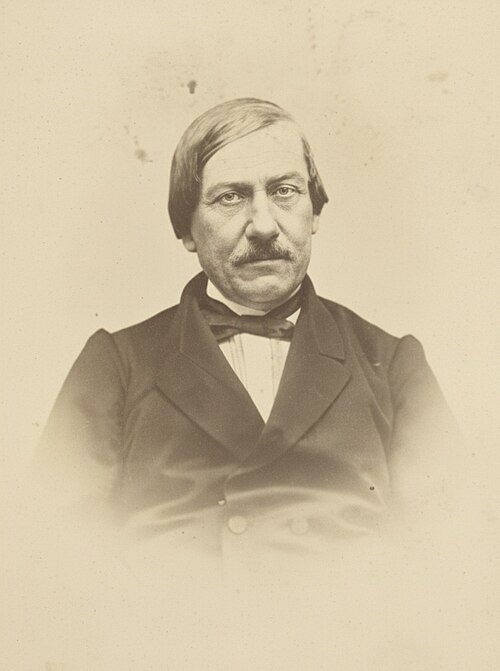
Life
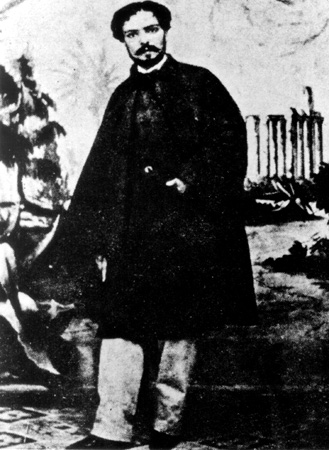
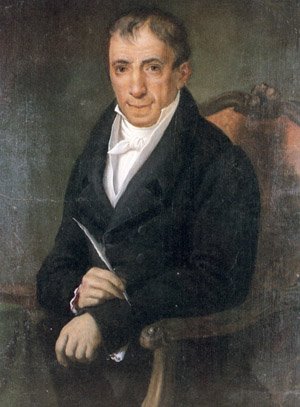
Triantafyllidis was born in Athens on 15 November 1883, into a Greece divided by the language question. The state, the schools and the newspapers used katharevousa, the "purified" language close to ancient Greek, while everyone spoke demotic, the living language. After studying philosophy in Athens he went to Germany to study linguistics with Karl Krumbacher, earning his doctorate with a thesis on loanwords in medieval vernacular Greek (Marburg, 1909), and he returned convinced that demotic was not a corrupt dialect but a full language with its own rules, which deserved to be described scientifically and taught in schools.
In 1910 he was one of the founders of the Εκπαιδευτικός Όμιλος (Educational Society), the group, joined by the educators Alexandros Delmouzos and Dimitris Glinos, that fought for demotic in education. When Eleftherios Venizelos's government introduced the first educational reform in 1917, Triantafyllidis and Delmouzos were appointed senior inspectors of primary education and, with Glinos, led it; for the first time, Greek primary pupils learned to read from books in their own language. The reform was reversed after the elections of 1920, and the struggle went on for decades. In 1926 he became professor of linguistics at the new University of Thessaloniki, where he taught until 1934. In 1939 the state commissioned from a committee under his direction an official grammar of demotic, which appeared in 1941. He lived in Athens in his last years and died there on 20 April 1959, leaving his property to the university for an institute devoted to Modern Greek.
Works

From his early study Ξενηλασία ή ισοτέλεια (Expulsion or Equal Rights, 1905), which asked whether Greek should chase out its foreign words or accept them as equals, Triantafyllidis worked on the same task: to describe Greek as it is really spoken. He wrote about the history of the language, about spelling, about teaching, and he took part in the fierce public debates of his time, always with arguments rather than insults.
His central work is the Νεοελληνική Γραμματική (της Δημοτικής) (Modern Greek Grammar of Demotic), published in 1941 by the state publisher of school books, followed in 1949 by a shorter version for schools, the Μικρή νεοελληνική γραμματική. It set out clearly the nouns, verbs and spelling of the common spoken language, and drew a line between what belongs to standard demotic and what is dialect or learned borrowing. When, in 1976, after the fall of the dictatorship, demotic finally became the official language of Greek education and the state, it was this grammar, in its school versions, that became the norm. Every Greek pupil since has learned verb tables and declensions that go back to it. The institute founded with his bequest at the Aristotle University of Thessaloniki continued the work: in 1998 it published the Λεξικό της κοινής νεοελληνικής (Dictionary of Standard Modern Greek), which Greeks and learners consult every day.
Legacy in Greece today
If you study Modern Greek, you are almost certainly using Triantafyllidis's work without knowing it: the way grammars present the cases of Greek nouns or the two conjugations of verbs goes back to his grammar. The Institute of Modern Greek Studies, the Manolis Triantafyllidis Foundation, at the Aristotle University of Thessaloniki publishes grammars, studies and the dictionary, and the dictionary can be consulted free of charge online. Look up any word in «the Triantafyllidis» and you are using his legacy directly. Streets in Greek cities carry his name. And whenever Greeks argue about spelling, accents or loan words, his name comes up.
Did you know?
- Greeks call the Dictionary of Standard Modern Greek (1998) simply «the Triantafyllidis», though it was published almost forty years after his death.
- He helped lead the 1917 reform that first brought demotic readers into Greek primary schools.
- His grammar of 1941 became the basis of school Greek only after 1976, when demotic was made the official language.
- He left his whole estate to the University of Thessaloniki to found an institute for Modern Greek.
Key works
| Greek title | Title | Year |
|---|---|---|
| Ξενηλασία ή ισοτέλεια | Expulsion or Equal Rights (study of foreign words in Greek) | 1905 |
| Εκπαιδευτικός Όμιλος (συνιδρυτής) | Educational Society (co-founder) | 1910 |
| Εκπαιδευτική μεταρρύθμιση | The educational reform bringing demotic into primary schools | 1917 |
| Νεοελληνική Γραμματική (της Δημοτικής) | Modern Greek Grammar (of Demotic) | 1941 |
| Μικρή νεοελληνική γραμματική | Short Modern Greek Grammar (for schools) | 1949 |
A line to remember
Ξενηλασία ή ισοτέλεια
Xenilasia i isoteleia
Expulsion of foreigners, or equal rights