Life
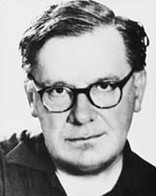
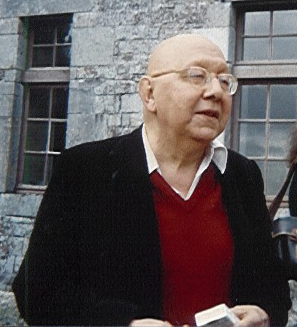
Matesis was born in 1933 in Divri, a mountain village of Ilia in the western Peloponnese, today called Lampeia. His childhood coincided with the darkest decade of modern Greek history: the Occupation (1941–1944) and the Civil War that followed (1946–1949), years of hunger, reprisals and divided villages. These experiences, seen through a child's eyes, would become the raw material of his best work.
He moved to Athens, studied acting at a drama school and also music, taking a diploma in the violin. In the 1960s he began writing plays: Ο σταθμός (The Station) won a playwriting competition in 1964, and Η τελετή (The Ceremony) received the State Theatre Prize in 1966. He became one of the playwrights of the generation that renewed Greek theatre in the 1960s and 1970s, alongside Loula Anagnostaki, Vasilis Ziogas and Dimitris Kechaidis. His plays mixed realism, black humour and the absurd, and looked hard at Greek family life, social hypocrisy and the scars of history.
Matesis was also a prolific translator for the Greek stage, from Aristophanes to Shakespeare, Molière, Tennessee Williams and Pinter, and he wrote television serials. He turned to the novel late, in his fifties, with Αφροδίτη (Aphrodite, 1986), and it was the novel that made his name abroad: Η μητέρα του σκύλου was translated into many languages. He continued to write novels until the late 2000s. In 2011 he suffered a stroke during a performance at the Theatro Technis, and he died in Athens on 20 January 2013, just after his eightieth birthday.
Works

His theatre began in the 1960s with plays such as Η τελετή (The Ceremony), and continued with works like Περιποιητής φυτών (The Plant Keeper, 1989), which won the Karolos Koun prize. They are often grotesque and funny on the surface and cruel underneath: closed families, small towns, people imprisoned by convention, and a recurring sense that public life in Greece was a theatre of lies.
Η μητέρα του σκύλου (1990) is his masterpiece. Its narrator, Rarau, tells her own life in a breathless spoken Greek, full of mistakes, proverbs and comic misunderstandings. During the Occupation, in a small town, her father is gone and her mother, to feed her children, sleeps with the occupying soldiers. At the Liberation the townspeople shave the mother's head and parade her through the streets, and she never recovers. Rarau grows up to become an actress, playing her parts with enormous pride. The horror of history is never described directly; it is filtered through the naive, affectionate, self-deceiving voice of a woman who refuses to be a victim. The result is both very funny and devastating.
His later novels, among them Ο παλαιός των ημερών (The Ancient of Days, 1994) and Πάντα καλά (All Is Well, 1998), continued to explore memory, family and the Greek provinces with the same mixture of tenderness and savage irony.
Legacy in Greece today
Η μητέρα του σκύλου is one of the most widely read Greek novels of the last decades of the twentieth century. It is studied by students of modern Greek literature, and it is available in English as The Daughter, so a learner can read the two side by side and hear what translation loses of Rarau's voice. Matesis is also part of the history of the post-war Greek stage, and his plays still return to theatres. Read with Dido Sotiriou and Iakovos Kambanellis, he belongs to the writers who taught Greeks to look back at the Occupation and the Civil War without official heroics. His books are in copyright, so look for them in Greek bookshops and libraries.
Did you know?
- He published his most famous novel, Η μητέρα του σκύλου, at about fifty-seven, after a long career as a playwright.
- The novel appeared in English under the title The Daughter.
- Its narrator Rarau speaks a deliberately broken, comic Greek, which makes the book a challenge and a delight for translators.
- He was also a prolific translator of plays for the Greek stage.
Key works
| Greek title | Title | Year |
|---|---|---|
| Η τελετή | The Ceremony (play, State Theatre Prize) | 1966 |
| Περιποιητής φυτών | The Plant Keeper (play) | 1989 |
| Η μητέρα του σκύλου | The Daughter (novel; literally The Dog's Mother) | 1990 |
| Ο παλαιός των ημερών | The Ancient of Days (novel) | 1994 |
| Πάντα καλά | All Is Well (novel) | 1998 |
A line to remember
Με ενδιαφέρουν τα έργα μου όσο ζω εδώ.
Me endiaferoun ta erga mou oso zo edo.
My works interest me as long as I live here.