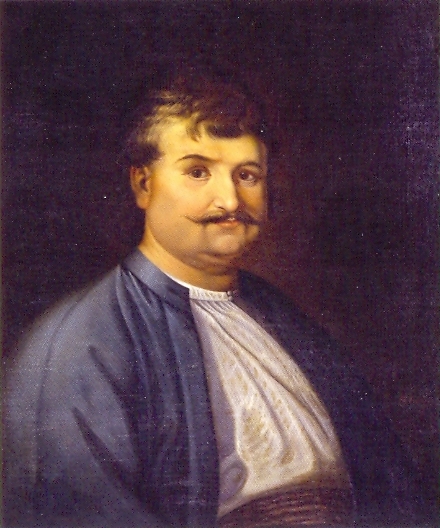
Life
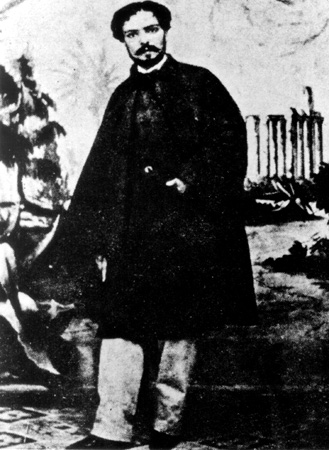
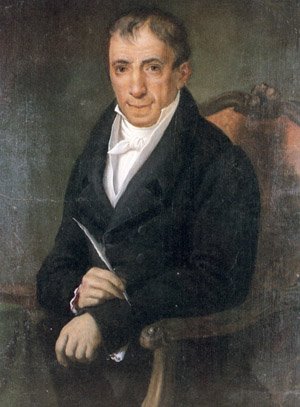
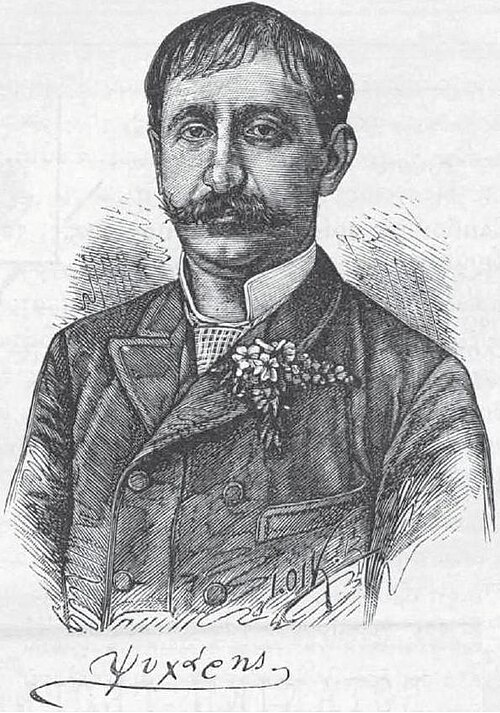
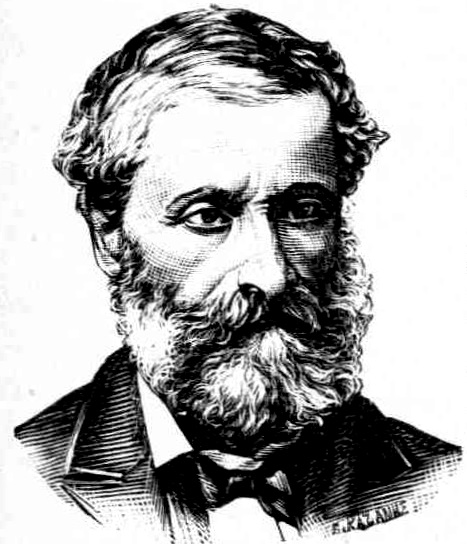
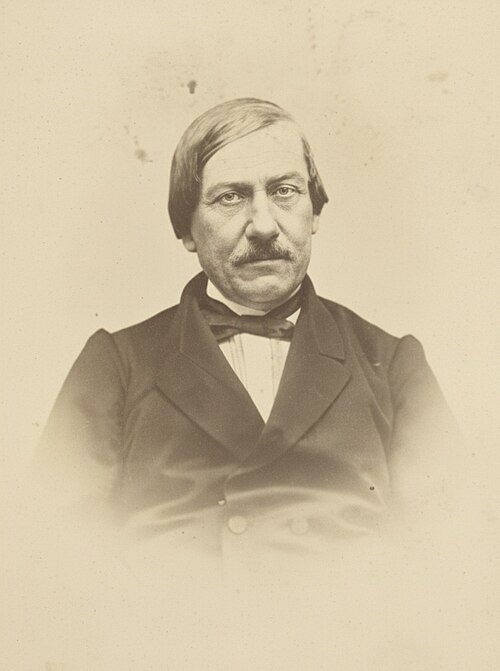
Paparrigopoulos was born in Constantinople in 1815, the son of Dimitrios Paparrigopoulos, a banker whose family came from Vytina in Arcadia. When the Greek Revolution broke out in 1821, the Ottoman authorities took reprisals against the Greeks of the capital, and his father was among those killed. The family escaped to Odessa, on the Black Sea, where the boy studied at the Richelieu Lyceum and learned Russian and French. In 1830, as the new Greek state was being born, they settled in Nafplio, its first capital.
He began as a civil servant at the Ministry of Justice, but in 1845 he lost his post because he was a ετερόχθων, a Greek born outside the borders of the kingdom, at a time when the «autochthonous» Greeks of the liberated lands resented the newcomers from Constantinople and elsewhere. The episode stayed with him: his whole life's work would argue that the Greek nation was far larger than the small kingdom. He turned to teaching and to history, and in 1851 he became professor of history at the University of Athens, where he taught for four decades and was elected rector in 1872. He published school textbooks, historical studies and newspaper articles, and from 1860 onwards the volumes of his great history. He died in Athens in April 1891, honoured as the man who had given the Greeks their past.
Works

The background to his work was a provocation. In the 1830s the German historian Jakob Philipp Fallmerayer had argued that the ancient Greeks had died out in the Middle Ages and that the modern Greeks were mostly of Slavic and Albanian descent. Paparrigopoulos answered as early as 1843 with a study of the Slavic settlements in the Peloponnese, and he spent the rest of his life building a larger answer.
The Ιστορία του Ελληνικού Έθνους (History of the Greek Nation), published in five volumes between 1860 and 1874, divides Greek history into three great periods, ancient, medieval and modern, and insists that they are one: the same nation, the same language, a continuous culture. Its boldest move concerned Byzantium. Western Enlightenment writers, and Greeks like Korais who followed them, had seen the Byzantine Empire as a dark age of superstition and decline; Paparrigopoulos made it the medieval phase of Hellenism, the bridge that carried Greek language and Orthodox Christianity from Pericles to 1821. His style is broad and patriotic, and he was writing for a purpose: to give the nation a past that justified its future, including the hope of uniting all Greeks in one state, the Μεγάλη Ιδέα (Great Idea). He also published a French summary, Histoire de la civilisation hellénique (1878), to make the case to Europe.
Legacy in Greece today
For generations the Greek school history of the nation followed the scheme Paparrigopoulos laid down: ancient, Byzantine, modern, one people throughout. Later historians have questioned his romantic nationalism and stressed the breaks and the many peoples in Greek history, but the idea of continuity and the rehabilitation of Byzantium remain part of how most Greeks see themselves. Streets named Παπαρρηγοπούλου exist in Athens and many other towns, and later editions of his History, completed and annotated by other scholars, are still in print. A good thing to do: look at a Greek school history book and notice how it is divided into periods; then ask a Greek friend whether Byzantium is «our» history. The answer will usually be yes, and that is his legacy.
Did you know?
- His father was killed in Constantinople in the reprisals that followed the outbreak of the Revolution in 1821.
- In 1845 he was dismissed from the Greek civil service for being born outside the kingdom.
- He wrote in direct reply to Fallmerayer, who claimed the modern Greeks did not descend from the ancient ones.
- He made Byzantium, long despised by Western historians, the central link in Greek national history.
Key works
| Greek title | Title | Year |
|---|---|---|
| Περί της εποικήσεως σλαβικών τινών φύλων εις την Πελοπόννησον | On the Settlement of Certain Slavic Tribes in the Peloponnese | 1843 |
| Ιστορία του Ελληνικού Έθνους (σύντομη πρώτη μορφή, ένας τόμος) | History of the Greek Nation (short first version, one volume) | 1853 |
| Ιστορία του Ελληνικού Έθνους | History of the Greek Nation (5 vols.) | 1860–1874 |
| Histoire de la civilisation hellénique | History of Hellenic Civilisation (in French) | 1878 |
From the works


Public-domain pictures from Wikimedia Commons.
A line to remember
Ιστορία του Ελληνικού Έθνους από των αρχαιοτάτων χρόνων μέχρι των νεωτέρων
In today's GreekΙστορία του ελληνικού έθνους από τα πολύ αρχαία χρόνια μέχρι τα νεότερα
Istoria tou Ellinikou Ethnous apo ton archaiotaton chronon mechri ton neoteron
History of the Greek nation from the most ancient times to the most recent