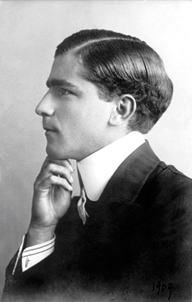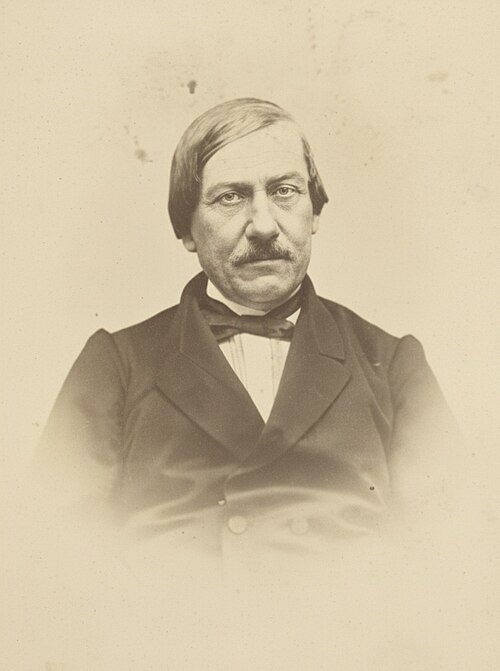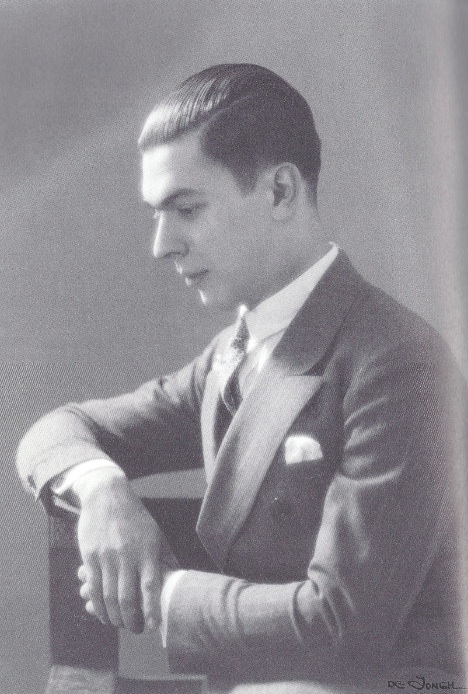
Life
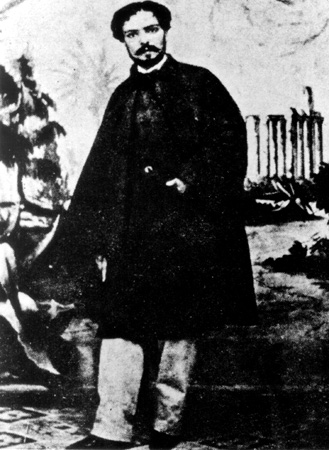
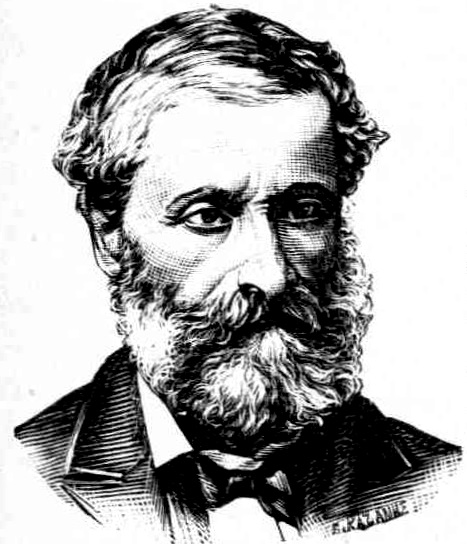
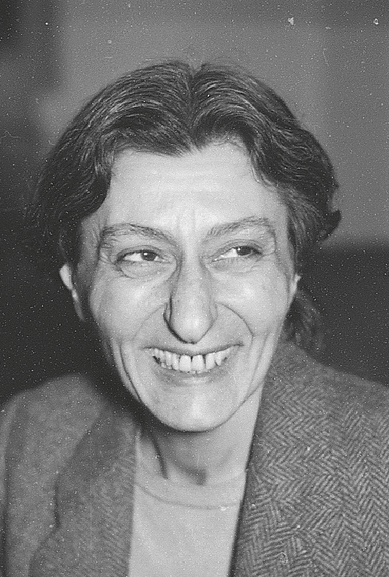
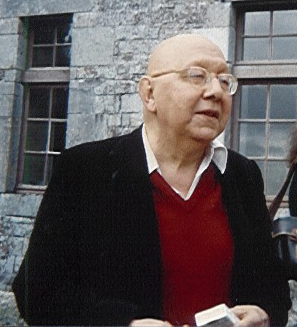
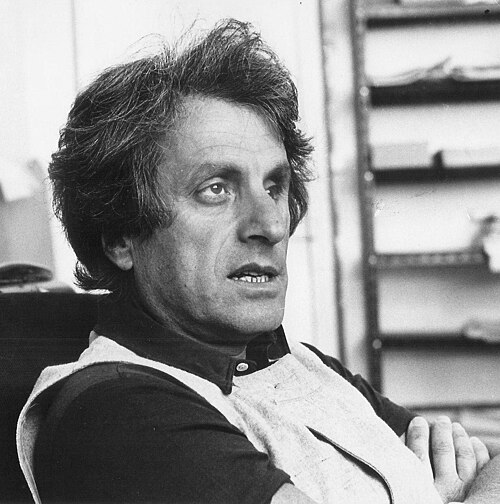
Embirikos was born on 2 September 1901 in Brăila, a Danube port in Romania where many Greek merchant and shipping families had settled. His family came from the island of Andros, one of the great shipowning islands of Greece, and he grew up mostly in Athens in comfortable circumstances. He enrolled in philosophy at the University of Athens but soon left, studied economics in Lausanne, and then philosophy and English literature at King's College London while working in the family shipping business there (1921–1925), a world he would later leave behind.
In 1926 he moved to Paris, and the five years he spent there decided his life. He joined the circle of André Breton and the surrealists, who believed that poetry should free the unconscious from the control of reason, morality and habit. At the same time he underwent analysis with René Laforgue, one of the founders of French psychoanalysis, and it was through this that he came into contact with the surrealists around 1929. When he returned to Athens in 1931, he brought with him both revolutions: surrealism and Freud.
On 25 January 1935 he gave a lecture on surrealism at the Artists' Club in Athens, and published Υψικάμινος, the first surrealist book in Greek. From 1935 to 1951 he practised as a psychoanalyst, the first in Greece. He married the poet Matsi Hatzilazarou in 1939 (they divorced in 1943) and Vivika Zissi in 1947; their son Leonidas, born in 1957, also became a writer. He spent his summers on Andros and lived quietly, surrounded by friends such as Odysseas Elytis and Nikos Engonopoulos, writing far more than he published. He died in Kifisia, in the north of Athens, on 3 August 1975.
Works

Υψικάμινος (Blast Furnace, 1935) is a book of prose poems written by automatic writing, the surrealist technique of letting words flow without conscious control. Its images are startling: machines and bodies, ships and stars, desire exploding in long sentences that mix the most learned katharevousa with the street language of demotic Greek. Critics and the public reacted with anger and laughter; many thought it was a joke. Yet the book changed the possibilities of Greek poetry, and the generation of the 1930s, Elytis above all, learned from its freedom.
Ενδοχώρα (Inland, 1945) collects more controlled poems written between 1934 and 1937, luminous and sensual, in which the Aegean, the human body and a kind of joyful cosmic optimism are celebrated. Later came the prose of Γραπτά ή Προσωπική μυθολογία (Writings, or Personal Mythology, 1960) and the short novel Αργώ ή Πλους αεροστάτου (Argo, or the Voyage of a Balloon, serialised in 1964–1965 and published as a book in 1980).
His central work, however, appeared only after his death. Ο Μέγας Ανατολικός (The Great Eastern), published in eight volumes between 1990 and 1992, describes a voyage of the giant steamship Great Eastern from Liverpool to New York in the nineteenth century, during which passengers and crew give themselves up to an endless, joyful eroticism. For Embirikos, a disciple of Freud, sexual freedom was the key to human happiness and to a utopian future, and the novel is his vast, provocative hymn to that belief.
Legacy in Greece today
Embirikos is today recognised as one of the great innovators of modern Greek poetry, and Υψικάμινος is studied in universities as the founding text of Greek surrealism, alongside the work of Engonopoulos. His books remain in print, and Ο Μέγας Ανατολικός still divides readers, admired by some as a masterpiece and shocking to others. Exhibitions and conferences have been devoted to him, and the island of Andros, with its strong literary and artistic life, keeps his memory. A learner at this level can try a single page of Υψικάμινος: do not look for logical meaning, but read it aloud and let the images and the music of the words act, as the surrealists wanted.
Did you know?
- He was both the first surrealist poet and the first practising psychoanalyst in Greece.
- Many readers in 1935 thought Υψικάμινος was a hoax.
- His great novel Ο Μέγας Ανατολικός was published in eight volumes, fifteen years after his death.
- He was born in Romania, into a shipowning family from the island of Andros.
Key works
| Greek title | Title | Year |
|---|---|---|
| Υψικάμινος | Blast Furnace | 1935 |
| Ενδοχώρα | Inland | 1945 |
| Γραπτά ή Προσωπική μυθολογία | Writings, or Personal Mythology | 1960 |
| Αργώ ή Πλους αεροστάτου | Argo, or the Voyage of a Balloon | 1964–1965 |
| Ο Μέγας Ανατολικός | The Great Eastern (novel, 8 vols, posthumous) | 1990–1992 |
A line to remember
Υψικάμινος
Ypsikáminos
Blast Furnace