Life
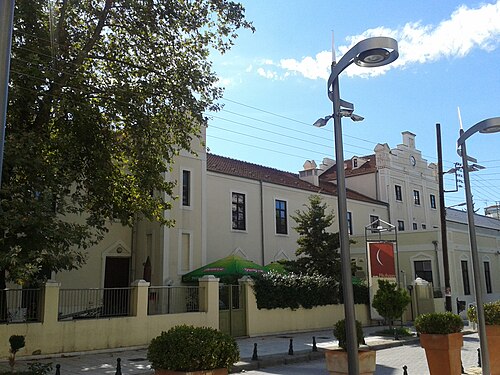
Nossis came from Epizephyrian Locri (Lokroi Epizephyrioi), a Greek colony on the Ionian coast of what is now Calabria in southern Italy. Almost everything known about her comes from her own poems. An epitaph she wrote for Rhinthon of Syracuse, an author of comic plays, is one of the clues that place her activity in the early third century BC, around 300 BC. No birth or death dates survive. The Latin spelling Nossis and the Greek Νοσσίς name the same poet; Italians often call her Nosside.
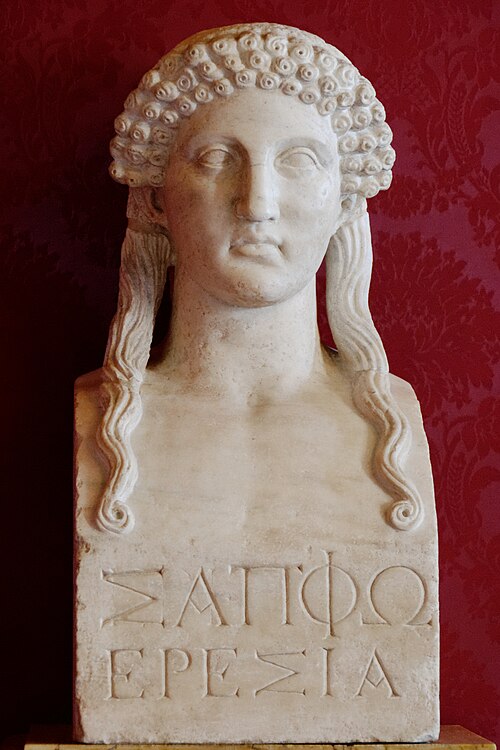
Her poems suggest a woman of some standing. In a dedication to Hera she names her mother Theophilis and her grandmother Cleocha, tracing her family back two generations through the female line. The offering is a robe of fine linen, a costly gift. Several poems speak in a confident first person: Nossis names herself, claims the favour of the Muses and sets herself beside Sappho of Lesbos.
Her work survived because later anthologists valued it. Around 100 BC Meleager of Gadara included her in his Garland, an anthology in which each poet is compared to a flower; he says that Eros himself melted the wax of her writing tablets. Antipater of Thessalonica later listed her among nine women poets, calling her θηλύγλωσσος (woman-tongued). Older theories that she led a circle of women like the one associated with Sappho remain speculation.
Works

Nossis wrote epigrams: short poems in elegiac couplets, a form that began on tombs and votive offerings and became a literary art in the Hellenistic age. About twelve survive in books 5, 6, 7 and 9 of the Greek Anthology, in a literary Doric Greek (for example ἁ instead of ἡ for “the”). Most are dedications. Bruttian warriors drop their shields under the blows of the Locrians, and the shields now hang in the gods’ temples; Samytha offers Aphrodite a decorated headdress that smells of nectar; Artemis is asked to come to Locri and free a woman named Alketis from hard labour pains.
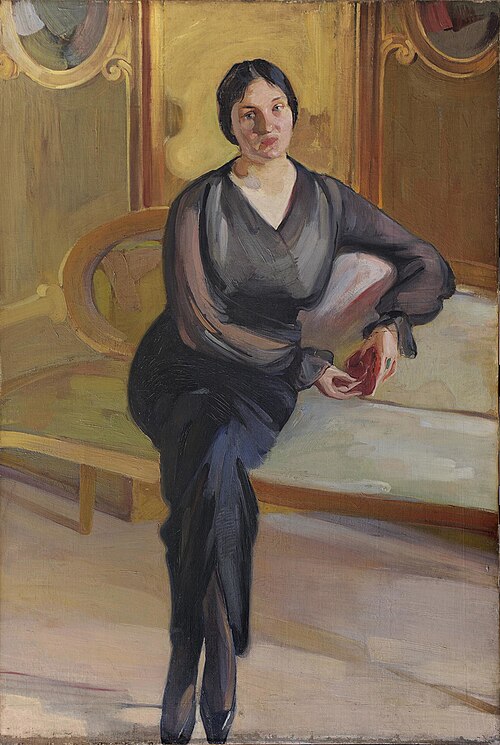
A second group looks at images. Nossis praises painted portraits of Melinna, Thaumareta, Kallo and Sabaethis for their likeness: Melinna’s face resembles her mother’s, and Thaumareta’s house dog would wag its tail at the picture, thinking it saw its mistress. Another poem invites women to view a gold-adorned statue of Aphrodite dedicated by Polyarchis. These poems give rare attention to women as donors, sitters and viewers.
Scholars often read two poems as a frame for her collection. One declares that nothing is sweeter than love: whoever Aphrodite has not loved does not know what roses are. The other asks a stranger sailing to Mytilene to report that the Locrian land bore a woman dear to the Muses, and that her name is Nossis.
Legacy in Greece today
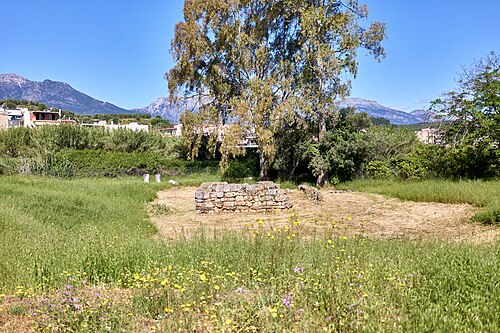
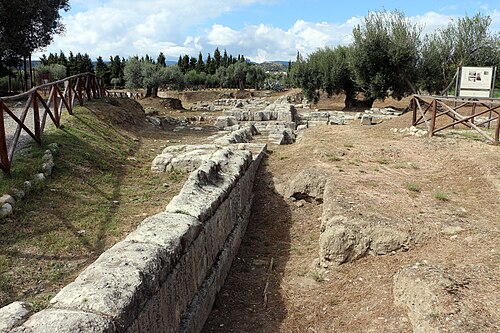
Nossis has no monument in Greece, but her poems appear in every edition of the Greek Anthology, and she is read alongside Sappho, Erinna and Anyte as one of the few ancient Greek women poets whose complete poems survive. In Locri, the National Archaeological Museum and Park preserve the city she knew, including fifth-century BC terracotta votive tablets (pinakes), another kind of offering from the same city. For a C1 exercise, start from the quoted dedication and our Modern Greek rendering. Write: Η Θευφιλίς προσφέρει στην Ήρα ένα λινό ένδυμα (Theophilis offers Hera a linen robe). Then replace both objects with pronouns: Της το προσφέρει (She offers it to her). Finally describe a gift of your own in the same two steps.
Did you know?
- A single four-line poem names Nossis, her mother Theophilis and her grandmother Cleocha.
- Antipater of Thessalonica called his nine women poets nine earthly Muses, matching the nine of heaven.
- In one epigram a house dog is imagined greeting a painted portrait as if it were its mistress.
- Her epitaph for the comic playwright Rhinthon is one of the clues used to date her.
Key works
| Greek title | Title | Year |
|---|---|---|
| Ἅδιον οὐδὲν ἔρωτος (Ἑλληνικὴ Ἀνθολογία 5.170) | Nothing is sweeter than love — Greek Anthology 5.170 | ? |
| Ἔντεα Βρέττιοι ἄνδρες (Ἑλληνικὴ Ἀνθολογία 6.132) | The Bruttians’ shields (dedication) — Greek Anthology 6.132 | ? |
| Ἥρα τιμήεσσα (Ἑλληνικὴ Ἀνθολογία 6.265) | A linen robe for Hera (dedication) — Greek Anthology 6.265 | ? |
| Θαυμαρέτας μορφάν (Ἑλληνικὴ Ἀνθολογία 9.604) | The portrait of Thaumareta — Greek Anthology 9.604 | ? |
| Ὦ ξεῖν’, εἰ τύ γε πλεῖς (Ἑλληνικὴ Ἀνθολογία 7.718) | To a stranger sailing to Mytilene — Greek Anthology 7.718 | ? |
A line to remember
δέξαι βύσσινον εἷμα, τό τοι μετὰ παιδὸς ἀγαυᾶς Νοσσίδος ὕφανεν Θευφιλὶς ἁ Κλεόχας.
In today's GreekΔέξου το λινό ένδυμα που ύφανε για σένα η Θευφιλίς, η κόρη της Κλεόχας, μαζί με την ευγενική της κόρη, τη Νοσσίδα.
déxai býssinon heîma, tó toi metà paidòs agauâs / Nossídos hýphanen Theuphilìs ha Kleóchas.
Accept this linen robe, which Theophilis, daughter of Cleocha, wove for you together with her noble daughter Nossis.