Life
Nonika Galinea, born Antigoni Galinea in Athens on 8 June 1938, received an unusually international education. After primary school in Athens she moved to Florence at fourteen and then to an English-language school in Switzerland. At eighteen she went to London, first to a secretarial college and then to the Webber Douglas School of Singing and Dramatic Art. Greek obituaries note that she spent a large part of her life in London.
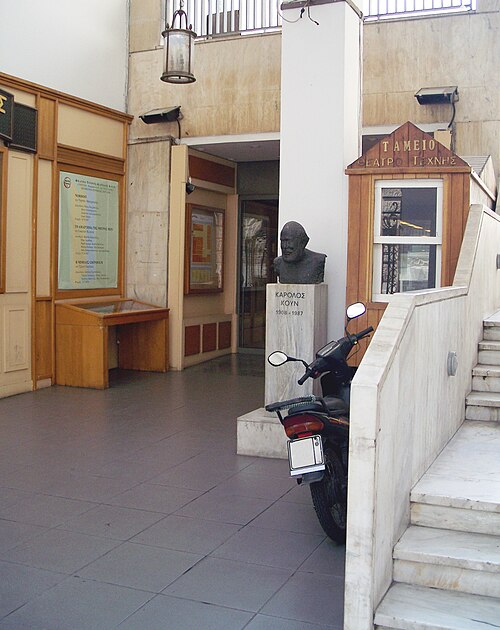
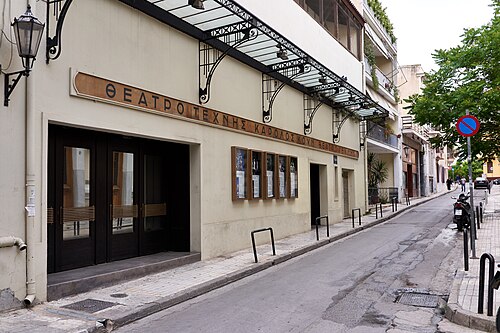
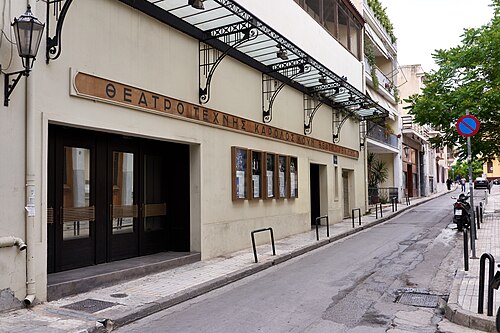
Her professional career began in 1963, when she passed the audition for Karolos Koun’s Theatro Technis (Art Theatre); her first production there was Aristophanes’ Όρνιθες (The Birds). Over the following decades she worked with leading figures of Greek theatre such as Katina Paxinou, Dimitris Horn, Anna Synodinou, Alexis Minotis and Dimitris Myrat. In the summer of 1969 she appeared at the Metropolitan Theatre in Georgios Roussos’s Μεγάλα Χρόνια (Great Years), where she first worked with Alekos Alexandrakis. They remained partners on and off stage for twenty-one years, until 1990.
In 1986 the two actors settled at the Ilisia Theatre in Athens, which they renovated completely, and they ran it together with the smaller Studio Ilisia. Between 1968 and 1972 she also appeared in four films, three of them made by Finos Film, and in two short television series. She marked fifty years on stage in 2013 and died in June 2023, a few days before her 85th birthday.
Works
Galinea’s work combined three crafts: acting, translation and writing. With Alexandrakis she played in productions such as Κάθε χρόνο τέτοια μέρα (Every Year on This Day), Μάρτυς κατηγορίας (Witness for the Prosecution) and Καινούργια σελίδα (A New Page). Their first play together, Τέσσερα δωμάτια με κήπο (Four Rooms with a Garden) at the Dionysia Theatre, required her to play four different roles. She later recalled that experienced colleagues doubted that a young actress could manage it, and that even severe critics praised her. At the Ilisia the couple staged Η επιστροφή της γηραιάς κυρίας (The Return of the Old Lady) and Ευαίσθητη ισορροπία (A Delicate Balance).
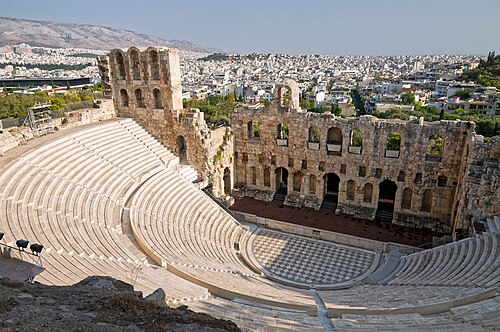
She translated seventeen plays into Greek, many of them published. Her translations include Η βεντάλια της Λαίδης Γουίντερμιρ (Lady Windermere’s Fan, 1983), Ταξίδι μεγάλης μέρας μέσα στη νύχτα (Long Day’s Journey into Night, 1987) and Λεωφορείον ο Πόθος (A Streetcar Named Desire, 1988). Beyond her own company she worked with the National Theatre, whose archive records her as the Queen in Παραμύθι χωρίς όνομα (Tale Without a Name) in 1995, and with the State Theatre of Northern Greece. She appeared at the Athens Concert Hall, at Epidaurus and at Covent Garden in London. She also told her own story in two books, the autobiography Η ζωή μου (My Life, 2005) and Επέστρεφε (Come Back, 2007).
Legacy in Greece today
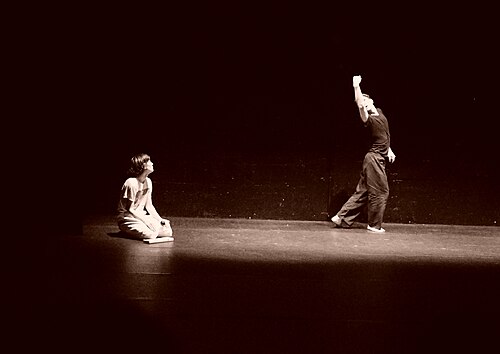
Greek theatre honoured Galinea with the Kyveli award in 2006 and the Nikos Kourkoulos award in 2017 for her contribution to the stage. Her last wish was that, instead of funeral wreaths, money should go to the foundation Το σπίτι του ηθοποιού (The Actor’s Home). For a learner, the National Theatre’s digital archive offers a concrete task: find the 1995 photographs of Παραμύθι χωρίς όνομα, also shown on searchculture.gr, and write a caption that attributes the role: Η Νόνικα Γαληνέα υποδύεται τη Βασίλισσα (Nonika Galinea plays the Queen). Then add one original sentence describing what the actors are doing in the picture. Finally, report her words in indirect speech: Η Γαληνέα είπε ότι πάνω στη σκηνή είσαι πάντα μόνος με το κοινό.
Did you know?
- Her first stage production, in 1963, was Aristophanes’ The Birds at the Art Theatre.
- In her first play with Alexandrakis she played four different roles.
- She translated seventeen plays, including Eugene O’Neill’s Long Day’s Journey into Night.
- She marked fifty years on the stage in 2013.
Key works
| Greek title | Title | Year |
|---|---|---|
| Όρνιθες (Αριστοφάνη) | The Birds — debut at the Art Theatre | 1963 |
| Μεγάλα Χρόνια | Great Years — Metropolitan Theatre | 1969 |
| Ταξίδι μεγάλης μέρας μέσα στη νύχτα | Long Day’s Journey into Night — translation | 1987 |
| Λεωφορείον ο Πόθος | A Streetcar Named Desire — translation | 1988 |
| Παραμύθι χωρίς όνομα | Tale Without a Name — the Queen, National Theatre | 1995 |
| Η ζωή μου | My Life — autobiography | 2005 |
A line to remember
Πάνω στην σκηνή είσαι πάντα μόνος με το κοινό.
Páno stin skiní íse pánda mónos me to kinó.
On stage you are always alone with the audience.