Life
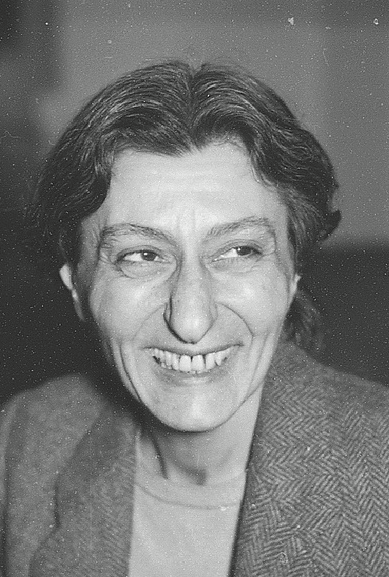
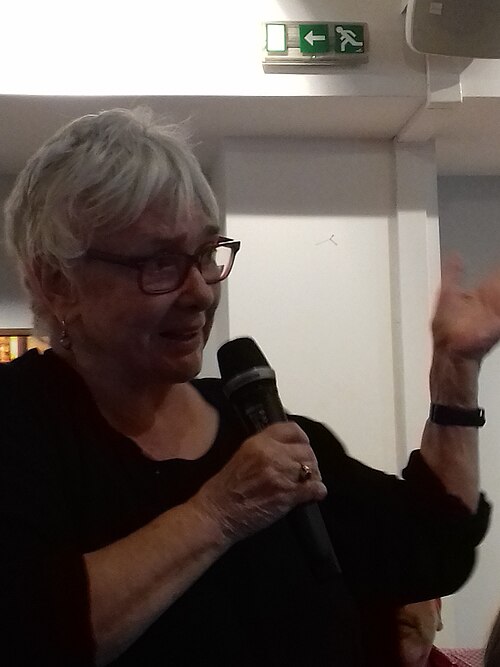
Nausica Pastra, also spelled Nafsika or Nausika Pastra, was born in Kalamata, in the Peloponnese, in 1921. She came to sculpture in her mid-thirties. According to the National Gallery in Athens, she attended Ewald Mataré’s sculpture course at the Sommerakademie in Salzburg in 1957; the curator Emmanuel Mavrommatis dates her first lessons with Mataré to 1956. There she built a vase from rings of clay laid one on top of another, an ancient pottery technique. From 1957 to 1962 she studied in Fritz Wotruba’s sculpture studio at the Academy of Fine Arts in Vienna, and in 1959 the academy awarded her its Füger Prize for drawing.
In 1963 Galerie Würthle in Vienna gave her a first solo exhibition of figures in clay, plaster, cement and bronze, which Austrian critics reviewed warmly. She then settled in Paris: the National Gallery gives 1963, while other sources give 1964. From 1967 to 1973 she followed Jean Cassou’s seminar on the sociology of art at the École Pratique des Hautes Études, and she became a corresponding member of the Vienna Secession.
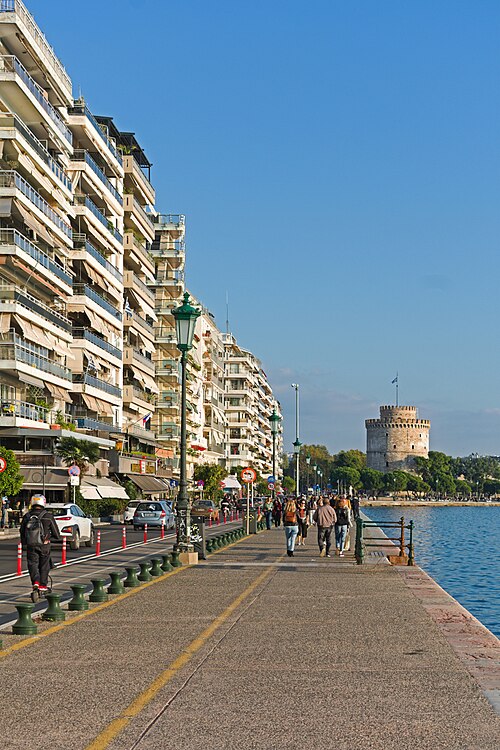
In the mid-1980s she returned to Greece and from then on divided her time between Athens, Thessaloniki and Paris. In 1982 she took part in Europalia in Belgium and won third prize for sculpture at the Alexandria Biennale. She died in 2011.
Works
In Vienna Pastra studied the human figure. Looking back, she wrote that she was not interested in its outward appearance but in how volumes sit in space and show the directions of balance in different poses. In Paris she replaced inspiration with mathematics. From 1968 she worked with two shapes everyone recognises, the square and the circle, and combined them into a new form she called the Σύνεκτρον (Synectron); the French state granted her a patent for it in 1971. The Synectron became the starting point of the series Αναλογικά (Analogiques), which grew from flat studies into reliefs and three-dimensional sculptures built on semicircles and right angles.
Her work kept returning to one problem: how space changes when the relations between its parts change, while the system of relations stays the same. Each sculpture is also an analysis of one stage of that problem. She worked in wood, iron, stone, marble, painted aluminium and duraluminium, often at architectural scale. In 1974 her design for a 500-square-metre fountain square in Montreuil, near Paris, was one of three shortlisted out of 100 entries; a stone sculpture-environment on the same theme was completed in 1976 at a lycée in Mirepoix, in southern France. Later series such as Σχέσεις-Ρυθμοί (Relations-Rhythms) combined iron and Oregon pine in more dynamic arrangements.
Legacy in Greece today
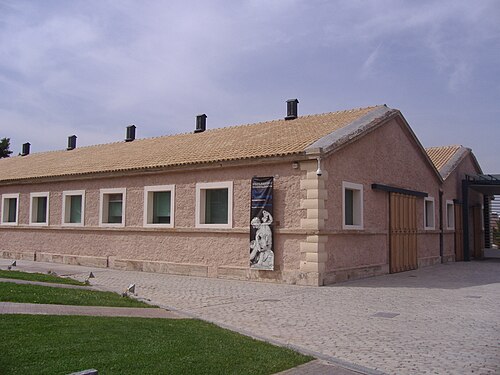
In 2014 the State Museum of Contemporary Art in Thessaloniki held a retrospective of her drawings, sculptures and theoretical texts at the Lazariston Monastery, which then travelled to the Museum of Modern Greek Art in Rhodes. Kalfayan Galleries in Athens showed her Paris series in 2018 and her Vienna years in 2022. In Thessaloniki, Συνάρτησις Ι (Function I) stands at the Teloglion Foundation of Art, and a painted-iron relief covers the facade of the Vafopouleio Cultural Centre.
Try this: open the National Gallery’s online record of Σύνεκτρον-Τετράγωνο-Κύκλος (Synectron-Square-Circle, 1976, duraluminium, 55 × 55 × 9 cm), listed as on view at the National Glyptotheque in Athens. Write two Greek sentences, for example «Το σχήμα προκύπτει από τον κύκλο και το τετράγωνο» (The shape arises from the circle and the square), plus one about the material. Then compare the title form Συνάρτησις with today’s συνάρτηση.
Did you know?
- She held a French patent for a shape: the Synectron, registered in 1971.
- Her first sculpture in Salzburg was built like an ancient pot, from coils of clay, and Mataré used it to teach his students.
- She designed the logos of the Institut Français de Thessalonique and of the Teloglion Foundation of Art.
- She began studying sculpture in her mid-thirties and was still exhibiting new work in Athens in 2004.
Key works
| Greek title | Title | Year |
|---|---|---|
| Πρώτη ατομική έκθεση, γκαλερί Würthle, Βιέννη | First solo exhibition, Galerie Würthle, Vienna | 1963 |
| Σύνεκτρον | Synectron (form patented in France) | 1971 |
| Σύνεκτρον-Τετράγωνο-Κύκλος | Synectron-Square-Circle (National Gallery, Athens) | 1976 |
| Συνάρτησις Ι, σειρά Αναλογικά 2 | Function I, Analogiques 2 series | 1979–1982 |
| Τρίπτυχο 1-2, Σχέσεις-Ρυθμοί | Triptych 1-2, Relations-Rhythms | 1988 |
A line to remember
Δημιούργημα σημαίνει ότι κανείς άλλος δεν θα μπορέσει να ξανακάνει αυτό το έργο.
Dimiúrgima siméni óti kanís állos den tha borési na xanakáni aftó to érgo.
A creation means that no one else will ever be able to make this work again.