Life
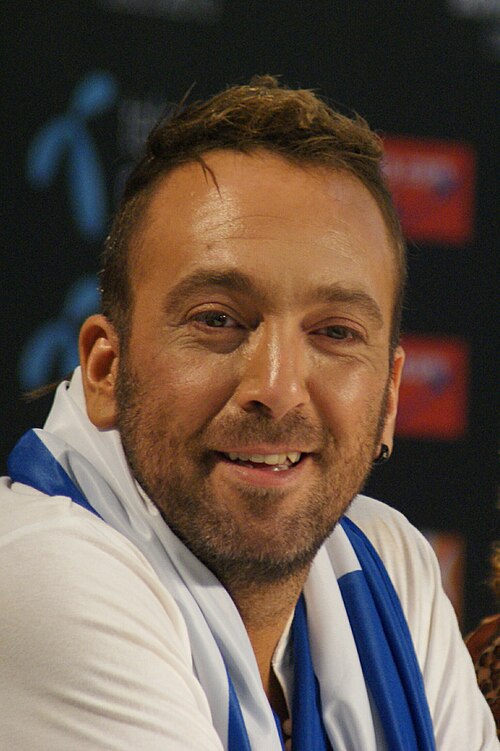
Sarbel was born in London on 14 May 1981, to a Greek Cypriot father and a Lebanese mother. English was his first language: in a 2005 Greek interview he called it his mother tongue. As a boy he took part in productions of the English National Opera and the Royal Opera House, Covent Garden, and in that interview he spoke of twelve years of such appearances. Profiles of him from 2007 mention operas such as Carmen, Tosca and Turandot. He also studied performing arts, music and drama in London.
At eighteen he went to Crete because, as he put it, he wanted a change in his life. He stayed for almost a year and fell in love with Greece. After returning to England to begin university, he found a way back through his studies, which brought him to Athens to study ancient theatre. In 2004 his single Σε πήρα σοβαρά (I Took You Seriously) made him known across Greece. Sony BMG released his first album in April 2005, and in the 2005–06 season he sang at the Athens club Ιερά Οδός alongside Giannis Parios and Natassa Theodoridou. His second album, Sahara, followed in the summer of 2006. On 28 February 2007 he won the Greek national selection organised by the public broadcaster ERT, ahead of Tamta and Christos Dantis. Further albums and singles followed, including Κάτι σαν εσένα (Something Like You) in 2008.
Works
Sarbel’s early records joined Greek pop and laïko with sounds from the Arab world. Σε πήρα σοβαρά was based on the Arabic song Sidi Mansour and featured the singer Eirini Merkouri in a brief cameo as a diva. His first album, Παράξενο συναίσθημα (Strange Feeling), also included Σκληρή καρδιά (Hard Heart), an Arabic song given Greek lyrics by Eleni Giannatsoulia. Its songs came from composers such as Marios Psimopoulos, Tasos Lymperis and Dimitris Kontopoulos. When asked to define his style, Sarbel said that Σε πήρα σοβαρά was neither purely pop, nor purely laïko, nor purely oriental. A special edition of the album added the pop-rock song Θέλω να πετάξω (I Want to Fly). He also recorded a duet with Natassa Theodoridou for one of her albums.
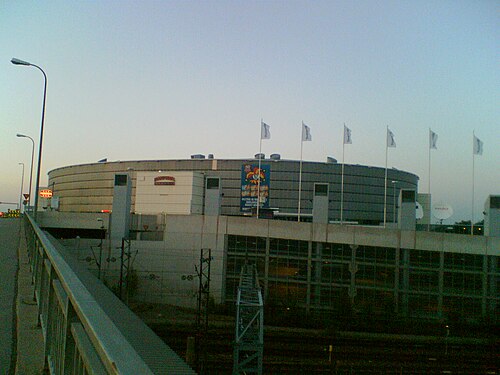
Yassou Maria, his Eurovision entry, was composed by Marcus Englöf and Alex Papaconstantinou, with lyrics by Mack. It is sung mainly in English; the Greek greeting γεια σου appears in its title. In Helsinki on 12 May 2007 it received 139 points and seventh place in the final. At a press conference there he sang a Greek version of the song, as well as a Lebanese and a Turkish song. He described his club shows as a kind of theatre: a sad song is presented as sad, a happy one becomes a reason to dance with the audience.
Legacy in Greece today
Sarbel’s path shows that Greek popular music also grows through the diaspora, through Cyprus and through neighbouring traditions: a singer whose first language was English found his audience in Greek. His seventh place in Helsinki was two places higher than Greece’s result the year before. For practice, read his 2005 interview in the Greek music magazine Music Corner. Find the passage where he compares his club show with a theatrical performance. Then describe a concert you remember in your own Greek, for example: Όταν ακούω ένα λυπημένο τραγούδι, μένω σιωπηλός· όταν ακούω ένα χαρούμενο, χορεύω (When I hear a sad song, I stay silent; when I hear a happy one, I dance). This is our own practice sentence, not a lyric.
Did you know?
- As a boy he sang in productions of the English National Opera and the Royal Opera House in London.
- In 2005 he said that he found it very hard to listen to his own voice.
- In Helsinki the Russian branch of the fan club OGAE named Yassou Maria the best entry of the year.
- The jury of the 2007 Greek national final was chaired by the composer Mimis Plessas.
Key works
| Greek title | Title | Year |
|---|---|---|
| Σε πήρα σοβαρά | I Took You Seriously — single | 2004 |
| Παράξενο συναίσθημα | Strange Feeling — debut album | 2005 |
| Sahara | Sahara — album | 2006 |
| Yassou Maria | Yassou Maria — Eurovision entry, 7th place | 2007 |
| Κάτι σαν εσένα | Something Like You — album | 2008 |
A line to remember
Ήθελα να ζήσω στην Ελλάδα.
Íthela na zíso stin Elláda.
I wanted to live in Greece.