Life
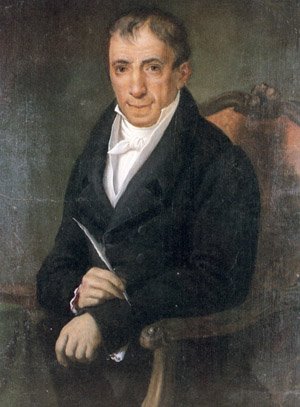
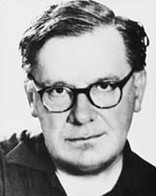
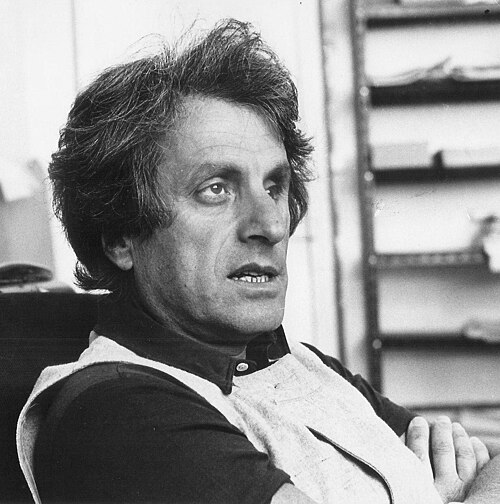
Theodorakopoulos was born on 28 February 1900 in the village of Vassaras in Laconia, in the southern Peloponnese. He was a scholarship pupil at the Rizarios school in Athens and then left, like many gifted Greeks of his generation, for the German-speaking universities: Vienna (1920–1922) and Heidelberg (1922–1925), then one of the great centres of European philosophy, where the neo-Kantian tradition and the new philosophies of existence and of culture were debated; he heard Heinrich Rickert and Karl Jaspers and took his doctorate in 1925 with a thesis on the dialectic of being in Plato. There he formed a lifelong friendship with two other young Greeks, Konstantinos Tsatsos and Panagiotis Kanellopoulos; Greek intellectual history calls them the «generation of Heidelberg».
Back in Greece, the three founded in 1929 the journal Αρχείον της Φιλοσοφίας και Θεωρίας των Επιστημών (Archive of Philosophy and Theory of the Sciences), which ran until 1940, an attempt to bring serious European philosophy into Greek. Their paths then divided: Kanellopoulos became a politician and briefly prime minister, Tsatsos a politician and later President of the Republic, while Theodorakopoulos remained above all a scholar, although he too briefly served as Minister of Education, in 1945 and 1966.
He taught philosophy at the young University of Thessaloniki (professor from 1933) and from 1939 at the University of Athens, which he left in 1967 under the military junta. He was elected to the Academy of Athens in 1960, was its president in 1963 and its secretary general from 1966 until his death; there he founded the Research Centre for Greek Philosophy. He died in Athens on 20 February 1981, having spent more than half a century in the company of Plato.
Works

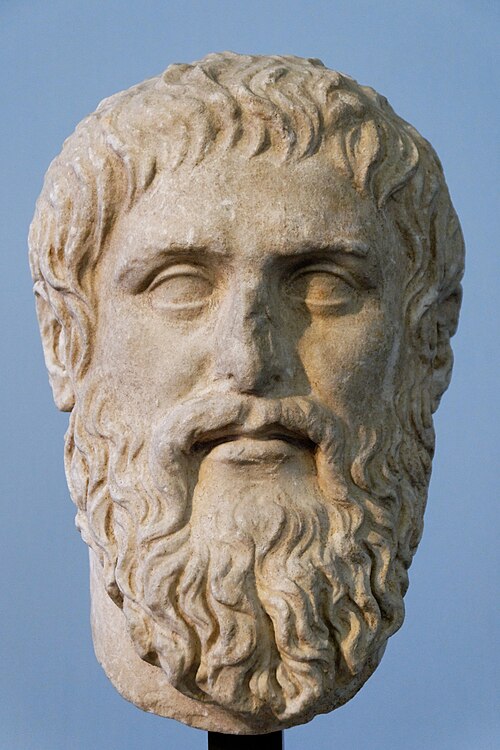
At the centre of Theodorakopoulos' work stands Plato. His Εισαγωγή στον Πλάτωνα (Introduction to Plato, 1940) is not a dry summary of doctrines but an invitation to read the dialogues as living philosophy: the questions of Socrates about justice, the soul, love and death, the drama of the conversations, the myths and images through which Plato speaks when argument reaches its limits. He wrote further studies, such as Πλάτων – Πλωτίνος – Ωριγένης (1959), and a book on Goethe's Faust (1956) that won a State Prize, and lectured on Plato for decades, and for many Greek readers his books were the first bridge between school Ancient Greek and philosophy itself.
His approach reflected his Heidelberg formation. He read the Greeks with the tools of German philosophy, history of ideas and philosophy of culture, and he saw ancient thought not as a museum but as a source of values for modern Greece and Europe. With Tsatsos and Kanellopoulos he belonged to a generation that wanted to give Greece a philosophical language of its own in the demanding but dignified Greek of the university. His style, measured and elevated, with long periods and abstract nouns, is typical of that tradition, and it is part of what makes his books a fine school for an advanced reader of Greek.
Legacy in Greece today
Theodorakopoulos' Εισαγωγή στον Πλάτωνα is still found on the shelves of Greek students of philosophy and classics, and in second-hand bookshops across Athens, a good first purchase for a C2 learner who wants to read about Plato in Greek. His name is linked, in Greek intellectual history, with Tsatsos and Kanellopoulos, and the «generation of Heidelberg» remains a reference point in discussions of how philosophy came into modern Greek. As a member of the Academy of Athens he is part of the institution's history. The site's pages on Plato and Socrates are the natural next step: read a page of the Apology, then read what Theodorakopoulos made of it.
Did you know?
- He, Konstantinos Tsatsos and Panagiotis Kanellopoulos are remembered together as the «generation of Heidelberg».
- Of the three friends, one became prime minister and one President of the Republic; he remained a philosopher, though he was twice briefly Minister of Education.
- He was elected to the Academy of Athens in 1960, presided over it in 1963 and was its secretary general from 1966 to 1981.
- In 1975 he founded a free school of philosophy named after the Byzantine philosopher Plethon, at Magoula near Mystras.
Key works
| Greek title | Title | Year |
|---|---|---|
| Η διαλεκτική του είναι στον Πλάτωνα (διδακτορική διατριβή, Χαϊδελβέργη) | The Dialectic of Being in Plato (doctoral thesis, Heidelberg) | 1925 |
| Αρχείον της Φιλοσοφίας και Θεωρίας των Επιστημών | Archive of Philosophy and Theory of the Sciences (journal, co-founder) | 1929 |
| Εισαγωγή στον Πλάτωνα | Introduction to Plato | 1940 |
| Ο Φάουστ του Γκαίτε | Goethe's Faust (study) | 1956 |
| Κέντρον Ερεύνης της Ελληνικής Φιλοσοφίας της Ακαδημίας Αθηνών | Research Centre for Greek Philosophy, Academy of Athens (founder) | 1966 |
| Σχολή Φιλοσοφίας «Ο Πλήθων», Μαγούλα Μυστρά | The «Plethon» School of Philosophy, Magoula near Mystras | 1975 |
A line to remember
Εισαγωγή στον Πλάτωνα
Eisagogi ston Platona
Introduction to Plato