Life
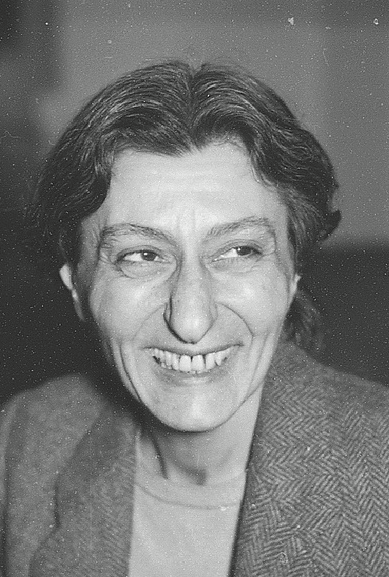
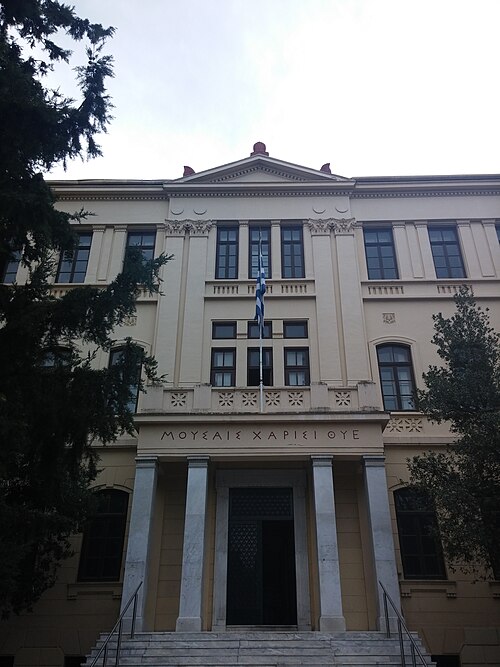
Alki Kyriakidou was born in Thessaloniki on 17 June 1935, the third daughter of Eftychia and Stilpon Kyriakidis, who taught folklore at the University of Thessaloniki. She finished Anatolia College in 1953 and entered the School of Philosophy of the Aristotle University the same year. A Fulbright scholarship took her to the University of Pennsylvania, where she earned a Bachelor of Arts in 1957, and she took her Thessaloniki degree in history and archaeology in 1958. Her double surname joins her father’s name with that of her husband, Stelios Nestoras.
In 1960 she became an assistant in the university’s chair that included folklore, and in the mid-1960s she completed a doctorate on the woven textiles of Macedonia and Thrace. In 1966–67 a state scholarship took her to Paris, where she followed Claude Lévi-Strauss’s seminar at the École Pratique des Hautes Études. Back in Thessaloniki she carried much of the chair’s teaching, but under the military dictatorship her career was blocked: in 1973 her post was not renewed and she was sent to teach in secondary schools.
After the fall of the junta she returned to the university in September 1974. She was elected professor in 1976 and became full professor of folklore in 1979. She also taught anthropology at Anatolia’s new business and liberal-arts school, today ACT, and in 1978 became president of the Thessaloniki arts society Techni. She died in Thessaloniki in September 1988, aged fifty-three.
Works

Her doctoral thesis, Τα υφαντά της Μακεδονίας και της Θράκης (The Woven Textiles of Macedonia and Thrace, 1965), studied the household weaving of northern Greece. In Paris she met structural anthropology, and she later wrote the introduction to the Greek edition of Lévi-Strauss’s The Savage Mind (1977). Her essays, gathered in Λαογραφικά μελετήματα (Folklore Studies, 1975), brought these new questions into Greek folklore research.
Her best-known book, Η θεωρία της ελληνικής λαογραφίας (The Theory of Greek Folklore, 1978), is a critical analysis of how the discipline had defined “the people” and its tradition, including the ideas of her own father. It invited readers to see folklore research itself as a product of history and of national concerns, not as a neutral record.
Οι δώδεκα μήνες (The Twelve Months, 1982), with twelve full-page pictures by the painter Chronis Botsoglou, follows the customs of the year: carol singing (κάλαντα), carnival, the midsummer fires of St John, the κλήδονας divination custom and the work of the fields. In the 1980s she turned to oral history and chose the Pontic Greek refugees of Thessaloniki as her field. Her 1987 article «Ο χρόνος της προφορικής ιστορίας» (The Time of Oral History) opens with the sentence: “The time of oral history is the time of memory.”
Legacy in Greece today
Greek folklorists continue to honour her. The Folklore Museum and Archive of the Aristotle University keeps a page about her among the people who shaped the field, and the University of Athens dedicated its 2013 annual folklore lecture to her treatment of traditional culture in space and time. Οι δώδεκα μήνες is still in print with Malliaris-Paideia. Try her method on one custom: choose a festival from a Greek town or village you know, ask Πότε γίνεται…; (When does … take place?) and answer with a month and a qualifier, for example Σε πολλά μέρη ο κλήδονας γίνεται τον Ιούνιο (In many places the klidonas takes place in June). Then add one sentence saying where your information comes from: a book, a website or a person you asked.
Did you know?
- She studied in the United States on a Fulbright scholarship in 1956–57, before finishing her Greek degree.
- Under the dictatorship she taught in secondary schools, first in Vasilika and then in Kalamaria.
- In 1974 she briefly worked at the Ministry of Education on school history textbooks.
- In 1983 she gave the keynote address at the first graduation of Anatolia’s business and liberal-arts school.
Key works
| Greek title | Title | Year |
|---|---|---|
| Τα υφαντά της Μακεδονίας και της Θράκης | The Woven Textiles of Macedonia and Thrace (doctoral thesis) | 1965 |
| Λαογραφικά μελετήματα | Folklore Studies (essays) | 1975 |
| Ο Claude Lévi-Strauss, το έργο του | Claude Lévi-Strauss and his work (introduction to The Savage Mind in Greek) | 1977 |
| Η θεωρία της ελληνικής λαογραφίας. Κριτική ανάλυση | The Theory of Greek Folklore: A Critical Analysis | 1978 |
| Οι δώδεκα μήνες – Τα λαογραφικά | The Twelve Months: The Folklore (illustrated by Chronis Botsoglou) | 1982 |
| Ο χρόνος της προφορικής ιστορίας | The Time of Oral History (article) | 1987 |
A line to remember
Ο χρόνος της προφορικής ιστορίας είναι ο χρόνος της μνήμης.
O chrónos tis proforikís istorías eínai o chrónos tis mnímis.
The time of oral history is the time of memory.