Life
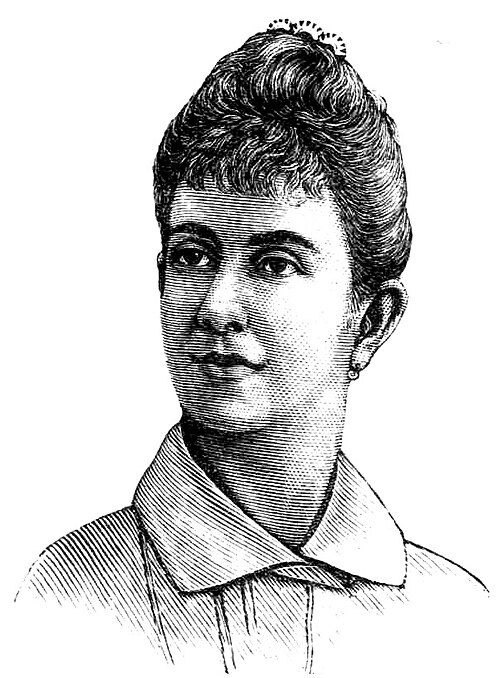
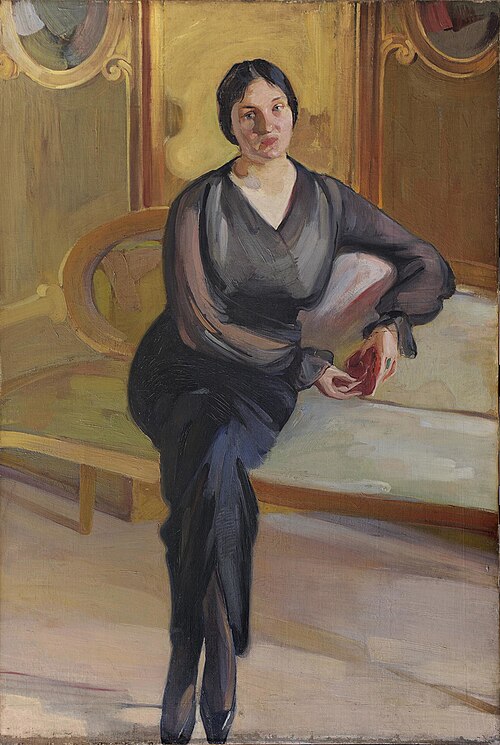
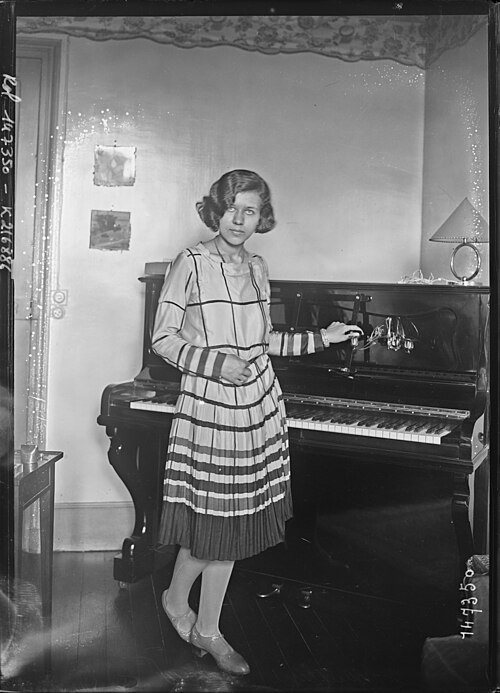
Melissanthi was born Ivi Kougia in Athens. Most library records give April 1907 as her birth date, although some reference works say 1910. She studied French and German philology at the French Institute and the Abendschule (evening school) in Athens, attended the pre-war Athens School of Journalism, and also trained in music, painting and dance. In 1932 she married Ioannis Skandalakis, a lawyer, politician and author of philosophical essays, and she is often listed as Kougia-Skandalaki. In Latin letters her first name appears as Ivi, Eve or Hebe.
She earned her living as a journalist and a teacher of French. From 1945 to 1955 she worked on literary programmes of the national radio, presenting Greek and foreign poetry as well as her own work. She also wrote criticism and philosophical essays and translated poetry; Emily Dickinson, Robert Frost and Rainer Maria Rilke are among the poets she is reported to have translated. She was a member of the Women’s Literary Company (Γυναικεία Λογοτεχνική Συντροφιά) from 1961 to 1972 and sat on the committee for the State Prizes from 1969 to 1975.
A memorial article by the critic Dimitris Karamvalis, published in 1992, dates her death to Friday 9 November 1990, and library authority records also give 1990. Some later reference works give 1991.
Works
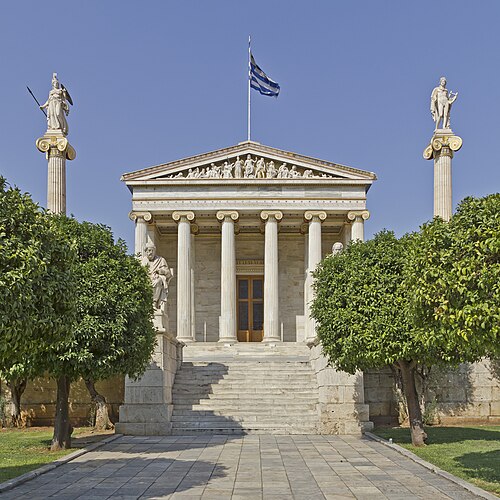
Melissanthi made her debut in 1930 with Φωνές εντόμου (Insect Voices), and a year later Προφητείες (Prophecies) was greeted as the literary event of the year. These early books are religious, even mystical, and close to symbolism. Ο γυρισμός του ασώτου (The Return of the Prodigal, 1936), a book-length poem whose title recalls the Gospel parable, was followed by a commendation from the Academy of Athens in 1936. Λυρική εξομολόγηση (Lyrical Confession, 1945) received an honourable mention for the Palamas Prize, and from about that year she moved gradually from traditional metre to free verse, renewing her themes and language as well.
Later books include Το ανθρώπινο σχήμα (The Human Shape, 1961) and Το φράγμα της σιωπής (The Barrier of Silence), which won the second State Poetry Prize in 1965. Her collected Τα ποιήματα 1930–1974 (Poems 1930–1974) was reviewed in 1976, the year she received the first State Poetry Prize. Critics place her work between religious faith and existential anxiety. Her translator Kathryn Maris notes that for a time she felt out of step with mid-century culture, stopped writing and turned to Carl Jung; the poems that followed are ontological rather than religious. Melissanthi described her own method plainly: she spoke indirectly, through allegorical symbols. Her titles show that method in miniature.
Legacy in Greece today
Melissanthi is less translated than Seferis, Elytis or Ritsos, but she has not disappeared. A bilingual selection, Hailing the Ascending Morn, prepared by Maria Voelker-Kamarinea, appeared in 1987; the journal Πάροδος published a poem and her conversation with the poet Yolanda Pengli in 2004; and new English versions by Kathryn Maris appeared in The Yale Review in 2025. A University of Athens thesis has studied her poetics. Try a small exercise with her titles: take Το φράγμα της σιωπής (The Barrier of Silence) and write one Greek sentence that explains the image, for example Η σιωπή γίνεται τοίχος ανάμεσα στους ανθρώπους (Silence becomes a wall between people). Then do the same for Φωνές εντόμου. These sentences are your own interpretations, not lines from her poems.
Did you know?
- Her pen name Μελισσάνθη echoes the Greek words μέλισσα (bee) and άνθος (flower).
- She received both the second State Poetry Prize (1965) and the first State Poetry Prize (1976).
- For ten years, from 1945 to 1955, she presented poetry on Greek national radio.
- Manos Hatzidakis’s song cycle Η εποχή της Μελισσάνθης (The Age of Melissanthi) shares her pen name, but its Melissanthi is a symbolic figure, and he dedicated the work to the memory of his mother.
Key works
| Greek title | Title | Year |
|---|---|---|
| Φωνές εντόμου | Insect Voices | 1930 |
| Προφητείες | Prophecies | 1931 |
| Ο γυρισμός του ασώτου | The Return of the Prodigal | 1936 |
| Λυρική εξομολόγηση | Lyrical Confession | 1945 |
| Το φράγμα της σιωπής | The Barrier of Silence | 1965 |
| Τα ποιήματα 1930–1974 | Poems 1930–1974 — collected poems | 1976 |
A line to remember
Μιλάω έμμεσα, με σύμβολα αλληγορικά.
Miláo émmesa, me símvola alligoriká.
I speak indirectly, with allegorical symbols.