Life
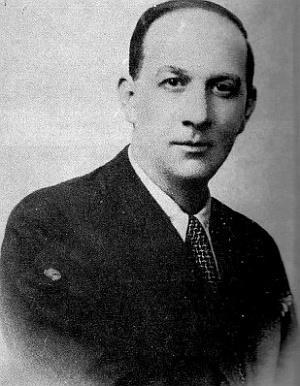
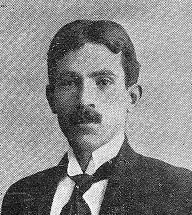
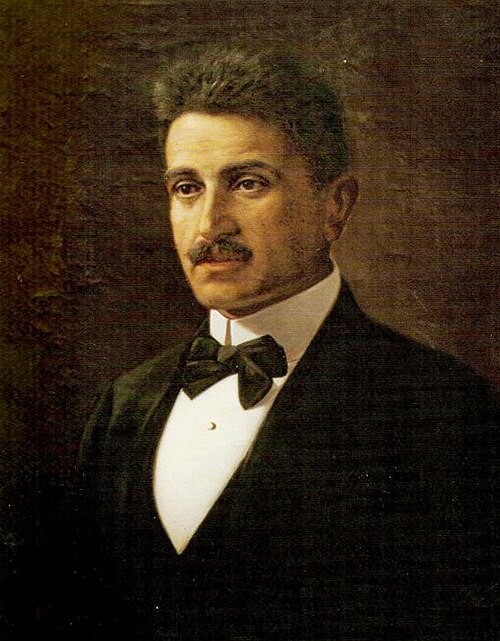
Theotokis was born in Corfu town on 13 May 1872 into one of the island's oldest noble families; his father was a count of the Venetian nobility and the family owned the estate of Karousades in the north of the island. He was educated by private tutors, went to Paris at seventeen to study natural science and philosophy, and at the same age married Ernestine von Mallowitz, a baroness from Graz, with whom he would live between Austria and Corfu. In 1897 he and his close friend, the poet Lorentzos Mavilis, fought as volunteers in the Cretan uprising against the Ottomans.
A restless, learned man, he studied Sanskrit at the University of Graz, read Nietzsche and then, decisively, Marx, and in 1910 he was among the founders of the Socialist Group of Corfu (Σοσιαλιστικός Όμιλος), scandalising his class. The death of his young daughter and his growing estrangement from the aristocratic world around him darkened his later years and deepened his writing. He was a committed demoticist, publishing in the journal Ο Νουμάς and siding with the «vulgarists» in the language quarrel.
By the time of the First World War he had spent most of his fortune and was selling family land to live. He died of cancer in Corfu on 1 July 1923, aged fifty-one, having published his last and largest novel the year before; much of his work, including the Corfiot short stories, appeared in book form only after his death.
Works

Theotokis began with short, violent tales of village life, collected posthumously as Κορφιάτικες ιστορίες (Corfiot Stories, 1935). The most famous, Πίστομα (Face Down, 1899), is barely three pages long: a bandit returns from the mountains, finds his wife has had a child by another man, and the story ends with a single terrible command.
The novellas that followed moved to society and money. Η τιμή και το χρήμα (Honour and Money, 1912) is set in Mandouki, a poor quarter of Corfu town: Rini loves the smuggler Andreas, who will not marry her without the dowry her mother cannot pay, and when he finally offers to take her without it she refuses, choosing her own labour over a husband bought with money. Κατάδικος (The Convict, 1919) tells of Tourkogiannos, a farmhand who accepts a prison sentence for a murder he did not commit and preaches a Christ-like love from his cell. Η ζωή και ο θάνατος του Καραβέλα (The Life and Death of Karavelas, 1920) follows an old miser destroyed by the greed of the village around him.
His final novel, Οι σκλάβοι στα δεσμά τους (Slaves in Their Chains, 1922), is a panorama of Corfu town at the turn of the century: the ruined aristocratic family of the Ofiomachos, the rising banker who buys their daughter in marriage, and the young socialist who cannot save her. Written in a rich demotic full of Corfiot words, it is the first Greek novel that reads like Balzac, and the «slaves» of the title are everyone in it, rich and poor alike.
Legacy in Greece today
Theotokis entered Greek classrooms long ago: Πίστομα, with its shock ending, and extracts from Η τιμή και το χρήμα and Κατάδικος appear in the literature anthologies of the lyceum, and the dilemma of Rini, honour or money, is a standard essay subject. His books have never gone out of print; since 1993, seventy years after his death, they are in the public domain and his Greek texts are freely available online, which makes them a practical choice for an advanced learner, especially the compact Η τιμή και το χρήμα. In Corfu the Theotokis name is attached to streets and to the family houses in town and at Karousades, and the Ionian islands claim him, with Solomos, Mavilis and Kalvos, as part of the Heptanesian School. Literary historians credit him with the first properly socialist novels in Greek.
Did you know?
- He married at seventeen an Austrian baroness, Ernestine von Mallowitz, and divided his life between Corfu and Graz.
- He learned Sanskrit and translated from it, and also translated Lucretius' On the Nature of Things and several plays of Shakespeare into demotic Greek.
- A count by birth, he helped found the Socialist Group of Corfu in 1910 and died almost poor, having sold off the family estate.
- His short story Πίστομα (1899) is only about three pages long and is still one of the most discussed texts in Greek schools.
Key works
| Greek title | Title | Year |
|---|---|---|
| Πίστομα | Face Down (short story) | 1899 |
| Η τιμή και το χρήμα | Honour and Money | 1912 |
| Κατάδικος | The Convict | 1919 |
| Η ζωή και ο θάνατος του Καραβέλα | The Life and Death of Karavelas | 1920 |
| Οι σκλάβοι στα δεσμά τους | Slaves in Their Chains | 1922 |
| Κορφιάτικες ιστορίες | Corfiot Stories (posthumous collection) | 1935 |
From the works


Public-domain pictures from Wikimedia Commons.
A line to remember
Πίστομα!
Pistoma!
Face down!
From the original
The text as Konstantinos Theotokis wrote it, out of copyright, with our own translation beside it.
«Πίστομα»Face Down
The last page of the story. The brigand Koukouliotis has come home under an amnesty to find his wife with another man's child; he has already killed the lover. The single word that ends the tale gives it its title.
«Πίστομα» (1899), the closing paragraphs · Public-domain text, source: el.wikisource.org