Life
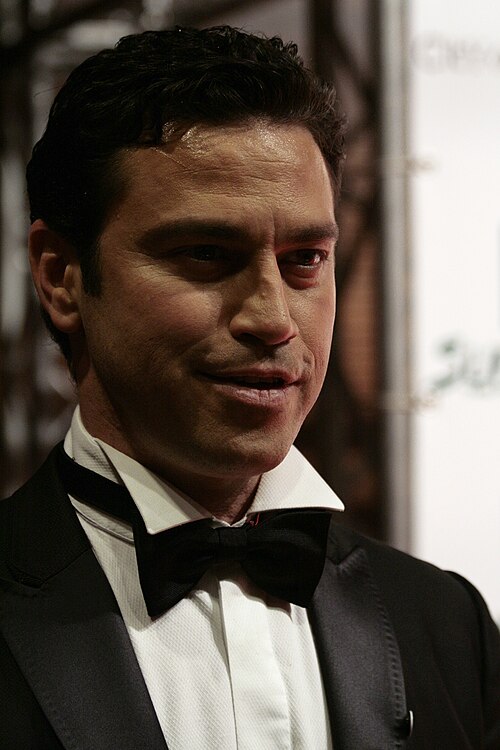
Victor Vernicos was born in Athens in 2006. According to the announcement by ERT, Greece’s public broadcaster, he began piano lessons at four, singing lessons at eight and guitar at ten. He started writing his own songs at eleven and, while attending classes in music technology, also took charge of producing his own recordings. In an English-language interview with The Greek Herald in 2023 he described a musical family, with grandfathers who played clarinet, guitar, piano and saxophone.
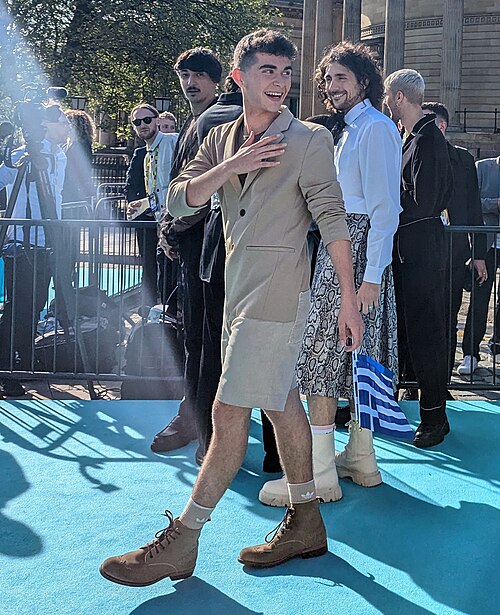
He released singles in English from his early teens, among them Out of This World in 2022. That year he submitted What They Say to ERT’s open call for the Greek Eurovision entry. It reached the final three, alongside Liar by Melissa Mantzouki and Shout Out by Antonia Kaouri and Maria Maragkou. On 30 January 2023 ERT revealed the result on its main evening news: a combined vote by a seven-member ERT committee and a seventy-member audience committee had chosen him. At sixteen, he was described by ERT as the youngest representative in Greece’s Eurovision history. By February 2023 he was on the roster of the Athens label Panik Records.
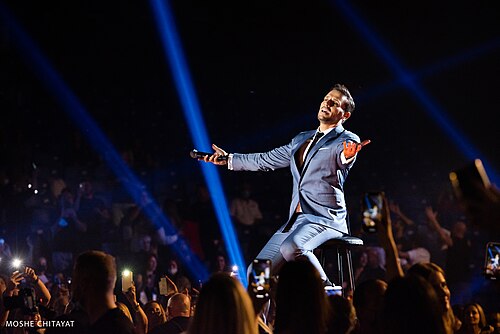
In Liverpool he sang in the second semi-final in May 2023 and finished thirteenth of sixteen with 14 points, so Greece did not reach the final. He has continued to write and release music, with some later releases credited simply to Victor on streaming services.
Works
What They Say is the song that made Vernicos known. He wrote it at fourteen, in April 2021, and later told The Greek Herald that it came from the first time he felt real anxiety, prompted by realising that his dreams could actually come true. He stressed that he had not written it for Eurovision. In Greek, after his selection, he called it συναισθηματική αλλά και παράλληλα φεστιβαλική μπαλάντα (an emotional yet at the same time festival-style ballad), said that it combines many musical genres and described it as the anthem of the inner thoughts of anxiety. He is credited as its sole songwriter and said that he also produced it himself.
The song is sung in English. Its music video, directed by PickCodes, involved him sitting for hours under water, as he recalled with some humour. The recording appeared in March 2023 on the official Eurovision Song Contest Liverpool 2023 album.
His other releases also carry English titles: the singles The 968 Paradox in 2023, Fading and Enemy Lines in 2024, the four-track EP Waterfall in November 2024 and Go Away in 2025. Across this work he presents himself as a songwriter who builds his songs alone, from composition to production. For a learner of Greek, the value lies less in the lyrics than in the way he explains his songs in Greek.
Legacy in Greece today
Vernicos’s selection came in the first year that ERT decided its Eurovision entry through two committees, mirroring the contest’s new voting rules, and it showed that a teenager writing and producing at home could reach the national stage through an open call. For a learner, the useful material is Greek speech, not the English song. Open ERT’s news report of 30 January 2023 on ertnews.gr, which is in Greek, and find the phrase συναισθηματική αλλά και παράλληλα φεστιβαλική μπαλάντα. Then describe a performance you know with the same pattern, for example: Ήταν μια ήσυχη αλλά και παράλληλα δυναμική εμφάνιση (It was a quiet yet at the same time powerful performance). Compare your adjectives with a partner. This practice sentence is our own, not a quotation.
Did you know?
- He began piano lessons at the age of four.
- The first song he sang in front of an audience was Heroes, the Eurovision winner of 2015.
- He wrote What They Say two years before singing it in Liverpool.
- Filming the video kept him under water for hours.
Key works
| Greek title | Title | Year |
|---|---|---|
| Out of This World | Out of This World — single | 2022 |
| What They Say | What They Say — Eurovision entry | 2023 |
| The 968 Paradox | The 968 Paradox — single | 2023 |
| Fading | Fading — single | 2024 |
| Waterfall | Waterfall — EP | 2024 |
| Go Away | Go Away — single | 2025 |
A line to remember
Άρχισα να γράφω δικά μου τραγούδια στα 11 μου χρόνια και βγάζω κάτι πάρα πολύ αληθινό από μέσα μου.
Árchisa na gráfo diká mou tragoúdia sta 11 mou chrónia kai vgázo káti pára polý alithinó apó mésa mou.
I started writing my own songs at the age of 11, and I bring out something very real from inside me.