Life
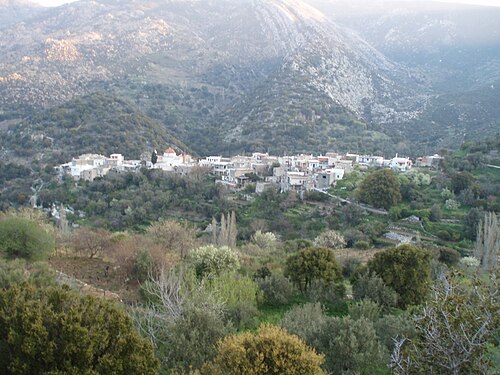
Almost nothing is known about Longus as a person. No ancient biography survives, and no other ancient writer discusses him. His name, sometimes spelled Longos, reaches us through the manuscripts of a single novel, Δάφνις και Χλόη (Daphnis and Chloe). Literary histories usually place him in the 2nd or 3rd century AD, in the Roman imperial period, but this date is estimated from style and literary connections, not from records. Some Greek literary histories simply call him Longus of Lesbos. Others are more cautious: the novel shows close knowledge of the island and of the countryside near Mytilene, yet it does not prove where its author was born or lived.
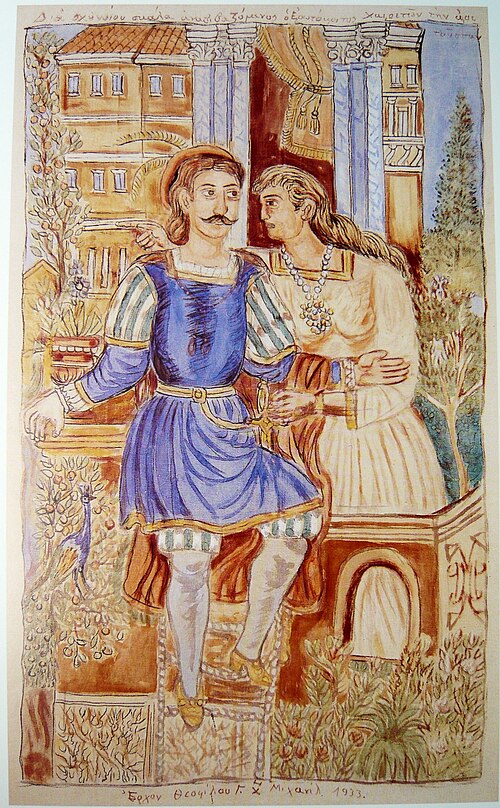
The only personal voice we hear belongs to the narrator of the prologue. He says that while hunting on Lesbos he saw a painting in a grove of the Nymphs, full of scenes of love. Full of admiration, he found someone to explain the picture and composed four books in reply, as an offering to Eros, the Nymphs and Pan, and as a pleasant possession for everyone. This frame is part of the fiction, a literary device that turns a painting into a story, not reliable autobiography. Any fuller life of Longus would have to be invented, so this page stays close to the novel itself.
Works

Δάφνις και Χλόη (Daphnis and Chloe), also transmitted under the title Ποιμενικά (Pastoral Tales), is an ancient Greek novel in four books. On an estate near Mytilene, the goatherd Lamon finds a baby boy being fed by one of his goats. Two years later the shepherd Dryas finds a baby girl, nursed by a ewe, in a cave of the Nymphs. The two foundlings, Daphnis and Chloe, grow up herding their flocks together. Slowly, and at first without understanding it, they fall in love. An old man, Philetas, explains to them who Eros is. Adventures interrupt the idyll: pirates from Tyre carry Daphnis off, and a quarrel between Methymna and Mytilene brings armed young men into the fields. In the fourth book Daphnis is recognised as the son of Dionysophanes, the owner of the estate, and Chloe as the daughter of Megacles. The story ends with their wedding.
What makes the novel unusual is its rhythm. The seasons shape the plot: spring flowers and bees in Book 1, then the passage from spring to summer; the grape harvest of autumn in Book 2; and in Book 3 a winter of heavy snow that keeps the young pair apart until spring returns. Longus brings the goats, panpipes and rural gods of earlier pastoral poetry, familiar from Theocritus, into elegant prose built from short, balanced phrases.
Legacy in Greece today
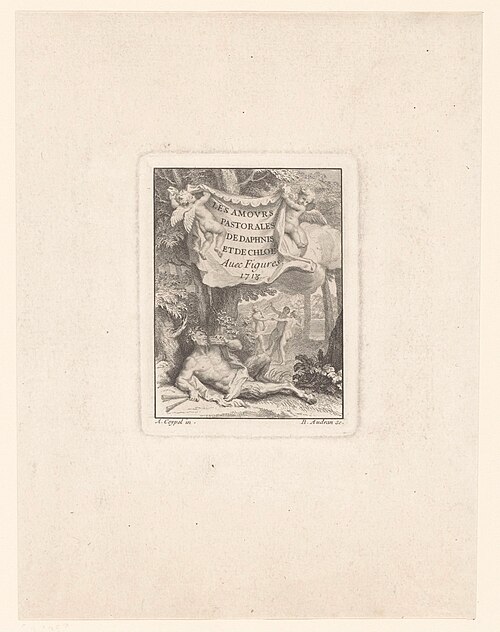
Daphnis and Chloe has had a long life beyond Greece. Jacques Amyot’s French translation of 1559 made it widely read in Europe. In 1809 the French scholar Paul-Louis Courier found a passage missing from other copies in a manuscript in Florence’s Laurentian Library, then famously stained the page with ink. Maurice Ravel’s ballet Daphnis et Chloé opened in Paris on 8 June 1912. In Greece, Orestis Laskos made the silent film Δάφνις και Χλόη (1931). For practice, read the line to remember on this page with its Modern Greek rendering. Compare the ancient words ἦρος and θέρους with the modern η άνοιξη (spring) and το καλοκαίρι (summer). Then write two sentences of your own about the end of spring on an island: one for what you see, one for what you hear.
Did you know?
- The prologue presents the whole novel as a written answer to a painting seen on Lesbos.
- Spring, summer, the grape harvest and a snowy winter all pass within the first three books.
- Courier’s ink blot of 1809 made the passage he had just copied hard to check against the manuscript.
- Ravel’s ballet reached the story through the French tradition of Amyot’s translation.
Key works
| Greek title | Title | Year |
|---|---|---|
| Προοίμιο | Daphnis and Chloe — Prologue: the painting in the grove | ? |
| Βιβλίο Α΄ | Daphnis and Chloe — Book 1: the foundlings, spring and summer | ? |
| Βιβλίο Β΄ | Daphnis and Chloe — Book 2: the grape harvest and Philetas | ? |
| Βιβλίο Γ΄ | Daphnis and Chloe — Book 3: winter snow and the return of spring | ? |
| Βιβλίο Δ΄ | Daphnis and Chloe — Book 4: recognition and wedding | ? |
A line to remember
Ἦρος ἦν ἤδη τέλος καὶ θέρους ἀρχή, καὶ πάντα ἐν ἀκμῇ.
In today's GreekΗ άνοιξη τελείωνε πια κι άρχιζε το καλοκαίρι, και όλα βρίσκονταν στην ακμή τους.
Êros ên ḗdē télos kaì thérous archḗ, kaì pánta en akmêi.
It was already the end of spring and the beginning of summer, and everything was at its peak.