Life
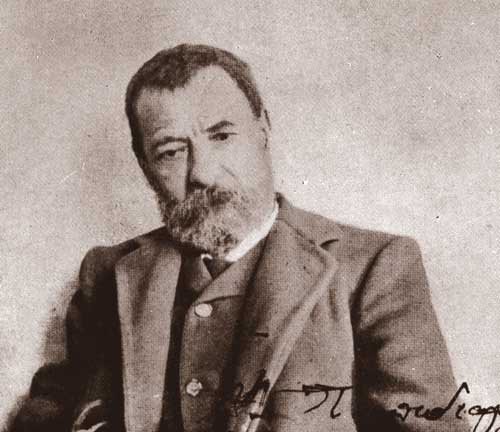
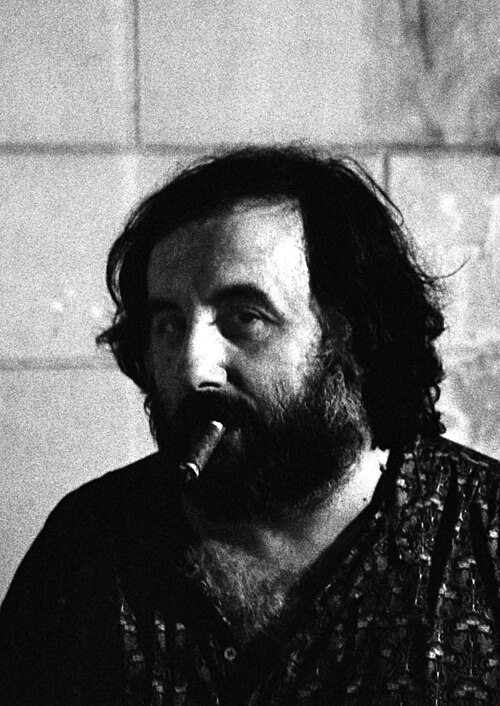
Anagnostakis was born in Thessaloniki in 1925 and grew up in the city that would be the setting of most of his poems. He was a medical student during the German Occupation and joined the left-wing youth Resistance; he was active in student publications, and his first collection, Εποχές (Seasons, or Epochs), appeared in 1945, at the very beginning of the Civil War. As the war between the government and the Communist-led Democratic Army spread, thousands of young leftists were arrested. Anagnostakis was arrested in 1948 and in 1949 an extraordinary military court sentenced him to death. The sentence was not carried out, and he was released under an amnesty in 1951.
He finished his medical studies and became a radiologist, the profession he practised for the rest of his working life. Poetry ran alongside: Εποχές 2 and Εποχές 3, then the three parts of Η Συνέχεια (The Continuation, 1954–1962). From 1959 to 1961 he edited the literary review Κριτική in Thessaloniki, one of the important journals of the postwar years. After the military coup of 1967 he fell silent for a time, then in 1970 published Ο Στόχος (The Target), a small book that circulated as an act of resistance to the dictatorship. After it he wrote almost no new poems, choosing instead short prose notes, collected in Το Περιθώριο '68–'69 (The Margin). In 1978 he moved to Athens, where he died on 23 June 2005.
Works

Anagnostakis wrote very little, a few dozen poems in all, and his collected poems fit in one slim volume. His style is the opposite of the grand, sun-drenched lyricism of Elytis or the epic voice of Ritsos. The lines are short and conversational; the tone is quiet, often ironic; the subject is the aftermath. His generation had fought in the Resistance with the hope of a new world and found instead civil war, prisons, exile and the slow comfort of a society that preferred to forget. His poems ask what remains of those hopes, and of the people who held them, when history has moved on.
The early Εποχές carry the anguish of the 1940s: friends executed, rooms of fear, love under threat. Η Συνέχεια turns to survival and memory. Ο Στόχος is the bitterest and most famous: in it the poet attacks not only the dictators but also the compromises of his own side and of poetry itself, which he suspects of turning suffering into pretty words. Its best-known poem, Θεσσαλονίκη, μέρες του 1969 μ.Χ. (Thessaloniki, Days of 1969 AD), walks through the city under the junta: on a street once full of memories now stand a bank, tourist offices and emigration agencies, and the past is covered in silence.
Legacy in Greece today
For Greeks, Anagnostakis is above all the voice of the defeated left and of the moral honesty that refuses easy consolation. His poems are studied in Greek secondary schools and universities, and are quoted in essays and newspapers whenever the subject is the Civil War or the dictatorship. Composers such as Mikis Theodorakis and Thanos Mikroutsikos have set his poems to music; look for these songs and follow the text. Read Θεσσαλονίκη, μέρες του 1969 μ.Χ. aloud: it opens on Egypt Street (οδός Αιγύπτου) in his home city. His collected Τα Ποιήματα 1941–1971 won the State Poetry Prize in 1986, and in 2002 he received the Great State Prize for Literature.
Did you know?
- He was sentenced to death by a military court in 1949, at twenty-four, and survived.
- He earned his living as a radiologist, not as a writer.
- His entire poetic work fits in a single slim volume.
- After Ο Στόχος (1970) he wrote almost no more poems, a silence that critics still discuss.
Key works
| Greek title | Title | Year |
|---|---|---|
| Εποχές | Seasons / Epochs (poems) | 1945 |
| Εποχές 2 | Seasons 2 (poems) | 1948 |
| Η Συνέχεια | The Continuation (poems, three parts) | 1954–1962 |
| Κριτική (περιοδικό) | Kritiki (literary review, editor) | 1959–1961 |
| Ο Στόχος | The Target (poems) | 1970 |
| Το Περιθώριο '68–'69 | The Margin '68–'69 (prose notes) | 1979 |
From the works

Public-domain pictures from Wikimedia Commons.
A line to remember
Στην οδό Αιγύπτου — πρώτη πάροδος δεξιά — / Τώρα υψώνεται το μέγαρο της Τράπεζας Συναλλαγών
Stin odo Aigyptou — proti parodos dexia — / Tora ypsonetai to megaro tis Trapezas Synallagon
On Egypt Street — first turning on the right — / now rises the building of the Bank of Exchange