Life
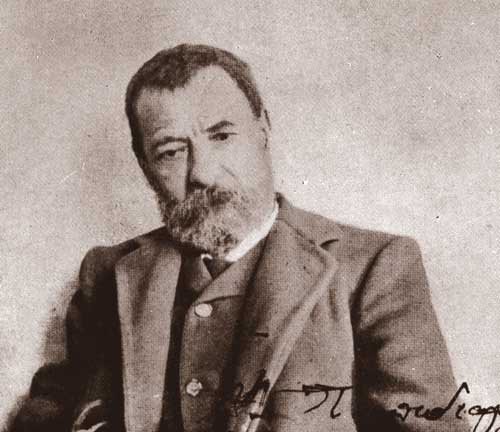
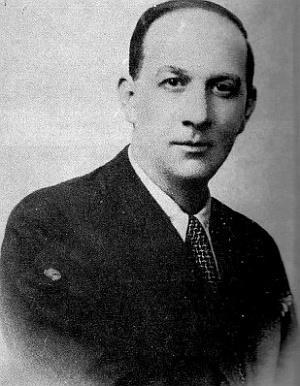
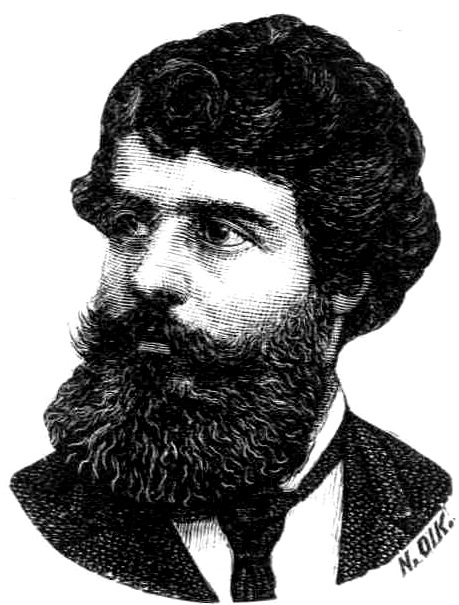
Pikionis was born in Piraeus in 1887. He studied civil engineering at the Athens Polytechnic, graduating in 1908, but his first passion was painting. He went on to Munich, where he studied drawing and sculpture, and then to Paris, where he studied painting and absorbed the new art of the time. In those years he was a close friend of Giorgio de Chirico, the painter born in Volos, with whom he shared a fascination for the silence and mystery of ancient places, a mood that would later appear in his own work.
Back in Greece he chose architecture and taught for more than three decades at the Polytechnic, where generations of Greek architects passed through his classes. At the same time he travelled through the villages of Greece, drawing and measuring houses, courtyards and walls: for him the anonymous builders of the islands and the mountains were as important teachers as the ancients. In the 1930s he took part in the circle of intellectuals who wanted to define a modern Greek culture rooted in tradition, and co-edited the review Το Τρίτο Μάτι (The Third Eye, 1935–1937) with the painter Nikos Hadjikyriakos-Ghikas. His buildings of that decade include a primary school on the slopes of Lycabettus and the Experimental School of the University of Thessaloniki. After the war came his great commission, the landscaping around the Acropolis and Philopappou. In 1966 he was elected a member of the Academy of Athens (Ακαδημία Αθηνών). He died in Athens in 1968.
Works

Pikionis was a modernist who refused to break with the past. In his early buildings, such as the school at Pefkakia on Lycabettus (1932) and the Experimental School in Thessaloniki (mid-1930s), clean modern volumes meet local materials, timber, tiled roofs and courtyards inspired by traditional houses. In his writings, above all the essay Συναισθηματική τοπογραφία (Sentimental Topography), published in Το Τρίτο Μάτι in the mid-1930s, he argued that architecture begins with listening to a place: its light, its stones, its slopes, the memory it holds.
His masterpiece puts that idea into practice. Between 1954 and 1957 he designed the approaches to the Acropolis and the paths over Philopappou Hill opposite. Instead of asphalt and concrete he used stone, and also fragments of marble, brick and tiles taken from the neoclassical houses of Athens then being demolished. He worked on site with the masons, choosing and placing pieces almost one by one, so that the paths seem to have grown from the ground, with patterns that recall at once Byzantine floors, Japanese gardens and village courtyards. Along the way he restored the little church of Άγιος Δημήτριος Λουμπαρδιάρης and built a small pavilion beside it. The result is not a monument competing with the Parthenon, but a modest, meditative route that prepares the walker to see it.
Legacy in Greece today
The best tribute to Pikionis is to walk his paths. Start from the pedestrian street Dionysiou Areopagitou, climb Philopappou Hill past the church of Agios Dimitrios Loumbardiaris, and look down at the stones under your feet: almost every one was chosen by him. Architects from all over the world come to study this work, and it is regularly cited as a model of landscape design that respects history. In Greece his name stands for an architecture that is modern and still Greek, rooted in light and materials; his drawings and writings have been published and exhibited, and his teaching shaped many of the country's leading architects.
Did you know?
- Many stones in his Acropolis paths come from demolished nineteenth-century houses of Athens.
- He was a friend of Giorgio de Chirico in his youth.
- He trained first as a civil engineer and wanted to be a painter before turning to architecture.
- He considered the anonymous builders of Greek villages as his teachers, alongside the ancients.
Key works
| Greek title | Title | Year |
|---|---|---|
| Δημοτικό σχολείο στα Πευκάκια του Λυκαβηττού | Primary school at Pefkakia, Lycabettus | 1932 |
| Συναισθηματική τοπογραφία | Sentimental Topography (essay) | 1935 |
| Πειραματικό Σχολείο του Πανεπιστημίου Θεσσαλονίκης | Experimental School of the University of Thessaloniki | 1930s |
| Διαμόρφωση του χώρου γύρω από την Ακρόπολη και τον Φιλοπάππου | Landscaping of the Acropolis approaches and Philopappou Hill | 1954–1957 |
| Άγιος Δημήτριος Λουμπαρδιάρης | Restoration of the church of Agios Dimitrios Loumbardiaris and its surroundings | 1954–1957 |
From the works


Public-domain pictures from Wikimedia Commons.
A line to remember
Συναισθηματική τοπογραφία
Synaisthimatiki topografia
Sentimental topography