Life
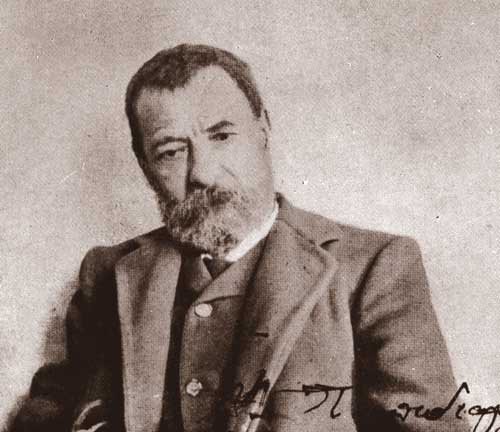
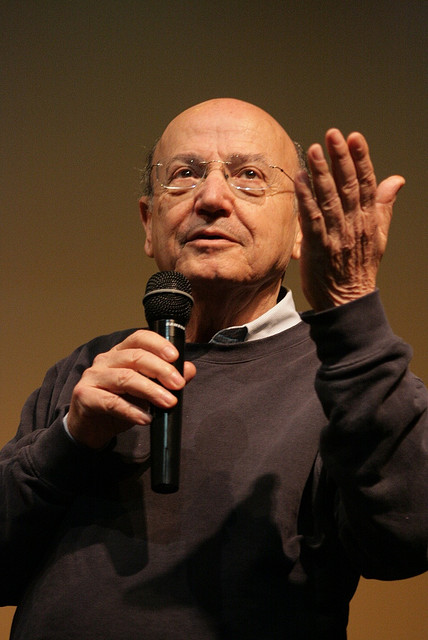
Angelopoulos was born in Athens on 27 April 1935, the son of a shopkeeper. He was nine during the street fighting of December 1944, when his father was arrested and the family went looking for him among the dead; he said later that those weeks gave him the images of his whole career. He studied law at the University of Athens, did his military service, and in 1961 went to Paris, first to the Sorbonne and then to the film school IDHEC, which he left after quarrelling with his teachers. He came home in 1964 and wrote film criticism for the left-wing daily Δημοκρατική Αλλαγή until the colonels' coup of 1967 closed it.
His first feature, Αναπαράσταση (Reconstruction, 1970), shot in black and white in a dying village in Epirus, won the prizes at the Thessaloniki festival and announced a new Greek cinema. Through the dictatorship and after it he made the films on which his reputation rests, with a stable team: the cinematographer Giorgos Arvanitis, the screenwriter Tonino Guerra, Fellini's old collaborator, and from 1984 the composer Eleni Karaindrou. In the 1980s and 1990s he worked with international stars, Marcello Mastroianni, Harvey Keitel, Bruno Ganz, Willem Dafoe, without changing his method, and he collected the major European prizes.
On 24 January 2012, while shooting Η άλλη θάλασσα (The Other Sea) in Drapetsona, near the port of Piraeus, he was crossing a road and was hit by a motorcycle; he died in hospital that night, aged seventy-six. The film was never finished.
Works

The Angelopoulos style can be described in a sentence and takes a lifetime to absorb. The shot lasts minutes, not seconds; the camera pans slowly across a landscape of rain, snow and mist, through which small figures walk; a single take may contain several years, the actors changing costume as the camera turns; dialogue is rare and music, in the later films Karaindrou's mournful oboe and accordion, carries the feeling. The settings are the Greek north, Thessaloniki, the mountains of Epirus, the lakes and frontiers of Macedonia.
His subject was Greek history as it was lived by those who did not make it. Ο Θίασος (The Travelling Players, 1975), nearly four hours long, follows a troupe of actors who try to perform the pastoral melodrama Γκόλφω while the Metaxas dictatorship, the Occupation, the Resistance and the Civil War interrupt them, and it was made under the colonels and released after their fall. Ταξίδι στα Κύθηρα (Voyage to Cythera, 1984) brings an old communist exile home from the Soviet Union to a country that no longer wants him. Τοπίο στην ομίχλη (Landscape in the Mist, 1988) sends two children north by train to find a father who may not exist. Το βλέμμα του Οδυσσέα (Ulysses' Gaze, 1995, Grand Prix at Cannes) follows a Greek-American director across the Balkans to besieged Sarajevo in search of the first film ever shot there. Μια αιωνιότητα και μια μέρα (Eternity and a Day, 1998, Palme d'Or) gives a dying poet in Thessaloniki one last day with an Albanian street child.
Legacy in Greece today
Start with Τοπίο στην ομίχλη, the most approachable of the films, or with Eleni Karaindrou's soundtracks for Ulysses' Gaze and Eternity and a Day, which are listened to in Greece far beyond the cinema; the theme from Ταξίδι στα Κύθηρα is instantly recognised. Greek critics regularly vote Ο Θίασος the best Greek film ever made, and ERT shows the films on anniversaries. The Thessaloniki International Film Festival, where he won his first prizes, holds retrospectives of his work, and the Greek Film Archive in Athens preserves his prints. The adjective αγγελοπουλικός has entered Greek for any slow, misty, long-take shot, used with admiration and sometimes with a smile. His death on a road in Drapetsona, in the middle of a film about the Greek crisis, is remembered as one of the sadder footnotes of those years.
Did you know?
- Eternity and a Day (1998) remains the only Greek film to have won the Palme d'Or at Cannes.
- The Travelling Players runs close to four hours and contains only about eighty shots; some single takes cover several years of history.
- He was expelled from the Paris film school IDHEC after disagreements with his teachers and learned his craft by watching films and writing about them.
- He died in 2012 while shooting a film about the Greek debt crisis, The Other Sea, which was never completed.
Key works
| Greek title | Title | Year |
|---|---|---|
| Αναπαράσταση | Reconstruction | 1970 |
| Ο Θίασος | The Travelling Players | 1975 |
| Ταξίδι στα Κύθηρα | Voyage to Cythera | 1984 |
| Τοπίο στην ομίχλη | Landscape in the Mist | 1988 |
| Το βλέμμα του Οδυσσέα | Ulysses' Gaze | 1995 |
| Μια αιωνιότητα και μια μέρα | Eternity and a Day | 1998 |
A line to remember
Καὶ ψυχὴ εἰ μέλλει γνώσεσθαι αὑτήν, εἰς ψυχὴν αὐτῇ βλεπτέον.
In today's GreekΚαι η ψυχή, αν είναι να γνωρίσει τον εαυτό της, σε μια ψυχή πρέπει να κοιτάξει.
Kai psychi ei mellei gnosesthai aftin, eis psychin afti vlepteon.
And the soul, if it is to know itself, must look into a soul.