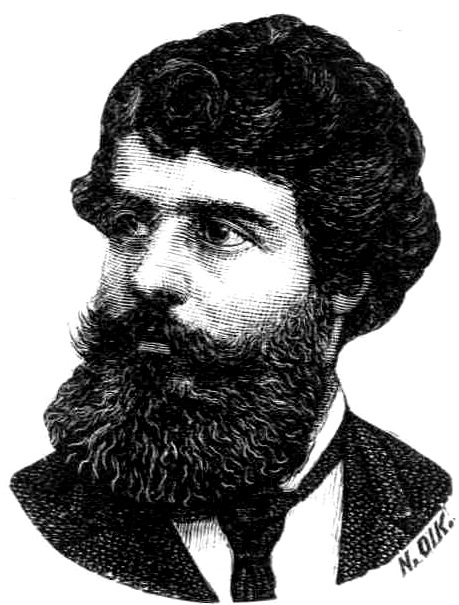
Life
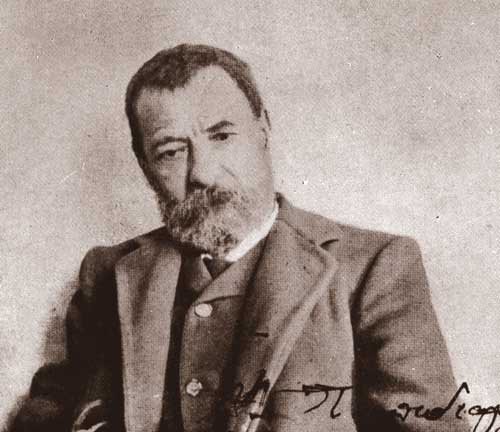
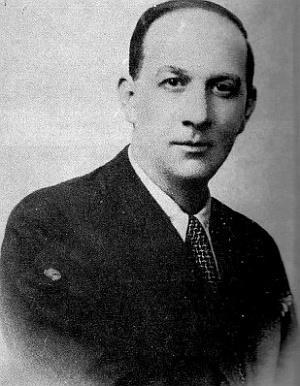
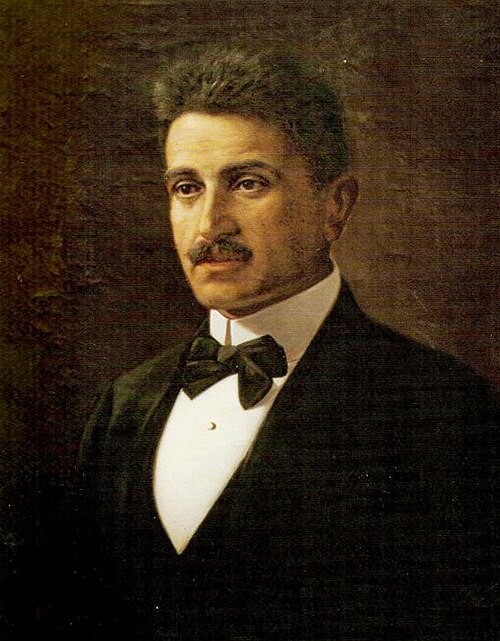
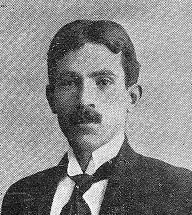
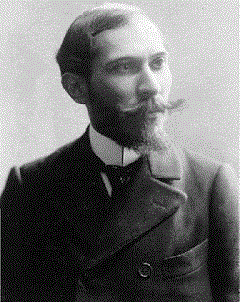
Politis was born in Kalamata in March 1852 and grew up in Athens, where he studied at the university. Even as a student he was fascinated by the beliefs and tales of ordinary people, and he published his first studies on modern Greek mythology, the nereids, dragons and fates of village belief, while still in his early twenties. He then continued his studies in Germany, in Munich, taking his doctorate at Erlangen; there he came into contact with the new European science of folklore and comparative mythology.
Back in Athens he became professor of mythology and Greek archaeology at the University of Athens in 1890, a chair he held for three decades, and he trained a whole generation of scholars. In 1884 he proposed the word λαογραφία (laografia, «writing about the people») for the study of popular culture, and it has been the Greek name of the discipline ever since. In 1908–1909 he founded the Hellenic Folklore Society and its journal Λαογραφία, and in 1918 he set up an archive for folklore materials, which later became the Hellenic Folklore Research Centre of the Academy of Athens.
Politis was also a public figure, involved in the debates of his time on education, the language and national history. Behind his work stood a political question of the nineteenth century: to answer those, like the German historian Fallmerayer, who denied any continuity between the ancient and the modern Greeks. He died in Athens on 12 January 1921.
Works

Politis's method was to collect systematically and to compare. He gathered material from his own travels, from teachers, priests and correspondents in every corner of the Greek world, and from earlier collections, and he arranged it by theme, tracing each belief, custom or story back through Byzantium to antiquity and across to the neighbouring peoples of the Balkans and Europe. He treated popular culture not as quaint superstition but as a living tradition worthy of scholarship.
His great collection of proverbs, Παροιμίαι (Proverbs), published in four volumes from 1899 to 1902, explains the origin and variants of thousands of Greek sayings. The two volumes of Παραδόσεις (Traditions, 1904) gather local legends: the marble emperor who sleeps beneath Constantinople waiting to wake, the last liturgy of Hagia Sophia, haunted bridges, buried treasures and saints who protect a village. His Εκλογαί από τα τραγούδια του ελληνικού λαού (Selections from the Songs of the Greek People, 1914) offered a carefully edited anthology of folk songs, from the songs of Digenis and the klephts to laments, love songs and the ballad of the Bridge of Arta, and it fixed the texts that schools have taught ever since.
His approach was shaped by the patriotism of his age, and later scholars have questioned some of his assumptions about continuity. But the collections, the archive and the discipline he created remain the foundation of Greek folklore research.
Legacy in Greece today
If you have read a Greek school anthology, you have read Politis: the legends of the marble emperor and of Hagia Sophia, and the songs of the Bridge of Arta and the Dead Brother, are usually printed in the texts he established. His Παραδόσεις are still in print and make excellent short reading for an advanced learner. The Hellenic Folklore Research Centre of the Academy of Athens, the heir of his archive, holds manuscripts, recordings and photographs from all over Greece. And every time a Greek explains a proverb such as «Όποιος βιάζεται σκοντάφτει», he is doing, without knowing it, what Politis did for fifty years.
Did you know?
- He coined the Greek word λαογραφία (folklore studies) in 1884.
- He published studies on modern Greek popular mythology while still in his early twenties.
- His collection of proverbs fills four volumes.
- The archive he founded in 1918 grew into a research centre of the Academy of Athens.
Key works
| Greek title | Title | Year |
|---|---|---|
| Νεοελληνική μυθολογία | Modern Greek Mythology | 1871–1874 |
| Παροιμίαι | Proverbs (4 vols) | 1899–1902 |
| Παραδόσεις | Traditions (2 vols) | 1904 |
| Ίδρυση της Ελληνικής Λαογραφικής Εταιρείας και του περιοδικού «Λαογραφία» | Founding of the Hellenic Folklore Society and the journal Laografia | 1908–1909 |
| Εκλογαί από τα τραγούδια του ελληνικού λαού | Selections from the Songs of the Greek People | 1914 |
From the works
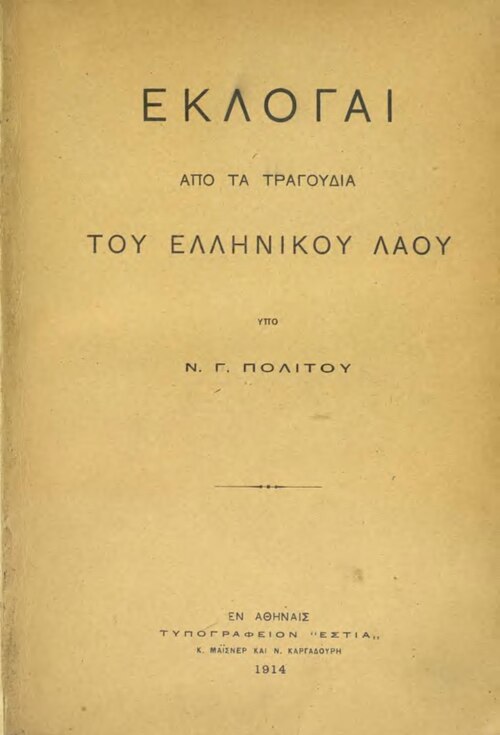
Public-domain pictures from Wikimedia Commons.
A line to remember
Σαράντα πέντε μάστοροι κι εξήντα μαθητάδες / γεφύρι εθεμέλιωναν στης Άρτας το ποτάμι.
Saranta pente mastoroi ki exinta mathitades / gefyri ethemelionan stis Artas to potami.
Forty-five master builders and sixty apprentices / were laying the foundations of a bridge on the river of Arta.