Life
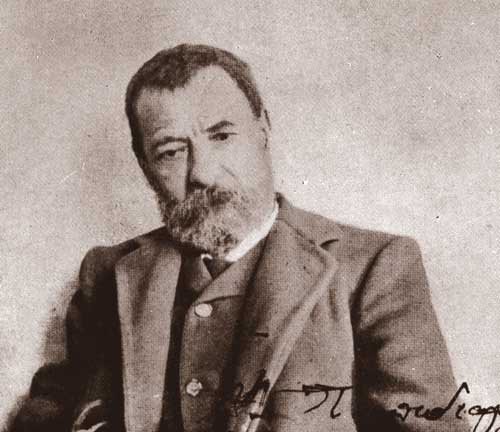
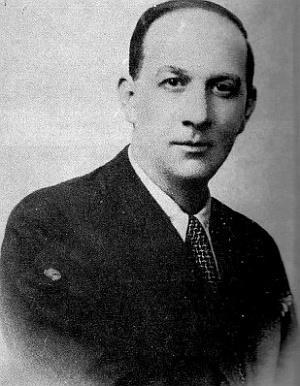
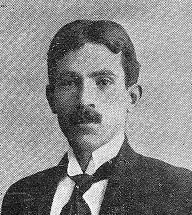
Varnalis was born on 14 February 1884 in Pyrgos, today Burgas, on the Bulgarian coast of the Black Sea, into a Greek family whose name came from the city of Varna. He was educated at the Greek school of Plovdiv and in 1902 came to Athens to study literature at the university, where he moved in the circle of young demoticists around the review Νουμάς. After graduating in 1908 he worked as a secondary-school teacher of Greek in various towns and in Athens, and published polished, sensual, rather Parnassian poems under the influence of Palamas.
A state scholarship took him to Paris in 1919, in the aftermath of the First World War and the Russian Revolution, to study philosophy and literature. He came back a Marxist, and the poet changed with the man. In 1925–26, during the controversy over progressive teaching at the Marasleio teacher-training school, he was accused along with Dimitris Glinos and Alexandros Delmouzos of corrupting the young, and in 1926 he was dismissed from the teaching service. From then on he lived by journalism, writing literary and political columns for Athenian newspapers for almost fifty years, by translation and by his books.
His politics cost him more than his job: he was banned, watched and periodically persecuted under the Metaxas dictatorship, during the civil-war years and under the colonels. He never recanted. In 1959 he was awarded the Lenin Peace Prize, and in his last years, under the dictatorship, he wrote some of his angriest verse. He died in Athens on 16 December 1974, a few months after democracy was restored, and his funeral drew huge crowds.
Works

Varnalis' major poetry is contained in two books. Το φως που καίει (The Light That Burns, 1922), first printed in Alexandria under the pseudonym Dimos Tanalias, is a mixture of verse and prose in which Prometheus, Christ and a figure called Momos, the spirit of mockery, debate what humanity needs; its answer is that neither myth nor religion but the labouring people themselves will bring the light. The best-known pieces in it are the Μοιραίοι (The Doomed), a chorus of men in a cellar tavern listing the fate that crushed them and ending with the admission that they are to blame because they never dared to rise, and the Μάνα του Χριστού (Mother of Christ), a lament of Mary at the cross. Σκλάβοι πολιορκημένοι (Slaves Besieged, 1927) takes its title from Solomos' Free Besieged and turns it inside out: the besieged are now the poor, held inside by hunger and by the masters' lies.
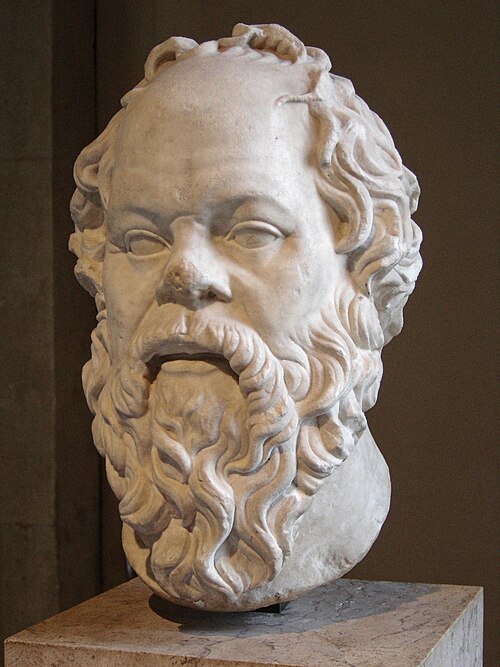
His prose is satire of a classical kind. Η αληθινή απολογία του Σωκράτη (The True Apology of Socrates, 1931) rewrites Plato: a Socrates who speaks the language of the Athenian street exposes his judges, the priests and the demagogues, and declines to flatter the people either. Το ημερολόγιο της Πηνελόπης (The Diary of Penelope, 1947) gives Odysseus' faithful wife a cynical private voice, and the Homeric household becomes a portrait of a ruling class at war. The essay Ο Σολωμός χωρίς μεταφυσική (Solomos without Metaphysics, 1925) reads the national poet as a product of his class and time, a scandal in its day. Later collections, Ποιητικά (1956), Ελεύθερος κόσμος (Free World, 1965) and the posthumous Οργή λαού (People's Wrath, 1975), are more direct, and he also translated Aristophanes, Euripides and Molière.
Legacy in Greece today
«Οι Μοιραίοι», with its opening line «Μες την υπόγεια την ταβέρνα», is one of the most recorded Greek songs of the twentieth century: Mikis Theodorakis set it in the 1960s and it has been sung by Grigoris Bithikotsis and many others since, and most people who sing along do not know that the words are a 1920s poem by a schoolteacher of Greek. The ballad Η μπαλάντα του κυρ Μέντιου (The Ballad of Mr Mentios), in which a worn-out donkey finally kicks back, is another song people know, in the voice of Nikos Xylouris. Varnalis is taught in lyceum literature, usually with Οι Μοιραίοι or passages of the True Apology, and streets in Athens and other cities carry his name. A learner should listen to Οι Μοιραίοι with the text in hand: four short stanzas of everyday Greek that teach the vocabulary of fate, wine and regret.
Did you know?
- He was born in Bulgaria and kept a Bulgarian-born Greek's outsider view of Athens all his life; his surname means «from Varna».
- The Light That Burns was first published in Alexandria in 1922 under the pseudonym Dimos Tanalias, because its author was a serving state schoolteacher.
- He was dismissed from teaching in 1926 for his ideas and lived by newspaper columns for nearly half a century.
Key works
| Greek title | Title | Year |
|---|---|---|
| Το φως που καίει | The Light That Burns | 1922 |
| Ο Σολωμός χωρίς μεταφυσική | Solomos without Metaphysics (essay) | 1925 |
| Σκλάβοι πολιορκημένοι | Slaves Besieged | 1927 |
| Η αληθινή απολογία του Σωκράτη | The True Apology of Socrates | 1931 |
| Το ημερολόγιο της Πηνελόπης | The Diary of Penelope | 1947 |
| Ελεύθερος κόσμος | Free World | 1965 |
From the works


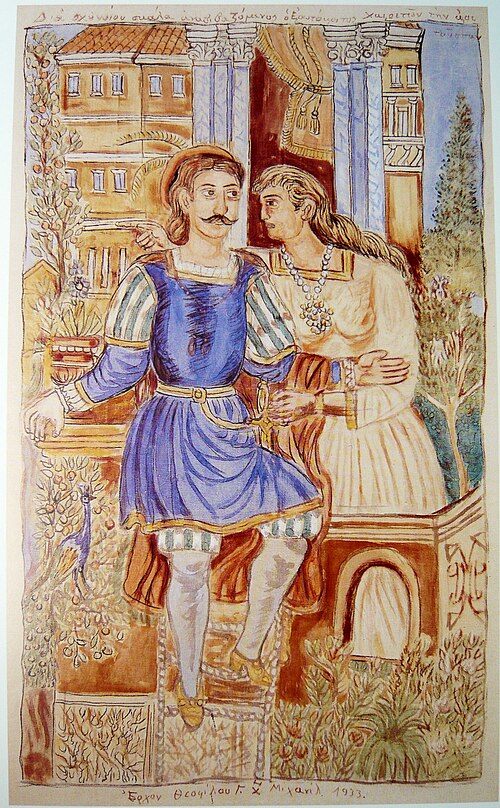
Public-domain pictures from Wikimedia Commons.
A line to remember
Μες την υπόγεια την ταβέρνα, / μες σε καπνούς και σε βρισιές
Mes tin ypogeia tin taverna, / mes se kapnous kai se vrisies
In the cellar tavern, / amid smoke and curses