Life
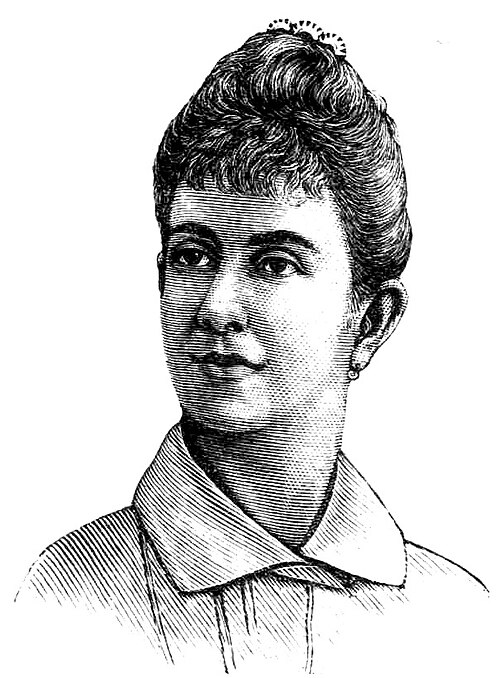
Kallirroi Siganou was born in 1861 in Rethymno, Crete, and received an unusually good education for a Greek girl of her time, which prepared her to become a teacher. Like many educated Greek women of the nineteenth century, she found her first career in teaching abroad, in the Greek communities of the Ottoman Empire and southern Russia, and she directed girls' schools in Adrianople and in Odessa.
She married Ioannis Parren, a journalist of French origin from Constantinople who founded the first Greek news agency, and settled in Athens. There, on 8 March 1887, she published the first issue of Η Εφημερίς των Κυριών. The newspaper appeared weekly for some three decades, and around it she built a whole network of women's organisations: Sunday schools for working girls and servants who had never learned to read, charitable and professional associations, and in 1896 the Union of Greek Women.
In 1911 she founded the Lyceum of Greek Women, devoted to the education of women and to the preservation of Greek costume, dance and folk tradition. She kept in touch with the international women's movement and remained active almost to the end of her long life. She died in Athens in 1940, twelve years before Greek women finally won the right to vote in national elections, in 1952.
Works

Η Εφημερίς των Κυριών was her great work. It was the first Greek newspaper run and written by women, and its pages mixed what readers expected, household advice, fashion and literature, with what they did not: reports on women's education in Europe and America, articles on the legal position of married women, campaigns for women's access to university and to professions such as medicine and law, and stories of working women in factories. Parren was careful in tone, often presenting her demands as good for the family and the nation, but the demands themselves were radical for 1880s Athens.
She also wrote fiction to carry her ideas to a wider public. Her novels Η χειραφετημένη (The Emancipated Woman, 1900), Η μάγισσα (The Witch, 1901) and Το νέον συμβόλαιον (The New Contract, 1902) follow educated young women who try to live by their own choices and pay the price in a society that is not ready for them. Her play Η νέα γυνή (The New Woman, 1907), drawn from these novels and staged with Marika Kotopouli, brought the same themes to the stage.
Her other lasting creation is the Lyceum of Greek Women, which combined two causes that she saw as one: the dignity and education of women, and the dignity of Greek popular culture, which the Lyceum collected and performed.
Legacy in Greece today
Parren is remembered as the first great figure of Greek feminism, and every history of women's rights in Greece begins with her newspaper. The Lyceum of Greek Women that she founded is still active, with branches across Greece and abroad: its dance groups, costume collections and folk music performances are seen at festivals and national celebrations, and many Greek children learn traditional dances there. Collections of Η Εφημερίς των Κυριών are preserved in Greek libraries, and looking at an original page, with its katharevousa headlines, is a vivid lesson in how Greek has changed. The date of the first issue, 8 March 1887, makes a striking link with today's International Women's Day.
Did you know?
- The first issue of her newspaper appeared on 8 March 1887, the date that is today International Women's Day.
- She founded Sunday schools so that working girls and servants could learn to read and write.
- The Lyceum of Greek Women, which she created in 1911, is still one of the main guardians of Greek traditional dance and costume.
- Her husband founded the first Greek news agency.
Key works
| Greek title | Title | Year |
|---|---|---|
| Η Εφημερίς των Κυριών | The Ladies' Newspaper (weekly) | 1887 |
| Ένωσις των Ελληνίδων | Union of Greek Women | 1896 |
| Η χειραφετημένη | The Emancipated Woman (novel) | 1900 |
| Η μάγισσα | The Witch (novel) | 1901 |
| Το νέον συμβόλαιον | The New Contract (novel) | 1902 |
| Λύκειον των Ελληνίδων | Lyceum of Greek Women | 1911 |
From the works


Public-domain pictures from Wikimedia Commons.
A line to remember
Η Εφημερίς των Κυριών
I Efimeris ton Kyrion
The Ladies' Newspaper