Life
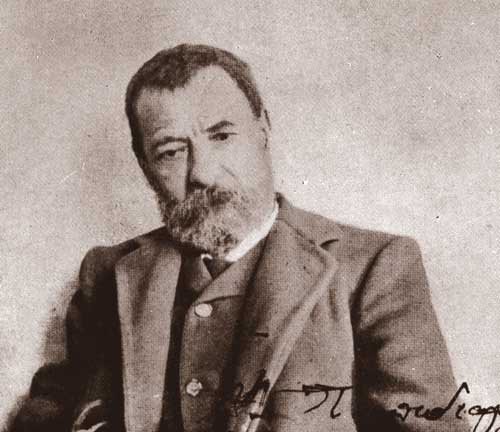
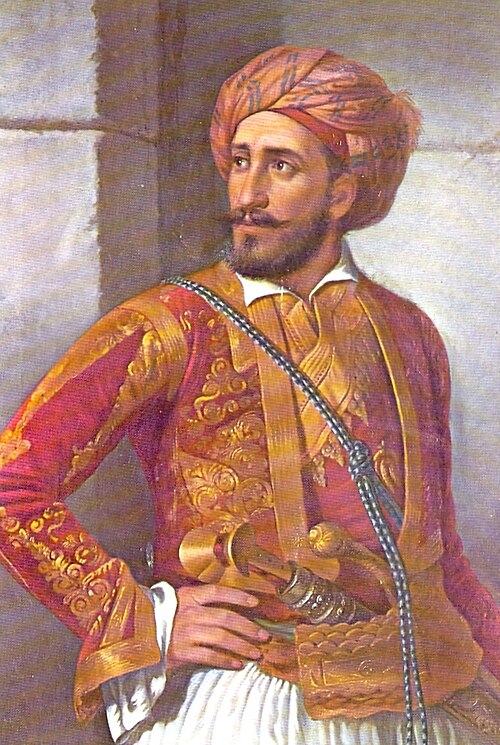
He was born in 1797 as Ioannis Triantafyllou in Avoriti, a hamlet in the mountains of Doris in central Greece, into a poor family; his father was killed in a clash with Albanian irregulars when he was a baby, and the family fled to Livadia. Tall for his age, he was nicknamed Makriyannis, «long John», and the name stuck. He worked as a servant and then as a small trader in Arta, joined the secret Filiki Eteria in 1820 and took up arms in 1821. He fought in Roumeli and the Peloponnese, and in June 1825 held the mills of Lerna near Nafplio against Ibrahim Pasha's Egyptian army. He was badly wounded defending the Acropolis of Athens in 1826–27 and carried the pain for the rest of his life.
In the new state he was made a general, settled in Athens below the Acropolis, in the quarter that today bears his name, and became an outspoken opponent first of Kapodistrias and then of the Bavarian regency and of King Otto's absolute rule. On the night of 3 September 1843 he led the troops and the crowd that gathered before the palace and obtained the promise of a constitution; the square was renamed Syntagma, «Constitution», in memory of it.
His independence made him enemies. In 1852 he was arrested, accused of conspiring against the king, and in 1853 condemned to death; the sentence was commuted and he was freed in 1854, broken in health. He died in Athens on 27 April 1864.
Works

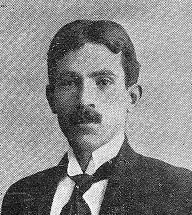
Makriyannis did not know how to write when the war ended. In 1829, at Argos, he taught himself the letters so that he could set down what he had seen, and between 1829 and 1850 he filled his notebooks with the Απομνημονεύματα (Memoirs). He wrote as he spoke, in the demotic of a Roumeliot villager, with no punctuation and words run together, and he hid the manuscript; it was deciphered and published only in 1907 by Giannis Vlachogiannis. The book tells the war from the inside, battle by battle, and then the disappointments of peace: foreign powers, Bavarian officers, politicians and chieftains who put their own interest before the common cause. Its moral centre is the sentence that Greeks still quote, that we are «in the “we” and not in the “I”», and its most famous page is his order to soldiers who were about to sell two ancient statues to Europeans: «for these we fought».
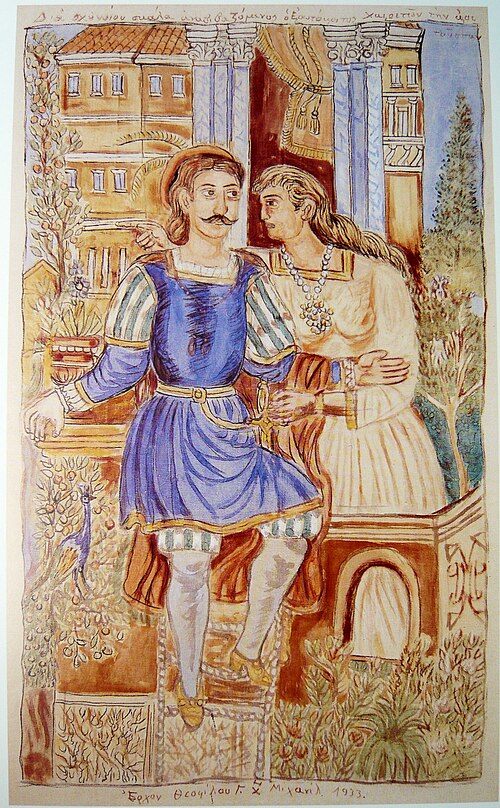
A second manuscript, Οράματα και θάματα (Visions and Wonders, 1851–52), a diary of his religious visions written in prison and in illness, was published only in 1983. Makriyannis was also, in his own way, a patron of art: between 1836 and 1839 he had the folk painter Panagiotis Zografos and his sons paint a series of pictures of the battles of the war under his direction, as a record for the king and the ambassadors of the great powers; copies survive in the Gennadius Library in Athens and in the Royal Collection at Windsor, and they are the visual twin of the Memoirs.
Legacy in Greece today
Makriyannis became a classic in 1943, when Giorgos Seferis, in a lecture to Greek soldiers in Alexandria titled Ένας Έλληνας – ο Μακρυγιάννης (A Greek: Makriyannis), presented the unlettered general as the master of all Greek prose writers, and Elytis, Theotokas and the whole generation of the 1930s took him as a model of living demotic. Extracts from the Memoirs, above all the statues passage and «είμαστε εις το “εμείς”», are read in every lyceum, and the phrase is quoted whenever Greeks argue about selfishness and the common good. In Athens the Makriyanni district beside the Acropolis Museum and the long street 3ης Σεπτεμβρίου are named after the man and his night; Syntagma Square itself commemorates his constitution. The Zografos paintings can be seen at the Gennadius Library in Athens.
Did you know?
- He learned to write at 32, at Argos in 1829, solely in order to record his memories of the war.
- The manuscript of the Memoirs, written without punctuation or spaces between words, lay unread until Giannis Vlachogiannis deciphered and published it in 1907, 43 years after the author's death.
- Syntagma Square in Athens, and the street 3ης Σεπτεμβρίου, take their names from the constitution he won on the night of 3 September 1843.
- He was condemned to death in 1853 by the state he had helped to create; the sentence was commuted and he was freed the next year.
Key works
| Greek title | Title | Year |
|---|---|---|
| Η μάχη στους Μύλους της Λέρνας | Defence of the mills of Lerna against Ibrahim Pasha | 1825 |
| Η πολιορκία της Ακρόπολης | Defence of the Acropolis of Athens | 1826–1827 |
| Απομνημονεύματα | Memoirs (written 1829–1850, published 1907) | 1829–1850 |
| Οι πίνακες του Παναγιώτη Ζωγράφου | The battle paintings commissioned from Panagiotis Zografos | 1836–1839 |
| Η επανάσταση της 3ης Σεπτεμβρίου | The uprising of 3 September 1843 for a constitution | 1843 |
| Οράματα και θάματα | Visions and Wonders (published 1983) | 1851–1852 |
From the works


Public-domain pictures from Wikimedia Commons.
A line to remember
Αυτά, και δέκα χιλιάδες τάλαρα να σας δώσουνε, να μην το καταδεχτείτε να βγουν από την πατρίδα μας. Γι' αυτά πολεμήσαμε.
Afta, kai deka chiliades talara na sas dosoune, na min to katadechteite na vgoun apo tin patrida mas. Gi' afta polemisame.
Even if they give you ten thousand thalers for these, do not allow them to leave our homeland. It was for these that we fought.
From the original
The text as Ioannis Makriyannis wrote it, out of copyright, with our own translation beside it.
«Απομνημονεύματα»Memoirs
A marginal note in the Memoirs, in Makriyannis's own untaught spelling: after the sack of Poros in 1831 he buys two ancient statues from soldiers who were about to sell them abroad, and later offers them to King Otto. The page's quote is what he told the soldiers.
Απομνημονεύματα, Book Γ΄, chapter 1, the author's own note (written 1829–1850, published 1907) · Public-domain text, source: el.wikisource.org