Life
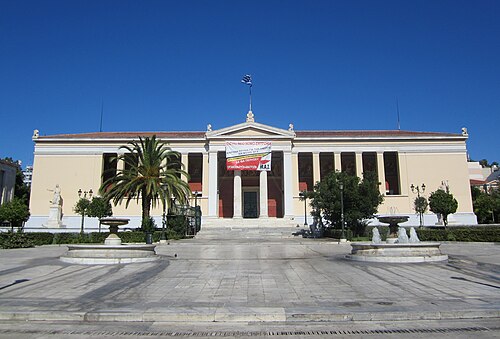
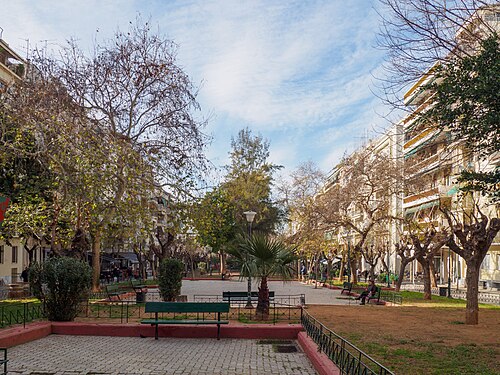
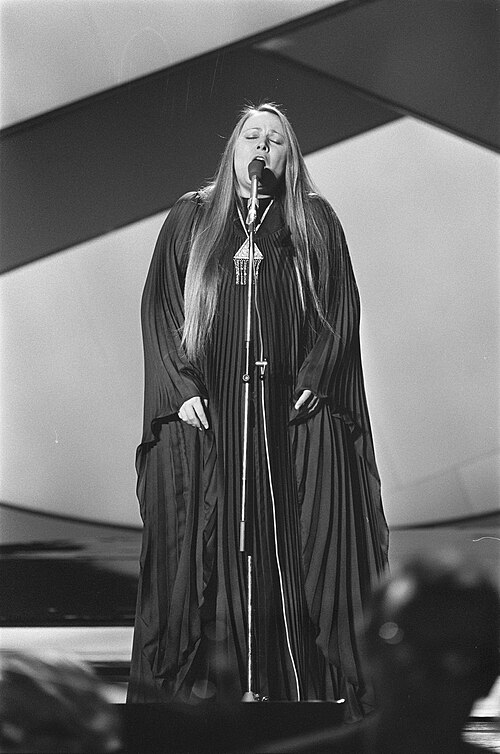
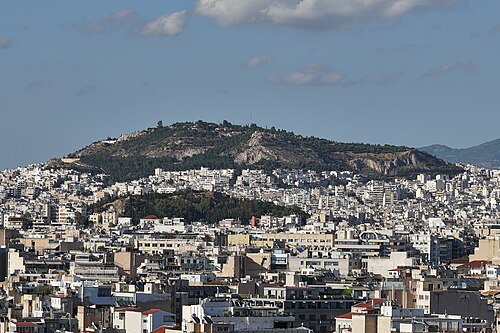
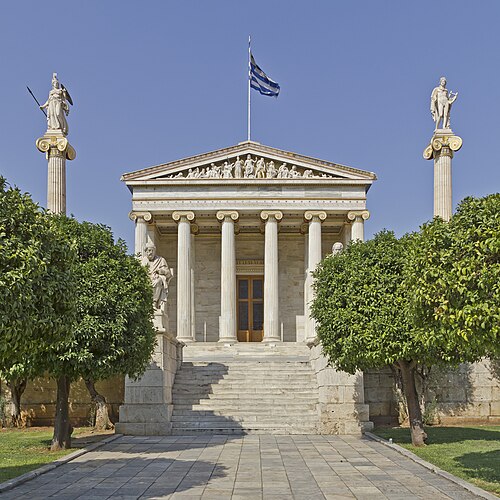
Arleta was born Argyro-Nikoleta Tsapra in Athens on 3 March 1945, but from childhood everyone called her Arleta. (A few English-language reports give her first name as Ariadne; Greek obituaries give Argyro-Nikoleta.) She grew up in Metaxourgeio, then lived for decades in Exarcheia, the neighbourhood she called her homeland, and finally in Kypseli. After the Arsakeio school she entered the Athens School of Fine Arts to study painting. In June 1965, on a student excursion, the law student Giorgos Papastefanou heard her sing Theodorakis’s Άξιον Εστί (It Is Worthy) and introduced her to Alekos Patsifas of the Lyra record label.
Her first single came out in 1966, followed the same year by her first album, with songs by Giannis Spanos, Notis Mavroudis, Nikos Chouliaras and Giorgos Kontogiorgos. She sang in boîtes of Plaka such as Η Παράγκα (The Shack) and Οι Νεφέλες (The Clouds). Under the military dictatorship of 1967–1974, however, two songs of her first album were censored, and she withdrew from the stage when she realised that any club she sang in would be closed. After the fall of the junta, at the invitation of Georges Moustaki, she sang at the Bobino theatre in Paris.
Her health was fragile. On 11 February 2008 she suffered a brain haemorrhage minutes before a concert in Volos, yet she recovered and returned with a double album in 2009. After months in hospital following a stroke and a heart attack, she died at Evangelismos hospital in Athens on 8 August 2017, aged 72.
Works
Arleta belonged to the Νέο Κύμα, a style that Lyra had promoted since 1964: gentle, carefully written songs for new voices and small ensembles, closer to light song than to the bouzouki-based λαϊκό (popular song). Critics compared her with Joan Baez and Judy Collins, but she mainly wanted to tell stories with her guitar. Her early records include Αρλέτα 2 (Arleta 2, 1967), 12+1 τραγούδια του Μάνου Χατζιδάκι (12+1 Songs by Manos Hatzidakis, 1969) and Έξι μέρες (Six Days, 1970), poems by Pavlina Pampoudi set to her own music.
She was also a singer of poetry. Spanos’s Τρίτη Ανθολογία (Third Anthology, 1975) set poems by Varnalis, Kavvadias and others, and in 1978 she recorded Theodorakis’s Romancero gitano, poems by Lorca in the Greek translation of Odysseas Elytis. In 1981 came Ένα καπέλο γεμάτο τραγούδια (A Hat Full of Songs), her first album of her own songs.
Her widest success followed with the composer Lakis Papadopoulos and the lyricist Marianina Kriezi: the albums Περίπου (Roughly, 1984) and Τσάι γιασεμιού (Jasmine Tea, 1985) included Σερενάτα (Serenade) and Batida de coco. Later came Άσε τα κρυφά κρυμμένα (Leave the Secrets Hidden, 1991), with her well-known Μπαρ «Το ναυάγιο» (Bar “The Shipwreck”). She said she had turned down songs she knew would be hits because they did not suit her. In 1997 Kastaniotis published her book Από πού πάνε για την άνοιξη; (Which Way to Spring?), with texts, lyrics and drawings.
Legacy in Greece today
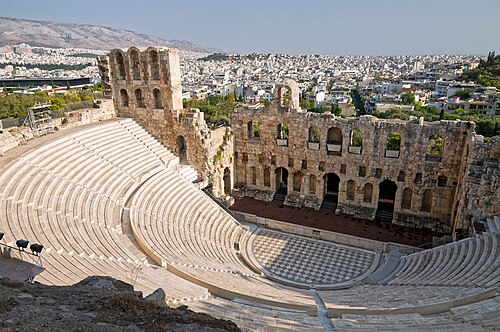
When Arleta died in 2017, the culture minister Lydia Koniordou called her a beacon of contemporary Greek song. In September 2018 friends and fellow artists, among them Foteini Velesiotou, Tania Tsanaklidou and Phoebe Killdeer of Nouvelle Vague, gave the tribute concert Ακόμη και αν φύγεις (Even If You Leave) at the Odeon of Herodes Atticus. Her recordings remain easy to find, including Demo (2010), ten English-language songs found in the Lyra archive some 35 years after she recorded them. A short task: listen to Τσάι γιασεμιού (1985), whose lyrics are by Marianina Kriezi, without reading the words. Then judge it in one Greek sentence modelled on her own comment about the New Wave, for example Το τραγούδι μπορεί να είναι απλό, βαρετό όμως δεν είναι (The song may be simple, but boring it is not). This is our own practice sentence, not a line of the song.
Did you know?
- Her first single in 1966 announced on its label «Παρουσιάζουμε την Αρλέττα με την κιθάρα της» (We present Arletta with her guitar), with a double τ; on her next single the name was already spelled Αρλέτα.
- As a small child she wanted to be a shoeshiner, and then, for a while, a horse.
- Though she was called the “queen of the boîtes”, she said she had sung in Plaka for only about a year and a half.
- She said that the only thing she ever accumulated in her life was guitars.
Key works
| Greek title | Title | Year |
|---|---|---|
| Αρλέτα | Arleta — first album, songs by Spanos, Mavroudis, Chouliaras and Kontogiorgos | 1966 |
| 12+1 τραγούδια του Μάνου Χατζιδάκι | 12+1 Songs by Manos Hatzidakis | 1969 |
| Romancero gitano | Romancero gitano — Theodorakis, Lorca in Elytis’s translation | 1978 |
| Ένα καπέλο γεμάτο τραγούδια | A Hat Full of Songs — her first album of her own songs | 1981 |
| Τσάι γιασεμιού | Jasmine Tea — with Lakis Papadopoulos and Marianina Kriezi | 1985 |
| Άσε τα κρυφά κρυμμένα | Leave the Secrets Hidden — album with Bar “The Shipwreck” | 1991 |
A line to remember
Το Νέο Κύμα μπορεί να ήταν λυρικό, μπορεί να ήταν αφελές, γλυκερό όμως δεν ήταν, πολύ σπάνια.
To Néo Kýma boreí na ítan lyrikó, boreí na ítan afelés, glykeró ómos den ítan, polý spánia.
The New Wave may have been lyrical, it may have been naive, but sugary it was not, only very rarely.