Life
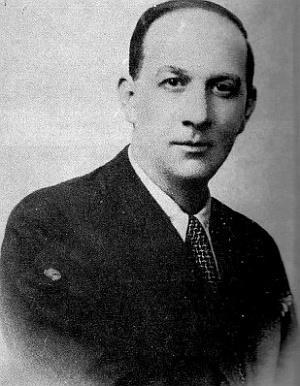
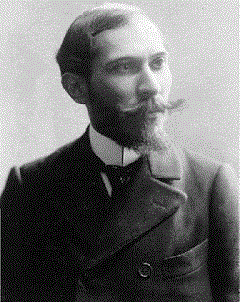
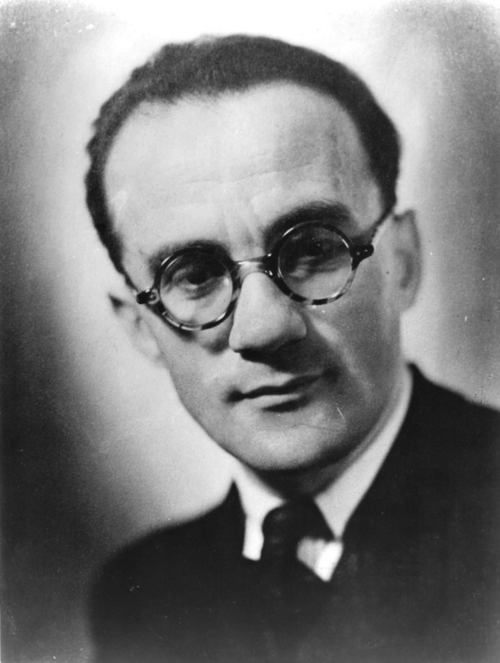
Skalkottas was born on 21 March 1904 in Chalkida, on the island of Evia, into a family of folk and amateur musicians. The family moved to Athens, where the gifted boy studied the violin at the Athens Conservatory and graduated with distinction in 1920. A scholarship took him in 1921 to Berlin, then one of the musical capitals of Europe, to continue as a violinist at the Hochschule für Musik. In the Berlin of the 1920s, full of new art and new ideas, he soon turned from performing to composition.
He studied composition with Philipp Jarnach, had some lessons with Kurt Weill, and from 1927 to about 1932 was a member of Arnold Schoenberg's master class at the Prussian Academy of Arts. Schoenberg, the inventor of the twelve-tone method, is said to have counted him among his most gifted pupils. But Skalkottas was poor, his scholarship ended, his personal life was troubled, and in 1933 he returned to Athens, leaving behind in Berlin a large part of his early manuscripts, which were lost.
In Athens no one was interested in his difficult modern music. For the rest of his life he worked as a violinist in the back rows of the Athens orchestras, playing other people's music, and composed at night for himself. In 1946 he married the pianist Maria Pangali and had a family. He died suddenly on 19 September 1949, aged only forty-five, from a hernia that had not been treated in time. He left behind well over a hundred works, most of which had never been performed.
Works

Skalkottas wrote in two very different worlds. On the one hand he developed his own free version of Schoenberg's twelve-tone technique, using several tone rows at once and combining them with traditional forms such as the concerto, the sonata and the suite. Works such as the Concerto for Violin (1938), the Third Piano Concerto (1939), for piano and ten wind instruments, the 32 Piano Pieces (1940) and the overture Η επιστροφή του Οδυσσέα (The Return of Ulysses, 1942–43) are dense, energetic and demanding, among the most ambitious modernist music written anywhere in those years.
On the other hand he wrote tonal music rooted in Greek tradition. The 36 Ελληνικοί χοροί (36 Greek Dances), composed between 1931 and 1936 and later revised, take folk melodies and rhythms from all over Greece, the islands, Epirus, Crete, Macedonia, and set them for orchestra with a brilliant, colourful sense of sound. Unlike the composers of the Greek national school, Skalkottas did not decorate folk tunes with Romantic harmonies; he treated them with a modern clarity that keeps their roughness. One of his last works, the ballet suite Η θάλασσα (The Sea, 1948–49), is equally accessible.
This double voice, the uncompromising modernist and the lover of Greek dance, is what makes him unique. Some of the Greek Dances were played in his lifetime and liked by audiences; his major twelve-tone works had to wait for decades, and many received their first performances only in the second half of the twentieth century.
Legacy in Greece today
After his death, friends and musicians founded a society to save and catalogue his manuscripts, and slowly his music began to be performed and published. A great turning point was the large series of recordings of his works made for the Swedish label BIS from the 1990s onwards, which allowed listeners around the world to discover him. Today Greek orchestras regularly play the 36 Greek Dances, and his name is honoured in Greek music education and concert life, including in his birthplace, Chalkida. For a learner, the best start is to listen to a few of the Greek Dances, for example those based on island tunes, and then compare them with a recording of the same folk dance: you will hear both the tradition and what a modern composer did with it.
Did you know?
- He studied in the master class of Arnold Schoenberg, the founder of twelve-tone music.
- Many of his early manuscripts were lost when he left Berlin for Athens in 1933.
- While composing major concertos, he earned his living as a rank-and-file violinist in Athens orchestras.
- Most of his works were first performed only after his death in 1949.
Key works
| Greek title | Title | Year |
|---|---|---|
| 36 Ελληνικοί χοροί | 36 Greek Dances for orchestra | 1931–1936 |
| Κοντσέρτο για βιολί | Violin Concerto | 1938 |
| Τρίτο κοντσέρτο για πιάνο | Third Piano Concerto | 1939 |
| 32 κομμάτια για πιάνο | 32 Piano Pieces | 1940 |
| Η επιστροφή του Οδυσσέα | The Return of Ulysses (overture) | 1942–1943 |
| Η θάλασσα | The Sea (ballet suite) | 1948–1949 |
From the works


Public-domain pictures from Wikimedia Commons.
A line to remember
36 Ελληνικοί χοροί
Triánta éxi Ellinikí chorí
36 Greek Dances